

















YouTube Introduces Automatic Labels for AI-Generated Videos
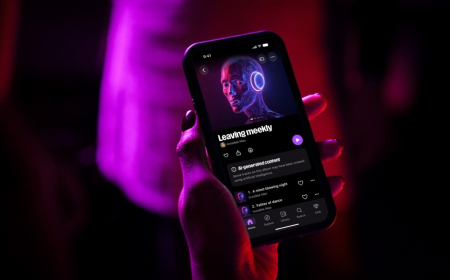
YouTube is rolling out automatic AI content labels to help viewers identify videos created or heavily modified using artificial intelligence. The update adds more visible disclosures on Shorts and long-form videos, improving transparency across the platform.
As AI-powered video creation tools continue to advance, YouTube is taking a more proactive approach to identifying AI-generated content on its platform. The company announced Wednesday that it will begin automatically applying labels to videos when its systems detect significant photorealistic AI-generated content.
The move marks an expansion of YouTube's eYouTube'sI disclosure framework, which has been in place for more than two years. Previously, creators were required to self-report when their videos contained AI-generated material that could realistically be mistaken for a real person, event, or location. Now, YouTube says it will use its own detection systems to identify eligible content and automatically apply labels when necessary.
The company also plans to make AI labels much more visible across both traditional videos and YouTube Shorts, ensuring viewers can more easily identify content that has been generated or heavily modified using artificial intelligence.
Although YouTube's AI disclosure policy remains unchanged, the platform is taking a more active role in enforcing it. The announcement comes shortly after Google introduced Gemini Omni, its latest family of multimodal AI models capable of generating highly realistic videos that understand subjects such as science, history, culture, and physics.
Beginning this month, YouTube will rely on new internal detection signals to identify AI-generated videos. Creators are still expected to disclose their use of AI themselves, but if they fail to do so, YouTube may automatically add the label.
If a creator believes a video was incorrectly identified, they can update the disclosure status. However, videos produced using YouTube's own, including Veo and Dream Screen, will retain their AI labels and cannot have them removed.
The company also confirmed that videos containing C2PA metadata — an industry standard used to verify AI-generated content — will automatically receive permanent AI labels. The C2PA framework has gained wider adoption across the technology sector, with companies including OpenAI, Nvidia, Kakao, and ElevenLabs supporting the standard.
The rollout follows YouTube's BY effort to address AI-generated media and deepfakes. Earlier this year, the company expanded its AI detection systems to allow adults to search YouTube for unauthorised uses of their likeness, building on earlier testing involving celebrities, public figures, politicians, and content creators.
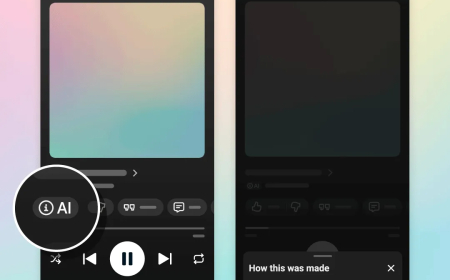
YouTube is also changing where AI labels appear. Previously, labels were often hidden within a video's description, unless the content involved sensitive topics such as health, politics, or news, in which case a more prominent notice appeared.
Under the new system, AI labels for long-form videos will appear directly beneath the video player and above the description section. For YouTube Shorts, labels will be displayed directly on-screen to improve visibility.
The company said these changes are intended to make it easier for viewers to recognise photorealistic AI-generated or AI-altered content. Videos featuring only minor AI enhancements, stylised effects, animations, or clearly fictional scenarios — such as fantasy scenes or unrealistic characters — will generally continue to display AI disclosures only within the expanded description section.
Importantly for creators, YouTube stated that AI labels will not affect how the platform recommends videos or impact monetisation eligibility.
Beyond content moderation, YouTube continues investing heavily in AI-powered features across its ecosystem. Recent additions include AI-assisted search tools, the Ask YouTube feature, AI-generated playlist creation for YouTube Music, video summaries, and a growing collection of generative AI tools designed to help creators produce content more efficiently.
As AI-generated media becomes increasingly sophisticated, YouTube's stance reflects the platform's balance of innovation and transparency while giving viewers clearer insight into how content is created.
What's Your Reaction?
 Like
0
Like
0
 Dislike
0
Dislike
0
 Love
0
Love
0
 Funny
0
Funny
0
 Angry
0
Angry
0
 Sad
0
Sad
0
 Wow
0
Wow
0