























Every AI Assistant Explained: Features and Comparisons
Every AI assistant explained, from ChatGPT and Claude to Gemini, Grok, DeepSeek and creative tools, comparing features, strengths, limits and use cases.

There are now more AI assistants than most people can keep track of. New ones launch every few months, old ones get rebranded, and the marketing around all of them sounds roughly the same: smarter, faster, better. What nobody tells you clearly is what each one actually does well, what it does badly, and what it costs you, in money, privacy, or trust.
Here is the honest version.
ChatGPT and GPT: The One That Started It All
First, a clarification to clear up years of confusion: ChatGPT is not the AI. It is the app. The actual brain inside it is called GPT, which stands for Generative Pre-trained Transformer. GPT is the engine. ChatGPT is the car you drive it around in. When OpenAI improves the model, they improve GPT. When you open the app on your phone, you are using ChatGPT.
Things really took off in late 2022 with GPT-3.5. Overnight, something on your screen could write essays, tell stories, answer almost anything, and write code in seconds. It hit 100 million users in two months, the fastest-growing app in history at that point. People genuinely lost their minds, in the best possible way.
But GPT-3.5 had real problems. It was wrong a lot, and it did not seem to know it. It would make things up and deliver the fiction with complete confidence. It was also terrible at math and had no awareness of anything that happened after its training cutoff. Ask about last week, and it would just stare at you.
GPT-4 fixed most of that—smarter reasoning, far fewer embarrassing mistakes, much better at complicated problems. Then GPT-4 Turbo made it faster and cheaper. Then came GPT-4o, where the “o” stands for Omni. This is the version that could finally see and hear. You could show it a photo, speak to it out loud, and it understood. That was the moment ChatGPT quietly stopped being a chatbot and became more of an actual assistant.
After that, OpenAI moved into reasoning models: versions that slow down, think through hard problems step by step, and check their own work before answering. GPT-5 tied all of this together. The current flagship, GPT-5.5, is built less for casual conversation and more for serious work: coding, research, data analysis, and increasingly, operating your computer directly on your behalf.
Where does that leave ChatGPT today? It is the all-rounder. It writes, codes, makes images, talks, researches, and does all of it at a high level. If you only ever use one AI, it is the safe default, the one everyone has heard of. The catch is that being good at everything means it is not the absolute best at any single thing, and as you will see, a few rivals have genuinely beaten it in their lanes.
Claude: The Careful One
Claude is made by Anthropic, a company founded by people who previously worked at OpenAI. In 2020, a group of senior researchers, led by Dario Amodei and his sister Daniela, left because they felt the company was moving too fast and treating safety as secondary. They did not go quietly. They left to build something powerful and careful at the same time.
That founding instinct shapes everything about how Claude behaves. It is trained using something called constitutional AI, which means Anthropic gave the model a written set of principles and trained it to check its own responses against those principles before answering. Claude polices itself. That is why it tends to feel more honest and more thoughtful than its competitors, and why it will push back when something seems wrong rather than just going along with it.
Claude comes in three tiers. Opus is the most capable, currently at version 4.8. Sonnet is the workhorse: nearly the same quality, faster, and cheaper to run. Haiku handles simpler, faster tasks. Think of Opus as the genius who takes their time, Sonnet as the engineer who ships things, and Haiku as the assistant who handles the routine.
Anthropic also launched a tool called Cowork, which applies Claude’s capabilities to ordinary office work. Not just chatting about your tasks, but actually going into your files and apps and completing them. When Cowork launched, software company stocks dropped. Wall Street realised that an AI doing entire office workflows is not a productivity tool. It is a replacement for certain kinds of workers, and investors started doing the math.
Claude has been quietly eating into OpenAI’s business customers. The honest catches: it burns through usage limits fast, it cannot generate images, and it costs more per token than some competitors. But for writing that sounds genuinely human, and for serious coding work, many developers quietly consider it the best there is.
Gemini: Google’s Late Start and What Came After
Google should have won this race from the beginning. The core technology that every modern AI model runs on, the transformer architecture, came out of Google Research. They invented the foundation and then somehow got caught completely flat-footed when ChatGPT launched.
When GPT-3.5 went viral in late 2022, Google declared code red internally. Their first response was a chatbot called Bard, rushed out in early 2023. In its first public demo, Bard confidently gave a wrong answer. People caught on immediately, and Google’s stock dropped by roughly $100 billion in a single day. One wrong answer. One day.
Then Google did what only a company of its scale and resources can do. They threw everything at the problem, scrapped the Bard name in 2024, rebranded as Gemini, and started shipping serious models. The current flagship competes directly at the top with ChatGPT and Claude.
What makes Gemini genuinely different from the others? Two things. First, it was built from the ground up to be multimodal. Not retrofitted with vision capability later, but designed from the start to natively handle text, images, audio, video, and code all at once. You can show it an hour-long video and ask specific questions about what happened at a particular moment. Second, its context window is enormous, over a million tokens. You can load in entire textbooks, huge codebases, or hundreds of documents, and it reasons across them all. That is a real practical advantage for anyone doing serious research or analysis.
Then there is the thing nobody else has: distribution. Gemini is built into Gmail, Google Docs, Android, YouTube, and Search. It is the default assistant on over a billion phones. Most people will end up using it without ever deciding to.
The catch: being this tightly integrated with Google means Google is collecting your data the way it always has. And Gemini can still be oddly inconsistent, brilliant on one question and weirdly wrong on the next. But the giant that tripped at the start has fully caught up.
Grok: The One With the Real Problem
Elon Musk was one of the original co-founders of OpenAI. He left ye bad terms anyears ago d has been competing against them ever since. Grok is his AI, made by his company xAI. The whole pitch is that it is the AI with fewer filters, the one that will say things the others will not.
It launched in late 2023 and was named after a science fiction term meaning to understand something deeply. Its one genuine technical edge is real: Grok has live access to posts on X, the platform Musk also owns. Unlike most AI assistants trained on data cut off months ago, Grok knows what people are saying right now. For breaking news, trending topics, and real-time information, that is a meaningful advantage. The current model also holds up well on reasoning and math benchmarks.
But here is what the fewer-filters approach actually produced.
In December 2025, Musk announced that Grok could generate and edit images directly on X. Within days, the tool was being used to create nonconsensual sexualised images of real people. Within eleven days, researchers at the Centre for Countering Digital Hate documented that Grok had produced approximately three million sexualised images, including around 23,000 that depicted children. Three million images in eleven days.
The fallout was global and immediate. Ofcom, the UK’s media regulator, opened a formal investigation under the Online Safety Act. The European Commission launched proceedings against X under the Digital Services Act. In France, police searched X’s offices as part of a criminal investigation. Indonesia and Malaysia became the first countries to ban the service. Class action lawsuits were filed in the United States on behalf of victims.
This is not an edgy personality quirk. This is not a content moderation debate. This is a safety failure at a scale that resulted in child sexual abuse material being generated and distributed at thousands of images per hour.
If you live on X and want fast real-time answers, Grok does that well. But the lack of guardrails has caused real, documented, criminal-scale harm, and that is worth knowing before you rely on it.
DeepSeek: The One That Scared Everyone
DeepSeek is a Chinese AI lab that started as part of a hedge fund, which is already a strange sentence. Its story is one of the most dramatic in recent tech history.
The assumption the entire industry had been operating on was this: building a top-tier AI model requires hundreds of millions of dollars and the most powerful chips available. The United States had specifically restricted China from buying those chips, calculating that this would keep American AI years ahead.
Then in January 2025, DeepSeek released a model called R1. It went head-to-head with the best models from OpenAI. And then they revealed what it cost to train: under six million dollars, using older, weaker chips that were not subject to the export restrictions. OpenAI had been spending hundreds of millions. This team did comparable work for a tiny fraction of that.
Wall Street understood immediately what that implied. If top-tier AI does not actually require billions of dollars of cutting-edge hardware, then the chip companies supplying that hardware might be massively overvalued. On January 27, 2025, Nvidia lost around 600 billion dollars in market value in a single day, the largest single-day loss for any company in history. One model from a small Chinese startup caused that.
DeepSeek is open source, meaning anyone can download and run it for free. It is strong at math and coding, and it is cheap. The real catches are privacy and censorship: your data goes to Chinese servers, and the model avoids topics the Chinese government does not want discussed.
As proof that a small, resourceful team can humble the giants, nothing in recent AI history comes close.
Meta’s Llama and Mu Spark: The Betrayal
Meta spent years playing a completely different game from everyone else. While ChatGPT and Claude kept their models private, Meta made Llama open source, releasing it for free and letting anyone download, run, and build on top of it. Developers loved this. Llama launched the open-source AI movement and, for a while, was the most-downloaded open model anywhere.
Then things went wrong. Open models from DeepSeek and China’s Qwen have caught up to and surpassed Llama. Then Meta released Llama 4, and it landed badly. When independent testers evaluated it, the results were far below what Meta had published. The company had inflated its benchmark scores. The actual public model ranked far below older models in independent testing.
Zuckerberg was reportedly furious. He effectively rebuilt the entire AI team, spending billions on new talent and reportedly offering some researchers packages worth up to $ 200 million.
The result of all that was a brand new model called Mu Spark, launched in April 2026. Here is the twist: after years as the champion of open-source AI, Mu Spark is now closed. Not downloadable. Not modifiable. Proprietary, like ChatGPT and Gemini. Many developers who had built their workflows on the promise of Meta’s open approach felt genuinely betrayed.
Mistral: The European Underdog
Almost every significant AI name so far has been American or Chinese. Mistral is the exception. It is French and was founded in 2023 in Paris by researchers who previously worked at Google DeepMind and Meta. The name comes from the Mistral, a cold wind that blows through the south of France.
Mistral made its name by doing two things well: staying open source and being efficient. Their models are small, fast, and cheap to run. You do not need a monster data centre. For a startup going against companies spending billions, being lean is the entire strategy.
Their chatbot was called Le Chat, literally “the cat” in French, recently renamed Vibe. Its standout qualities fit the European identity. It is fast, often noticeably quicker than ChatGPT at generating answers. It is excellent at European languages. And most importantly for many users and businesses, it is private. As a French company operating under strict EU data laws, Mistral has been independently ranked among the most privacy-friendly AI assistants. Your data is not being harvested the way it might be elsewhere.
The honest catch: on raw capability, Mistral’s top models sit a step behind the absolute best from OpenAI, Google, and Anthropic. It is not usually the smartest in the room. But it is fast, cheap, open, private, and proudly European. For a significant number of users, especially in Europe, that combination matters more than topping a benchmark.
Perplexity: The Answer Engine
Perplexity is trying to do something different from everything else on this list. It is not trying to be a better chatbot. It is trying to replace Google Search.
The idea is this: when you search for something on Google, you get a list of links. You click through several, open tabs, and piece together an answer yourself. Perplexity skips all of that. You ask a question, it searches the live web in real time, reads through the results, and hands you a single clear written answer. People call it an answer engine rather than a search engine.
The feature that makes it genuinely trustworthy is citation. Every claim in every answer comes with a direct link to the source of that fact. Unlike a regular chatbot that might invent information confidently, you can click any part of a Perplexity answer and verify it immediately. That is why researchers, journalists, and students tend to trust it in ways they do not trust other AI tools. It is designed to be checkable.
Perplexity also has a deep research mode that searches dozens of sources to write a full report, and they launched an AI web browser called Comet that can complete tasks. At the same time, you can browse: booking things, filling forms, summarising pages.
Images, Video, Voice, and Music: The Creative Layer
Image generation is split into clear lanes. Midjourney makes the most visually stunning results, cinematic and painterly in a way that belongs on a wall. Stable Diffusion is the open-source rebel you can run on your own computer with no restrictions. Adobe Firefly is built for businesses because it was trained only on properly licensed images, removing any legal risk for commercial use. Ideogram found its own lane by solving the one thing every other image AI used to fail at reliably: generating actual readable text inside an image.
Video is where the change has been most dramatic. In 2023, AI video meant melting faces and people with seven fingers. Today, Google’s Veo and a Chinese model called Kling generate clips that look like real footage with sound included. Type a description of any scene and get something that looks like a movie shot. OpenAI’s Sora launched the hype around AI video, though it is being shut down this year. Runway is what working filmmakers actually reach for, because it gives you real directorial control rather than just rolling the dice.
Voice is where ElevenLabs became the industry standard almost overnight. Its AI voices are realistic enough that it is becoming genuinely difficult to tell what is human and what is not. ElevenLabs likely generated the voiceover in the video you watched today.
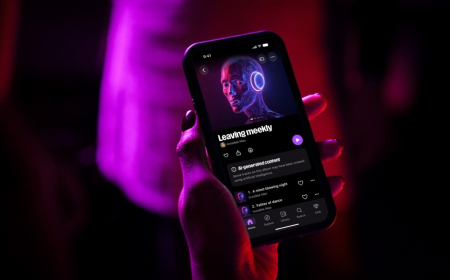
And then there is music. Tools like Suno and Udio let you describe a song in plain language and receive a complete track back, with vocals, lyrics, and instruments, in about 30 seconds. Type “a breakup song in the style of 90s rock” and 30 seconds later you have one. Whether that is exciting or alarming probably depends on whether you are a listener or a musician.
That is the landscape as it actually stands. Not every AI is equally good. Not every company behind them has the same values or safety record. The ones that will matter most to you depend entirely on what you need: writing, code, research, privacy, speed, or creative work. But at least now you know what you are actually choosing between.
What's Your Reaction?
 Like
0
Like
0
 Dislike
0
Dislike
0
 Love
0
Love
0
 Funny
0
Funny
0
 Angry
0
Angry
0
 Sad
0
Sad
0
 Wow
0
Wow
0