
































Amazon Alexa Tablet 12 Pro: Premium Display, Frustrating Software
Amazon Alexa Tablet 12 Pro pairs a 120Hz display and full Android app support with Alexa+, but intrusive software complicates its $499.99 starting price.
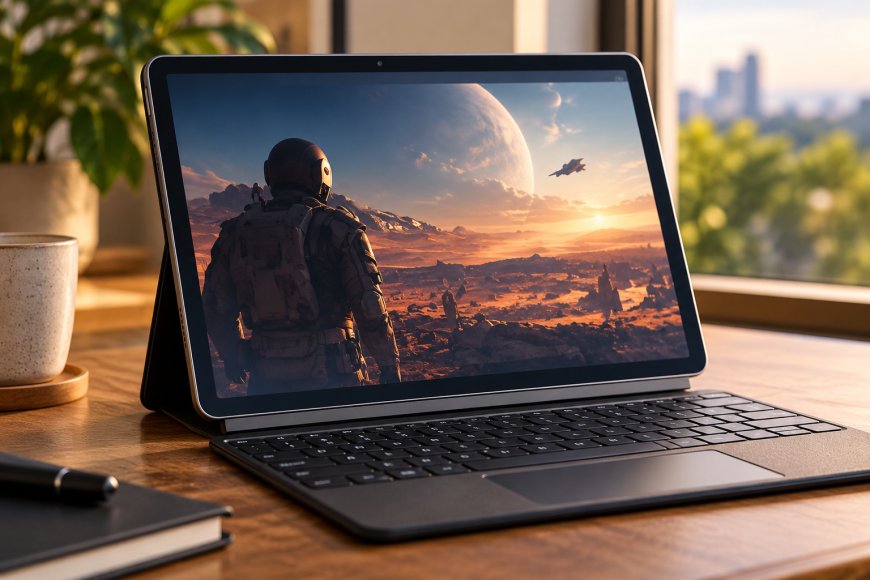
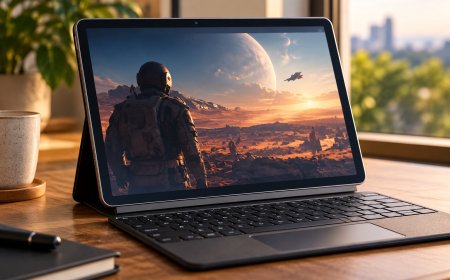
The Amazon Alexa Tablet 12 Pro is a major departure from the company’s inexpensive Fire tablets. Starting at $499.99, it combines a premium aluminium design, a 12-inch display, full Google Play Store access, and deeply integrated Alexa+ features. The most interesting upgrade, however, is an optional Nanomatte screen designed to make reading and viewing content more comfortable in bright environments.
Amazon finally has a tablet with hardware that can compete beyond the budget category. Yet its aggressive promotion of Amazon services creates an awkward contradiction: the company has opened its software ecosystem while making its own applications and recommendations unusually prominent. The result is an appealing entertainment tablet, but its software remains its biggest weakness.
Design and Display: The Nanomatte Advantage
The Alexa Tablet 12 Pro features a 6.5 mm aluminium unibody and a 12-inch LCD with a 2800 x 1840 resolution, 120Hz refresh rate, and 3:2 aspect ratio. That combination makes sense for reading, browsing and working with multiple windows. The taller screen provides more vertical space than a traditional widescreen tablet, while the high refresh rate supports smoother scrolling.
Amazon offers standard and Nanomatte display configurations. The latter costs an additional $50, bringing the starting price to $549.99. Developed with Corning, the Nanomatte technology uses precision-etched glass to reduce reflections while preserving image detail.
Unlike conventional matte coatings that can noticeably soften an image, Amazon’s approach targets glare at a microscopic level. That is particularly useful for reading near windows, working under bright lighting or watching videos outdoors. The trade-off is that the LCD cannot deliver the deep blacks associated with OLED displays, and a matte surface may introduce subtle texture in certain viewing conditions.
The screen is the strongest reason to consider this tablet. Buyers primarily interested in reading, streaming, and web browsing may find the Nanomatte option more valuable than paying extra for processing power they rarely need.
Android Finally Replaces Fire OS
One of Amazon’s most consequential decisions is abandoning Fire OS for its new Alexa Tablet lineup. The Alexa Tablet 12 Pro runs Android with official Google Play Store access, eliminating the application restrictions that made previous Fire tablets less attractive to demanding users.
Applications including YouTube, Gmail, Google Docs and Netflix are available alongside Amazon’s own services. This substantially improves the tablet’s flexibility, particularly for people who want one device for entertainment, communication and occasional productivity.
Unfortunately, the interface still emphasises Amazon’s commercial ecosystem. Preinstalled apps, personalised recommendations, and promotional home-screen elements take up valuable space. Some advertising-oriented widgets are not directly removable through the default launcher, making the experience less customisable than the hardware deserves.
Android provides ways to change the launcher and reduce some of that clutter. Nevertheless, customers spending approximately $500 shouldn’t need to reorganise the interface to get a cleaner home screen. The software feels designed as much to promote Amazon services as to serve the tablet’s owner.
Alexa+ Integration: Useful Features, Questionable Value
Amazon integrates Alexa+ throughout the interface rather than treating it as a separate assistant app. Users can ask questions, control compatible smart-home devices, manage reminders and request help with information displayed on the screen.
According to Amazon’s official tablet announcement, On-Screen Intelligence allows Alexa+ to interpret visible content and provide contextual assistance. It also supports continuous voice conversations, reducing the need to repeat the wake word during a session.
These capabilities have practical potential, but they do not automatically justify making Alexa central to the tablet experience. The assistant is most relevant to people already using Amazon’s smart-home devices and connected services. Users who primarily want conventional Android applications may find its constant presence unnecessary.
Amazon has made screen-sharing features optional, with On-Screen Intelligence disabled by default. This is an important privacy consideration because an assistant that can understand on-screen content needs access to information that may be personal or sensitive.
Performance, Battery Life and Accessories
The Alexa Tablet 12 Pro uses an eight-core processor manufactured on a 4nm process, with configurations offering up to 16GB of RAM. The hardware supports everyday multitasking, streaming, and gaming, though it isn’t meant to rival the processing power of the most powerful premium tablets.
Four Dolby Atmos-compatible speakers and Wi-Fi 6E support its entertainment focus. Amazon advertises up to 16 hours of video playback, while a dedicated Kindle reading experience can extend the manufacturer’s claimed battery endurance to 20 hours under appropriate conditions. Treat these figures as estimates rather than independently verified results.
The reading experience also includes reduced notifications, adjustable display themes, and lower blue-light output. Combined with the Nanomatte screen, these features make the tablet particularly attractive to readers who want a larger colour display without constantly dealing with reflections.
Optional accessories expand its functionality. The $89.99 Pro Pen supports pressure sensitivity, tilt detection and wireless charging, while the $149.99 Pro Keyboard enables more conventional typing and multitasking. Both increase the overall cost considerably, and buyers should consider whether their preferred Android applications take full advantage of a keyboard or stylus.
Pricing and Competition
The standard Alexa Tablet 12 Pro starts at $499.99 with 8GB of RAM and 128GB of storage. The Nanomatte version starts at $549.99, putting Amazon in competition with established midrange and premium tablets rather than its traditional budget alternatives.
That advantage becomes less convincing for customers who do not regularly use Amazon services. Buyers seeking top performance, advanced creative apps, or a more neutral Android experience have good reasons to consider competing tablets before choosing the Alexa Tablet 12 Pro.
Pros and Cons
Pros:
- Excellent display specifications with an optional anti-glare Nanomatte finish.
- Full Android experience with access to the official Google Play Store.
- Thin aluminium construction and a useful 3:2 screen ratio.
- Integrated Kindle reading features and long battery life rated by the manufacturer.
- Optional keyboard and pressure-sensitive stylus support.
Cons:
- Amazon promotions and preinstalled services clutter the interface.
- Alexa+ integration may offer limited value outside Amazon’s ecosystem.
- The performance hardware is less ambitious than on flagship tablets.
- The Nanomatte display costs an additional $50.
- Keyboard and stylus accessories significantly increase the total price.
Final Verdict
The Amazon Alexa Tablet 12 Pro gets several important things right. Its premium construction, smooth display and unrestricted access to Android applications represent substantial improvements over Amazon’s older tablets. The Nanomatte option gives it a particularly compelling identity as a reading and entertainment device.
The problem is that Amazon’s software priorities undermine some of those hardware improvements. An expensive tablet should offer more control over its interface, and Alexa+ doesn’t provide enough universal value to make its prominent integration essential for every customer.
For frequent Kindle readers, Prime Video viewers and Amazon smart-home users, the Alexa Tablet 12 Pro is worth considering, especially with the Nanomatte display. Buyers who prioritise clean software, demanding productivity work or maximum processing performance may be better served elsewhere. Amazon prioritised a much more capable tablet, but its software still prevents the experience from fully matching the hardware’s potential.
What's Your Reaction?
 Like
0
Like
0
 Dislike
0
Dislike
0
 Love
0
Love
0
 Funny
0
Funny
0
 Angry
0
Angry
0
 Sad
0
Sad
0
 Wow
0
Wow
0