




























Acti Launches AI Keyboard That Brings Smart Agents to Every Mobile App
Discover how Acti’s AI-powered keyboard lets users access intelligent agents directly from any app on iPhone and Android. Create custom AI shortcuts, automate everyday tasks, and stay productive without switching between apps.
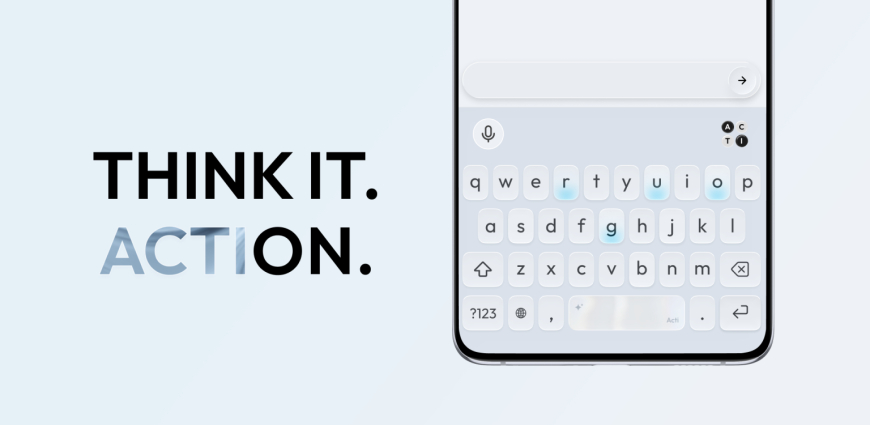
A new startup is aiming to make artificial intelligence part of one of the most frequently used tools on a smartphone: the keyboard.
On Tuesday, Singapore-based startup Acti—short for “action”—introduced an AI-powered keyboard for both iOS and Android devices. Unlike conventional AI keyboards that predict the next word, Acti is designed to perform actions on a user’s behalf, bringing AI assistance directly into the apps people already use every day, including messaging platforms, email, social media applications, and more.
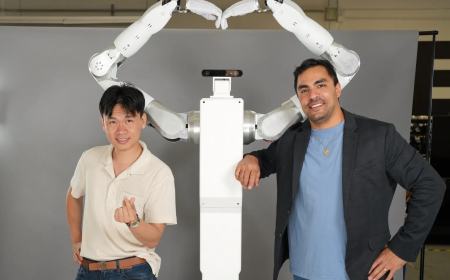
According to Acti founder and CEO Young Wang, the new approach addresses a common frustration among users who constantly switch between multiple applications when they need AI assistance.
“Today’s AI agents are fundamentally limited because user context stays fragmented across separate apps,” Wang explained in an email interview conducted because of time zone differences. Acti, he said, “sits across all of them, which is why we can build a context layer that genuinely belongs to the user instead of the platform. That is the foundation the entire AI-agent era will be built on.”
The product reflects a broader vision of how artificial intelligence may become part of consumers’ daily routines. Instead of requiring users to launch standalone AI chatbot applications, Acti integrates AI directly into the interface people already interact with most—the smartphone keyboard.
For example, if someone asks for restaurant suggestions in a messaging conversation, Acti can instantly recommend nearby dining options without requiring users to leave the chat. Likewise, if a stock symbol appears during a discussion, the keyboard can retrieve and insert the latest market price directly into the conversation. Under the traditional approach, users would need to switch to a browser or AI application, search for the information, and then return to the original conversation, adding unnecessary steps.
Behind the scenes, Acti is powered by Google’s Gemini AI models. Wang said the company selected Gemini because it offers a strong combination of intelligence, speed, multilingual capabilities, reliability, and cost efficiency. Gemini also powers one of Acti’s standout features, known as Skills, which serve as intelligent keyboard shortcuts. Users can assign a single key to automatically perform multi-step actions, such as translating text or instantly inserting a meeting invitation.
Privacy has also been a central focus during development. Acti follows a local-first architecture, meaning a user’s personal context remains stored on the device by default. The company says it does not access or retain private messages, conversations, or other personal information unless users intentionally activate a feature that requires external AI processing.
Wang said the inspiration for building an AI-first keyboard came after spending nearly a decade at Baidu, where he helped grow the company’s Facemoji Keyboard to more than 300 million daily active users.
“When LLMs arrived, I realized something fundamental had changed,” Wang said. “Text was no longer just something people typed; it had become a carrier of intent. And in many everyday contexts, that intent can now be directly translated into action.”
“That made me believe it was time to reinvent one of the most basic and universal products people use every day: the keyboard. For me, the opportunity to rebuild such a foundational surface for the AI era is deeply exciting,” he added.
Acti is still refining its business strategy but plans to generate revenue through subscription plans that will provide access to more advanced AI models, higher daily usage allowances, and additional premium capabilities.
The keyboard already includes several built-in Skills. For instance, long-pressing the letter “T” automatically translates a message into another language, while another shortcut assigned to “C” can instantly generate and share a meeting link.
The company emphasizes that users do not need programming knowledge to create their own Skills. Instead, they describe the desired function using natural language, and Acti automatically builds the workflow. During its early access programme, testers created more than 1,000 custom Skills in under two weeks.
Skills can remain private for personal use or be shared through a public Skills Marketplace, where users can browse creations made by others. Available examples include Skills for accessing real-time FIFA World Cup information, generating Polymarket links, and numerous other automated tasks. Looking ahead, the company believes the marketplace could become an additional monetization opportunity for creators.
Acti also announced that it has secured $5.3 million in seed funding through a financing round led by BITKRAFT Ventures.
“We backed Acti because this team has a real shot at owning the next phase of human-computer interaction,” said Jonathan Huang, partner at BITKRAFT Ventures, commenting on the firm’s investment.
The leadership team also includes Chief Technology Officer Mike Sun, who previously served as the founding technical lead behind Baidu’s Yike Album cloud photo platform, which eventually grew to more than 10 million daily active users. Acti’s Chief Strategy Officer, Junbo Yang, joined the company from HashKey Capital, where he led dozens of investments focused on consumer technology startups.
What's Your Reaction?
 Like
0
Like
0
 Dislike
0
Dislike
0
 Love
0
Love
0
 Funny
0
Funny
0
 Angry
0
Angry
0
 Sad
0
Sad
0
 Wow
0
Wow
0