





































Dario Amodei Says AI Backlash Stems From a Broader Crisis of Trust
Anthropic CEO Dario Amodei says public scepticism toward AI reflects a broader crisis of trust, rather than simply warnings from technology leaders alone.
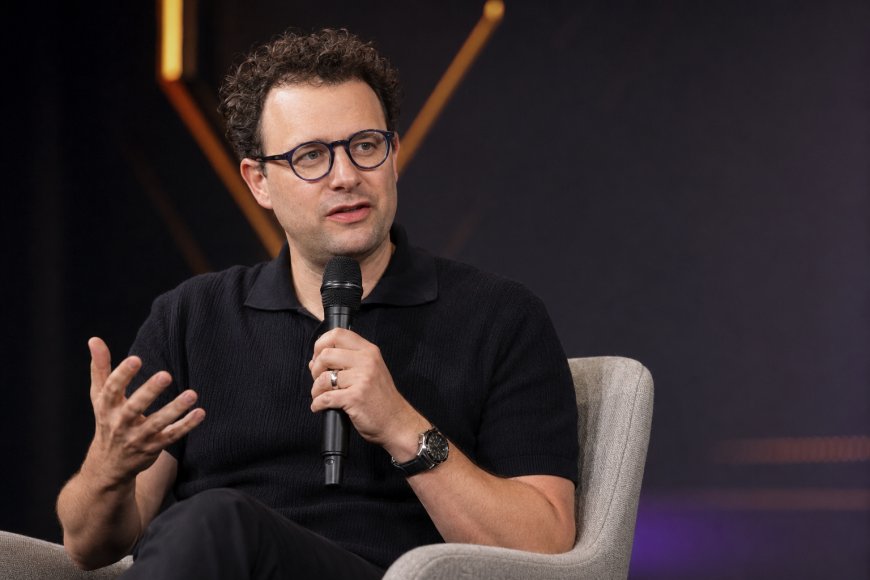
Anthropic CEO Dario Amodei says growing public resistance to artificial intelligence is driven less by warnings from AI executives and more by a broader loss of trust in powerful institutions.
Amodei made the argument after investor Gavin Baker criticised his public messaging around AI risks. Baker said Amodei’s warnings have contributed to negative sentiment toward artificial intelligence in the United States, including opposition to data centre development, and urged him to become a more positive advocate for the industry.
Baker also argued that Amodei had lost the debate over AI regulation. Anthropic has supported some regulatory measures, including transparency requirements for large AI developers in California.
Amodei says AI scepticism goes beyond industry messaging
Amodei rejected the idea that his public comments have focused disproportionately on the dangers of AI. He said his writing has addressed both the potential benefits and the risks of increasingly capable systems.
As an example, Amodei pointed to his essay Machines of Loving Grace, which presented an optimistic view of how advanced AI could improve areas such as health, science and economic development. He said he wrote it partly because he believed the industry had not presented a sufficiently inspiring picture of the technology’s potential benefits.
At the same time, Amodei acknowledged that negative public attitudes toward AI are a serious problem. He disagreed, however, that those attitudes are primarily the result of executives discussing safety concerns.
"I think it is fundamentally a crisis of trust," Amodei said.
He argued that many people already distrust corporations, governments and the technology industry, creating suspicion that new technologies may be used in ways that do not benefit them. In his view, the current backlash against AI is another expression of a much older problem rather than something created by recent debates over artificial intelligence.
Amodei also said AI companies, including Anthropic, deserve criticism for not yet delivering on their largest promises about how the technology will improve society. He suggested that broad claims about AI solving major problems will have limited persuasive power until companies can demonstrate concrete results.
Using cancer treatment as an example, Amodei argued that repeatedly promising AI could help cure cancer is less convincing than actually producing a breakthrough that improves treatment or outcomes.
Anthropic CEO defends targeted AI regulation.
Amodei also challenged Baker’s argument that regulation creates a choice between widely distributed AI systems and a market dominated by a small number of heavily regulated companies.
He said the common Silicon Valley assumption that regulation automatically leads to regulatory capture and greater concentration of power oversimplifies the issue. Outside the technology industry, he noted, regulation is often viewed instead as a way to limit corporate power and protect the public.
Amodei said Anthropic tries to design its policy proposals so that the largest frontier AI developers bear more of the burden. At the same time, smaller competitors are given an advantage rather than pushed out of the market.
That approach reflects Amodei’s broader concern that advanced AI naturally tends to concentrate power. He said open-weight models can reduce that concentration to some extent, but do not fully solve the problem because access to large amounts of computing power and advanced chips remains concentrated.
Amodei argued that carefully designed rules could address several concerns at once. In his view, regulation can reduce cybersecurity, biological, and AI alignment risks, place institutional limits on the most powerful AI companies, and still leave room for open-weight models while addressing risks specific to those systems.
The disagreement between Amodei and Baker ultimately centres on what is driving public resistance to AI and how the industry should respond. Amodei’s position is that stronger marketing alone will not rebuild confidence. For public attitudes to change, he argues, AI companies will have to demonstrate that the benefits they have repeatedly promised can be delivered in practice.
What's Your Reaction?
 Like
0
Like
0
 Dislike
0
Dislike
0
 Love
0
Love
0
 Funny
0
Funny
0
 Angry
0
Angry
0
 Sad
0
Sad
0
 Wow
0
Wow
0