


































Best Pocket Alternatives: 16 Read-It-Later Apps to Try
Looking for Pocket alternatives after the 2025 shutdown? Instapaper, Matter, Raindrop.io, Readwise Reader, Folio and others offer ways to save and read later.
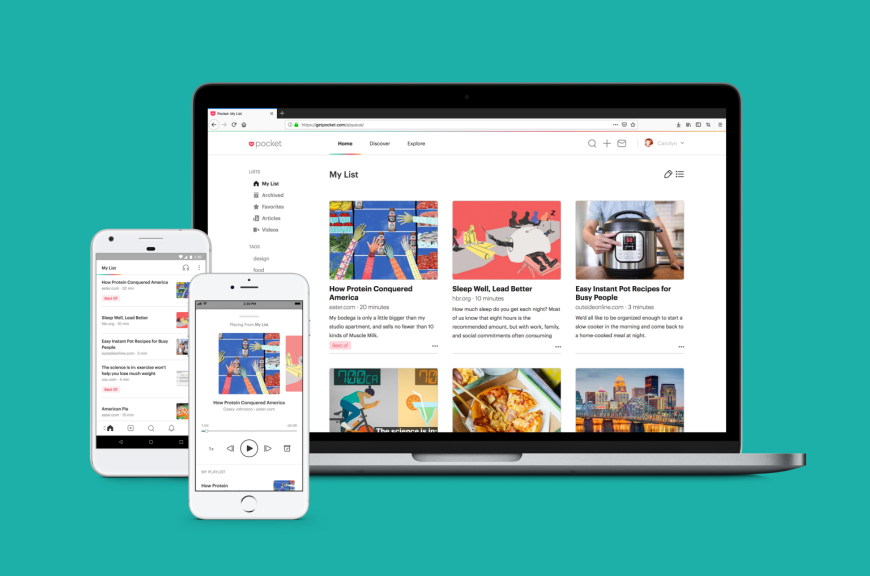
Mozilla shut down Pocket in July 2025, ending one of the web’s best-known services for saving articles and other content to read later. Former users still have plenty of choices, but the alternatives increasingly differ in what they are designed to do, from simple article saving to research, bookmarking and AI-assisted knowledge management.
Pocket users had a limited period after the shutdown to export their libraries. Mozilla ultimately disabled data exports on November 12, 2025, meaning anyone choosing a replacement now will generally be starting a new library unless they previously moved their Pocket archive elsewhere.
Best Pocket alternatives for traditional read-it-later use
Matter
Matter combines a conventional read-it-later library with newsletters, feeds and support for other media. It is available on Apple devices and through browser extensions, and it can turn podcasts and YouTube content into text for reading.
The basic service is free, while Matter Premium currently costs $60 per year. Paid features include improved text-to-speech, highlighting and notes, full-text search, personalisation, and integrations. Matter has also introduced AI features that help users ask questions about the material as they read.
Instapaper
Instapaper remains one of the closest replacements for people who primarily used Pocket to save articles and videos. Created by Marco Arment in 2008, the service supports iOS and Android and allows users to build a reading library without requiring a paid subscription for basic saving.
Its premium tier adds features aimed at heavier readers, including notes, permanent article archiving, full-text search, text-to-speech playlists and Kindle delivery. Instapaper also offered a direct migration option for Pocket users while Pocket exports were still available.
Folio
Folio may feel particularly familiar to former Pocket users because its creator, Nick Chapman, previously worked as Pocket’s head of product. The cross-platform app keeps its interface focused on saved reading rather than turning the experience into a complicated productivity system.
Users can filter articles by categories such as favourites, tagged items, short reads and long reads. Articles can be added through a browser extension, share sheet or URL, while features including text-to-speech, highlights, custom fonts and full-text search are also available.
PaperSpan
PaperSpan takes a simpler approach, offering a synchronised reading list across devices with notes and text-to-speech. It is available for both iOS and Android.
Its limited development activity is worth considering for anyone looking for a service they expect to use for years to come. The app still works, but people building a large, long-term reading archive may prefer a service that receives more frequent updates.
Alternatives that focus on bookmarks and organisation
Raindrop.io
Raindrop.io is closer to an advanced bookmark manager than a dedicated Pocket clone, making it useful for people who save more than articles. It supports web pages, PDFs, videos and other online material, with apps and extensions available across major platforms.
The free service supports unlimited bookmarks, collections and devices. More advanced capabilities include full-text search, archived copies of saved pages, reminders, duplicate link detection, file storage, and tools for organising large collections.
Plinky
Plinky, created by former Twitter engineer Joe Fabisevich, is designed to save almost any type of link, including articles, videos, recipes, and memes. It is available across Apple’s platforms and through browser extensions.
Folders, tags and reminders make it more useful for people who want to organise their saved links rather than maintain a reading queue. A limited free tier is available, with paid plans removing restrictions on saved links, folders, tags and reminders.
Dewey
Dewey follows a similar “save everything” model but puts more emphasis on social content. It can collect links, videos and images from services including X, TikTok, Bluesky, Threads, Reddit, Instagram and LinkedIn.
Its organisational features include folders, tags, AI-assisted bulk tagging, export tools and automatic Notion syncing. That makes Dewey a better fit for users collecting research or social posts than for someone who only wants a clean article reader.
Karakeep
Karakeep is an open-source bookmarking service that lets users save links, notes and images. AI-powered tagging can automatically organise saved items, while full-text search, lists and bulk actions help manage larger collections.
The service offers mobile apps and browser extensions, making it another option for users who prefer a broader bookmarking system to a traditional read-it-later queue.
Best options for researchers and heavy readers
Readwise Reader
Readwise Reader is built for people who do more with saved material than read it once. It can collect articles, RSS feeds, PDFs, YouTube videos and social content while offering extensive highlighting and annotation tools.
Its integration with Readwise allows highlights to flow into knowledge-management services including Obsidian, Notion, Roam Research, Evernote and Logseq. Reader also offers full-text search and AI-assisted reading features offline.
The service includes a 30-day free trial. After that, Readwise with Reader costs $9.99 per month when billed annually, and more when billed month-to-month.
Obsidian Web Clipper
Obsidian’s Web Clipper is useful for people who already manage notes or research in Obsidian. The open-source browser extension can capture whole pages or selected text, images and other elements directly into an Obsidian vault.
Templates allow different types of pages to be stored in different ways. An article can retain citations and footnotes, for example, while a recipe can be captured with its ingredients and instructions organised separately.
Recall
Recall takes a more AI-focused approach. It can save articles, PDFs, podcasts, Wikipedia pages, YouTube videos and other material, then generate summaries and automatically categorise what has been collected.
Instead of treating saved content as a passive archive, Recall resurfaces related information as users learn about new subjects. It also uses spaced repetition to help users revisit material from their personal knowledge base.
Omphalis
Omphalis extends the read-it-later concept beyond written articles. Users can save documents, podcasts, and videos, with the service using AI to generate summaries, key points, and chapter-like structures to make longer material easier to consume.
A free tier provides limited AI processing and transcription, while paid plans increase those limits and add features such as recaps and read-along tools.
Open-source and privacy-focused Pocket replacements
Wallabag
Wallabag is one of the more established open-source read-it-later options. It works on the web, iOS, and Android and supports offline article reading, highlighting, and tags.
One of its strengths is data portability. Libraries can be exported in formats including PDF, ePUB, MOBI, JSON, CSV,, TXT and HTML, reducing the risk of being locked a singleo one service. Wallabag can be self-hosted, or users can subscribe to a hosted service if they do not want to manage their own server.
Readeck
Readeck is another open-source option built around saving web content for later. It supports articles, videos and images, along with highlighting, e-book exports and saved video transcripts.
The service works with a browser extension and can be self-hosted, making it particularly attractive to users who want more control over where their saved library lives.
DoubleMemory
DoubleMemory is an independent option aimed at Apple’s ecosystem. On a Mac, users can save content with a shortcut and browse their collected material through a visual, tile-based interface.
The app supports offline reading and search across text, notes and tags. It does not require an account to get started and can synchronise content across Apple devices using iCloud.
Apps that rethink the read-it-later queue
Burn 451
Burn 451 targets one of the biggest problems with read-it-later apps: users often save far more than they ever read. Instead of letting the queue grow indefinitely, the service sets a deadline for saved articles.
Users must read or tag an article within 24 hours, or the item is deleted. That makes Burn 451 a deliberately aggressive alternative for people who want to break the habit of building enormous unread archives. It is available on the web and iOS.
Which Pocket alternative makes the most sense?
There is no single replacement that recreates every part of Pocket. Instapaper and Matter are among the closest choices for people who mainly want to save and read articles, while Folio offers a particularly familiar, streamlined approach.
Raindrop.io, Plinky, Dewey and Karakeep make more sense for users who want to collect many kinds of links. Readwise Reader, Recall and Obsidian Web Clipper are stronger options for research and knowledge management, while Wallabag and Readeck give users greater control through open-source software.
The shutdown of Pocket has ultimately pushed the read-it-later category in several directions. Choosing a replacement now depends less on finding another identical Pocket and more on deciding whether the priority is distraction-free reading, long-term archiving, research, AI assistance, or simply keeping saved links organised.
What's Your Reaction?
 Like
0
Like
0
 Dislike
0
Dislike
0
 Love
0
Love
0
 Funny
0
Funny
0
 Angry
0
Angry
0
 Sad
0
Sad
0
 Wow
0
Wow
0