



























Former Datadog Executives Launch Niteshift to Challenge AI Platform Lock-In
Niteshift, an AI coding startup founded by former Datadog veterans, aims to help developers avoid dependence on a single AI provider. The company is building tools that offer greater flexibility, model choice, and control over AI-assisted software development.
AI coding startup Niteshift has raised $7 million in a seed funding round led by Greylock partner Jerry Chen. While the raise is modest by current AI standards, the company has attracted a notable group of angel investors, including Reid Hoffman, Datadog co-founders Olivier Pomel and Alexis Lê-Quôc, Braintrust founder Ankur Goyal, and Reflection AI’s Misha Laskin.
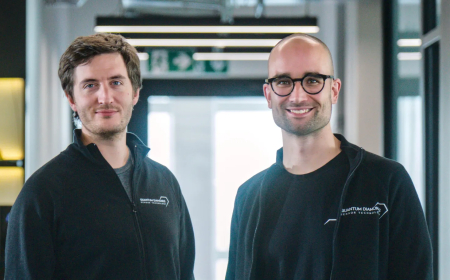
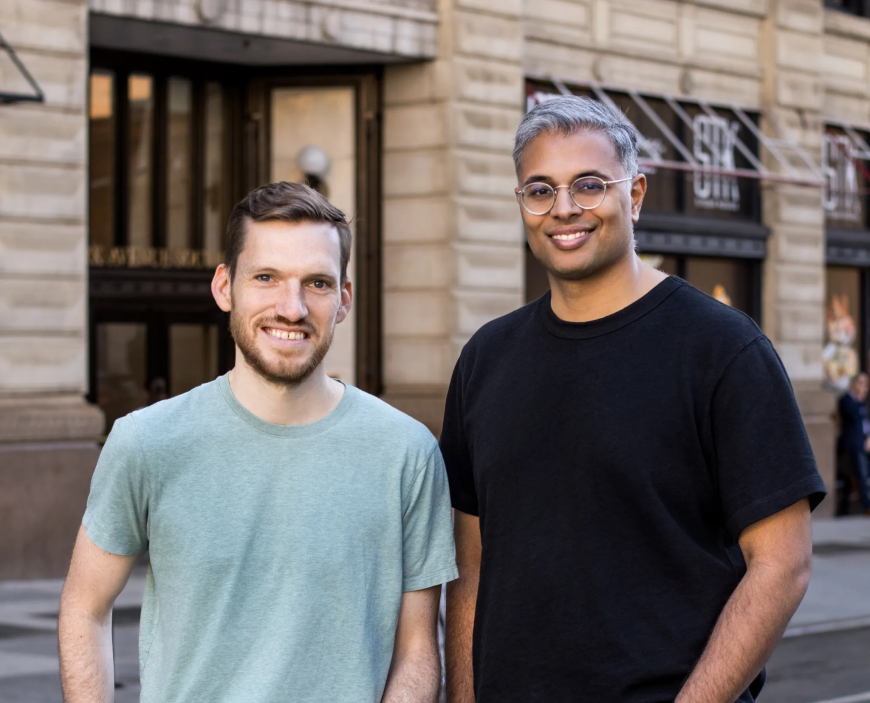
Founded by former Datadog engineers Sajid Mehmood and Conor Branagan, who helped grow Datadog from its early startup days into a multibillion-dollar company, Niteshift is entering the crowded AI coding market with a different perspective. The founders question whether enterprises should rely entirely on AI model providers such as OpenAI and Anthropic to manage some of their most valuable assets — the code that powers their products and services.
Mehmood, who serves as CEO, compares the current situation to Datadog’s early growth years. At the time, many e-commerce companies preferred not to build exclusively on Amazon Web Services because Amazon was also competing with retailers through its own marketplace business.
“At Datadog, we saw this clearly,” Mehmood said. “A big part of our multicloud business came from e-commerce businesses that did not want to run on Amazon. We are absolutely going to see the same dynamic as Anthropic goes to compete in legal, healthcare, finance, and whatever else.”
According to Mehmood, the AI industry is already experiencing a similar trend. Companies such as OpenAI and Anthropic are increasingly expanding into software categories that have traditionally been served by startups and SaaS vendors, creating concerns among businesses about becoming too dependent on a single provider.
Niteshift’s core bet is that enterprises will want infrastructure that separates coding models from the orchestration, testing, governance, and maintenance systems required to manage AI-generated software safely. The company also believes customers may prefer vendors whose business interests do not overlap with their own.
To be clear, Niteshift is not trying to replace popular coding agents such as Claude Code or Codex. Instead, it aims to provide a layer that reduces dependence on any one model provider.
Its AI coding cloud automatically routes workloads across models, including Claude, GPT models, open-source alternatives, and other options, based on the needs of a specific project.
“Being able to switch between GPT and Claude models is important,” Mehmood said. “Everybody’s worried about getting stepped on by these giants.”
That flexibility is what convinced Greylock’s Jerry Chen to invest.
“As the frontier labs move up the stack, there’s an opportunity to offer customers an alternate path: unbundling their agents from the infrastructure they run on,” Chen said. “Niteshift is building the platform that enables this for coding agents, letting customers invest deeply in their developer tooling without locking themselves into a single model or agent vendor.”
Another aspect of Niteshift’s strategy is its business model. Rather than selling AI tokens, the company positions itself as an infrastructure provider, charging customers based on usage, more akin to cloud computing services.
“Everybody else is selling labour-replacementintelligence,” Mehmood said. “We’re selling software to agents, as opposed to humans — but we’re still out here selling software.”
Despite its differentiated approach, Niteshift faces intense competition. The AI coding sector already includes major players such as Cursor, Cognition, Amazon Bedrock, and OpenRouter. Many of those companies have significant funding advantages and established user bases. Cognition recently raised $1 billion at a reported $26 billion valuation, while OpenRouter secured $113 million at an approximately $1.3 billion valuation.
Mehmood argues that Niteshift’s biggest advantage is its founding team’s experience. He and Branagan spent years helping Datadog solve the challenges of operating large-scale engineering environments and believe those lessons are increasingly relevant in the age of AI-generated code.
According to Mehmood, organisations need systems capable of running, testing, validating, and maintaining software autonomously in production environments. Building that infrastructure requires practical experience operating software at scale rather than simply generating code.
With fresh funding and support from prominent technology investors, Niteshift is betting that enterprises will increasingly prioritise flexibility, governance, and model independence as AI coding tools become more deeply embedded in software development workflows.
What's Your Reaction?
 Like
0
Like
0
 Dislike
0
Dislike
0
 Love
0
Love
0
 Funny
0
Funny
0
 Angry
0
Angry
0
 Sad
0
Sad
0
 Wow
0
Wow
0