



































Lululemon Invests in Syntetica's $30M Series A to Expand Nylon Recycling Technology
Lululemon has joined Syntetica’s $30 million Series A funding round to help scale advanced nylon recycling technology, supporting circular fashion and sustainable textile manufacturing.
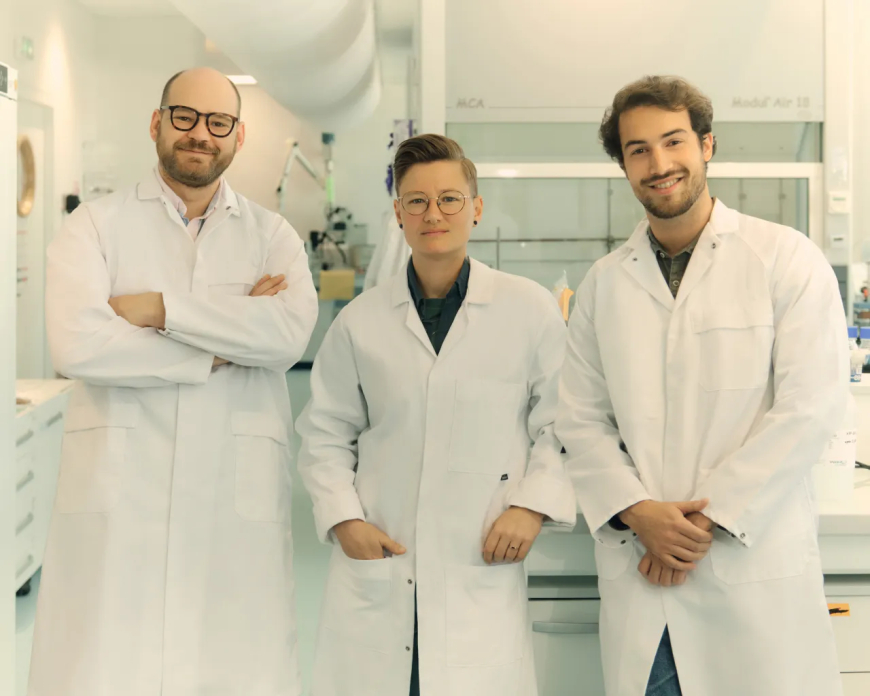
Activewear brand Lululemon has participated in the $30 million Series A funding round raised by French startup Syntetica, a company developing an innovative recycling process for nylon—one of the textile industry’s most durable yet difficult-to-recycle materials.
Syntetica says its technology can recycle both Nylon 6 and Nylon 6,6, two widely used forms of nylon that are notoriously difficult to separate once mixed in post-consumer textile waste. According to CEO Marco Bertone, solving that sorting challenge is one of the company’s biggest technological breakthroughs.
As millions of tons of clothing continue to end up in landfills each year, fashion companies are increasingly investing in circular manufacturing solutions, driven both by growing consumer demand for sustainability and stricter environmental regulations. Bertone also pointed to recent instability in nylon pricing as another factor accelerating industry interest.
Over the past six months, geopolitical disruptions affecting the oil market have caused nylon prices to fluctuate sharply, forcing quarterly and even weekly pricing negotiations, Bertone said. He explained that many apparel brands that traditionally depended on petroleum-based nylon are now experiencing significant cost uncertainty.
According to Bertone, those market conditions align well with Syntetica’s business strategy.
“We built the company knowing there is no green premium,” he said. “If sustainable solutions are going to scale globally, they must remain cost-competitive, highly scalable, and supported through strong partnerships from the very beginning.”
The startup has already established relationships with apparel companies including Lululemon, Victoria’s Secret, and Etam, where one recycling initiative is expected to reach the commercial market early next year. Syntetica’s latest funding round also attracted investment from major apparel manufacturer MAS Holdings, which Bertone described as further evidence of the growing importance of textile recycling across the supply chain.
Investment from manufacturing companies at such an early stage remains relatively uncommon. Before completing its Series A, however, Syntetica had already partnered with Michelin’s Centre for Sustainable Materials to build a commercial demonstration facility in Clermont-Ferrand. In this French city, Michelin is headquartered.
Unlike many companies working in sustainable textiles, Syntetica does not plan to manufacture fabrics or develop new textile materials. Instead, its recycling technology produces high-quality nylon pellets that can be supplied to yarn manufacturers and textile producers such as MAS Holdings.
Bertone described the company’s strategy as building practical industrial partnerships across the entire supply chain rather than competing with existing manufacturers.
Before launching Syntetica, Bertone worked in the fashion industry and secondhand e-commerce. Through Entrepreneurs First’s startup accelerator at Paris-based Station F, he met chemistry researcher Louis Monsigny. The pair later continued to develop the company in Reims, where they used laboratory facilities at AgroParisTech.
The company has since strengthened its leadership team by appointing Ash Ward as chief technology officer. Ward previously worked at battery manufacturer Northvolt, while Northvolt co-founder Peter Carlsson now serves as one of Syntetica’s advisers.
Bertone believes that having experienced leaders who understand the realities of scaling industrial technology helps the company strike the right balance between innovation and risk.
“As a startup, we have to be comfortable taking more risks than established industrial companies; otherwise, innovation doesn’t happen,” he said. “But there is a limit. If you try to manage too many risks at the same time, the complexity quickly becomes overwhelming.”
For that reason, Syntetica is remaining focused on nylon recycling rather than expanding into additional materials or industries for now.
The company’s immediate objective is to use its new funding to demonstrate that it can consistently produce hundreds of tons of recycled nylon pellets annually and supply them to customers throughout the textile manufacturing chain. Bertone said that once this milestone is achieved, Syntetica plans to establish recycling facilities in multiple regions worldwide, positioning them close to both textile waste sources and manufacturing centres.
Although Syntetica has global ambitions, Bertone said being headquartered in France has provided valuable support. The Series A was led by the Ecotechnologies 2 fund, managed by Bpifrance’s Green Venture team as part of France’s national France 2030 investment strategy. The startup has also received backing from the European Innovation Council through equity investments, grants, and accelerator initiatives.
These public investments reflect broader efforts to strengthen Europe’s industrial capabilities while reducing dependence on fossil fuel-based materials. Alongside public funding, Syntetica has also secured support from private investors including EQT Ventures, SWEN Capital Partners, and several family offices.
Competition in nylon recycling continues to grow. Some companies are pursuing enzyme-based technologies that break down plastics biologically, while chemical giant BASF has developed its own recycled nylon products.
Despite the increasing competition, Bertone believes the industry requires multiple successful companies to meet global demand. “If every company in this sector scaled to dozens of factories, we still wouldn’t completely solve the problem,” he said. “Everyone needs to succeed if society is going to succeed.”
Lululemon has also invested in several other textile recycling startups in recent years, including Epoch Biodesign and Samsara Eco, as it continues expanding its sustainable materials strategy.
What's Your Reaction?
 Like
0
Like
0
 Dislike
0
Dislike
0
 Love
0
Love
0
 Funny
0
Funny
0
 Angry
0
Angry
0
 Sad
0
Sad
0
 Wow
0
Wow
0