


































Charles Hudson Highlights Fundraising Mistakes Startup Founders Should Avoid
Charles Hudson explains the fundraising mistakes that startup founders should avoid, including valuation, investor selection, and the current venture capital landscape.

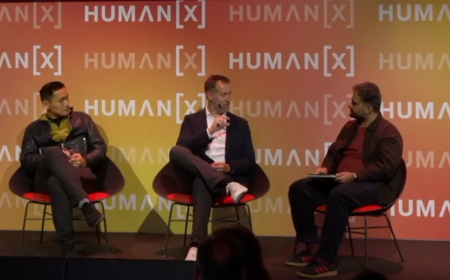
Early-stage fundraising has become significantly more challenging, and startup founders need to rethink their approach to venture capital, according to Charles Hudson, founder and managing partner of Precursor Ventures. Speaking during a recent episode of Build Mode, Hudson shared lessons drawn from investing in more than 500 startups and explained why founders should avoid chasing fundraising trends that may not fit their long-term goals.
Hudson said today’s investment environment requires entrepreneurs to be more deliberate about every financing decision. Instead of focusing solely on raising the largest possible round, founders should carefully consider how funding decisions will shape their companies for years to come.
Precursor Ventures is an early-stage venture capital firm that has invested in hundreds of startups across multiple technology sectors.
Startup Valuations Should Match Long-Term Business Goals
One of Hudson’s biggest concerns is that many founders prioritise securing high company valuations without fully understanding the long-term consequences.
While a larger valuation can generate media attention and create confidence among potential investors, Hudson believes founders should evaluate whether the expectations attached to those valuations are realistic. The investors they add to their cap table will remain important partners throughout the company’s journey, making compatibility just as valuable as the size of an investment.
“The real risk with these big rounds is you end up being a prisoner of your own company. You raise all this money, and you’ve sold people on a big vision. They don’t want the money back. They want you to find a way to build something worthy of what they gave you,” Hudson said.
Rather than accepting every large investment opportunity, founders should determine whether an investor is the right long-term partner before completing a funding round.
Investors Should Also Be Evaluated
Hudson emphasised that fundraising is not a one-sided process. While venture capital firms assess startups, founders should also conduct thorough research on potential investors.
He encouraged entrepreneurs to speak with founders already backed by a venture capital firm to understand better the support those investors actually provide. Recruitment assistance, go-to-market guidance, introductions to customers, and access to broader platform teams should all be verified rather than accepted at face value.
According to Hudson, founders should remember that investors are competing for promising startups just as startups are seeking investment.
Listeners interested in additional conversations about valuations and investor selection can find more discussions through Build Mode. A future episode will feature Andrew Dai, co-founder and CEO of Elorian, discussing the company’s reported $30 million valuation before raising a pre-seed round.
Venture Capital Is Not the Right Path for Every Startup
Hudson also stressed that venture capital is not suitable for every business model.
Many successful businesses can grow sustainably without venture funding, whereas venture-backed companies are generally expected to deliver returns sufficient to support an entire investment fund. Entrepreneurs should decide whether those expectations align with the type of company they truly want to build.
“I’ve been more successful lately in telling people, ‘This is what venture capital needs you to do. Let’s abstract away from your company. This is the kind of business you need to want to build. Is that your desire?’ Hudson said.
He suggested founders separate personal ambitions from investor expectations before pursuing venture financing.
The Fundraising Landscape Has Changed
Hudson noted that venture capital has evolved dramatically over the past several years. Investors now compare startups not only with previous generations of companies but also with some of the fastest-growing artificial intelligence businesses in history.
As a result, companies demonstrating strong year-over-year growth may still struggle to meet investor expectations if they cannot match the extraordinary pace seen across leading AI startups.
“They’re doubling, they’re tripling, they’re quadrupling, and the message they’re hearing from the market is that’s good but not great,” Hudson said.
The current season of Build Mode explores topics affecting startup founders throughout the fundraising process. Episodes cover venture capital, bootstrapping, crowdfunding, term sheets, and practical pitching advice, while featuring investors and entrepreneurs who are building or exiting technology companies.
New episodes of Build Mode are released every Thursday across major podcast platforms and YouTube.
What's Your Reaction?
 Like
0
Like
0
 Dislike
0
Dislike
0
 Love
0
Love
0
 Funny
0
Funny
0
 Angry
0
Angry
0
 Sad
0
Sad
0
 Wow
0
Wow
0