






























Cognition CEO Scott Wu Says AI Coding Agents Are Meant to Assist, Not Replace Developers
Cognition CEO Scott Wu believes AI coding agents can improve software development productivity, but human engineers remain essential for creativity, decision-making, and oversight in the coding process.
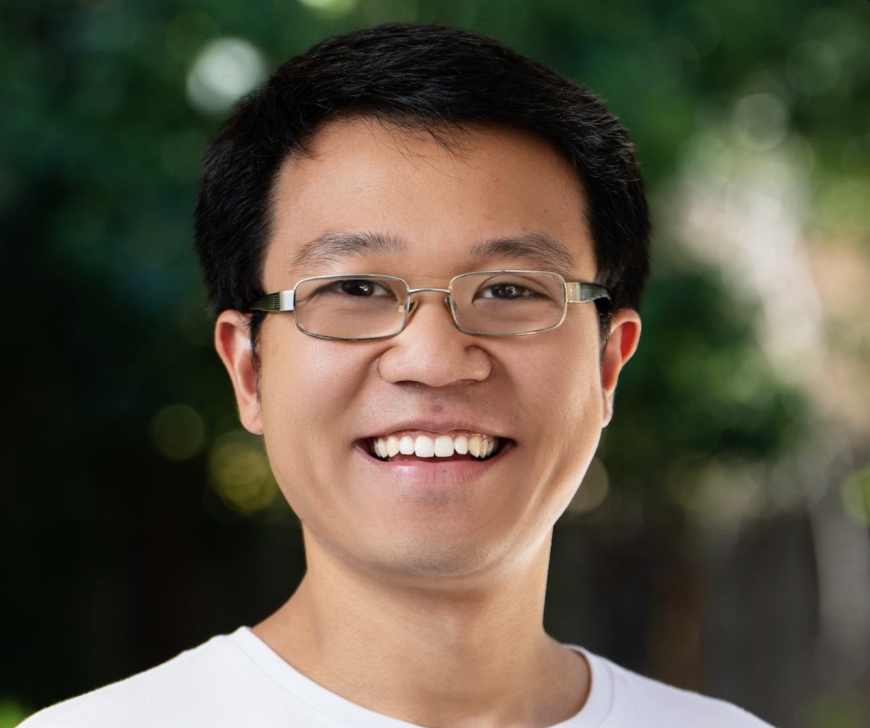
Cognition CEO Scott Wu was back in the spotlight this week after his two-year-old AI coding startup secured $1 billion in funding at a valuation of $26 billion. Cognition is best known for Devin, one of the earliest and arguably most successful AI coding agents available today. According to Wu, Devin is designed to “naturally own tasks end to end.”
In the company’s announcement detailing the latest funding round, Cognition also outlined its vision for a future in which software development becomes increasingly autonomous, describing the transition as a move toward “self-driving software development.”
That naturally raises questions about whether a tool like Devin could eventually replace a mid-level software engineer. Wu’s answer is both yes and no.
“We’ve never thought about it as replacing humans,” Wu said. “People talk about those scenarios, but that has never been our perspective.”
At a time when technology leaders frequently announce workforce reductions while embracing AI-driven automation, Wu insists that eliminating programming jobs is not the company’s objective. “We are programmers ourselves,” he explained. “I started coding when I was nine years old.”
Wu’s reputation as a highly accomplished competitive programmer dates back to childhood. According to a recent profile by Colossus, he won a national mathematics competition intended for seventh-grade students while still in second grade. That achievement helped launch years of participation in mathematics and programming contests and introduced him to other exceptionally talented young technologists, including Scale AI founder Alexandr Wang.
Because of that background, Wu says the original goal behind Devin was never to make human software developers obsolete.
“When we started building Devin, it’s kind of a funny thing,” he reflected, “but we really just thought of it as your buddy who helps you build more.”
To illustrate the idea, Wu showed off a small stuffed toy sitting on his desk—a teddy bear-like figure holding a computer that he associates with Devin. For him, it represents an AI coding companion that helps people create more software rather than replacing them.
Wu also believes it is important that AI does not remove the enjoyment developers get from programming.
“It’s not a secret that most software engineers genuinely enjoy building software,” he said. “If you ask them why, they’ll usually tell you it’s because they can take an idea, create something from nothing, and turn it into a real product or experience.”
In his view, AI agents represent the next stage in a long history of abstraction within software development. Just as visual development tools reduced the need to work directly with low-level machine instructions, AI agents add another layer between a product’s idea and its implementation.
At the same time, Cognition has acknowledged that Devin plays a major role within its own organisation. The company says nearly all of its software development work is now handled by AI systems. According to Cognition, 89% of code committed by its engineers is generated through Devin. In contrast, the remaining code is produced by local agents operating within Windsurf, the AI coding platform the company acquired last year.
Wu explained that Devin primarily focuses on maintenance and repetitive tasks that many developers would rather avoid. These include updating legacy software, migrating applications between platforms, and handling other long-tail engineering work.
According to Wu, agents allow programmers to spend less time on routine maintenance and more time creating new products and experiences.
For that reason, he pushes back against the idea that Devin is replacing human developers. While he acknowledges that the system can work independently, he estimates its performance currently falls somewhere between that of a junior engineer and a mid-level engineer, depending on the specific task.
As for the broader vision of self-driving software development—where AI systems continuously improve themselves and eventually operate at increasingly advanced levels—Wu believes the future could be transformative.
“I think we are in for a wild ride,” he said.
Beyond software development, Wu expects AI agents to expand into many other industries, including customer service and healthcare. Even then, he hopes the technology will be used primarily to enhance human capabilities rather than eliminate human roles.
“Software and coding were simply the first areas to move in this direction, but we’ll see the same thing happen across many industries,” Wu predicted. “One thing that has been clear to us from the beginning is that the human should always remain in control. You can see that in software engineering today, and I think it applies just as much to every other profession.”
What's Your Reaction?
 Like
0
Like
0
 Dislike
0
Dislike
0
 Love
0
Love
0
 Funny
0
Funny
0
 Angry
0
Angry
0
 Sad
0
Sad
0
 Wow
0
Wow
0