


















Former Ultrahuman Hardware Executive Secures $5.5M to Develop AI Agent Control Devices
Former Ultrahuman hardware executive Apoorv Shankar’s startup, Aina, raises $5.5 million to build AI-native devices that help users control AI agents and automate workflows using context-aware hardware.
The race to create the next generation of AI hardware interfaces is becoming increasingly competitive, with startups experimenting with everything from smart rings and AI pins to glasses and compact controllers. Devices such as the Sandbar ring, Plaud’s AI pin and desktop note-taking products, and Pocket’s credit card-sized AI pucks are all designed to capture how users communicate and interact. Other companies, including Bee and Friend, are focusing on wearables, while Meta Ray-Bans and Even Realities continue betting on smart glasses. Now, Bengaluru- and San Francisco-based startup Aina—whose name means “mirror” in Hindi—is entering the growing market with its own approach to human-computer interaction.
The company announced on Thursday that it has secured $5.5 million in a funding round led by Redstart Labs (Info Edge India) and 360 ONE. Additional backing came from MIXI Global Investments, Antler, and the Blume Founders Fund.
The financing round also attracted several prominent angel investors, including newly appointed WhatsApp head Kunal Shah, Razorpay co-founders Harshil Mathur and Shashank Kumar, and Scribd founder Tikhon Bernstam.
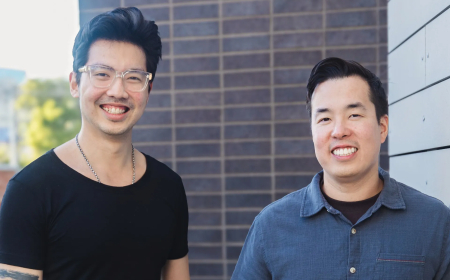
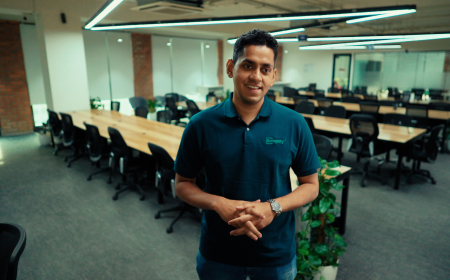
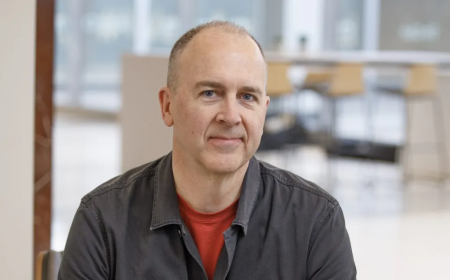
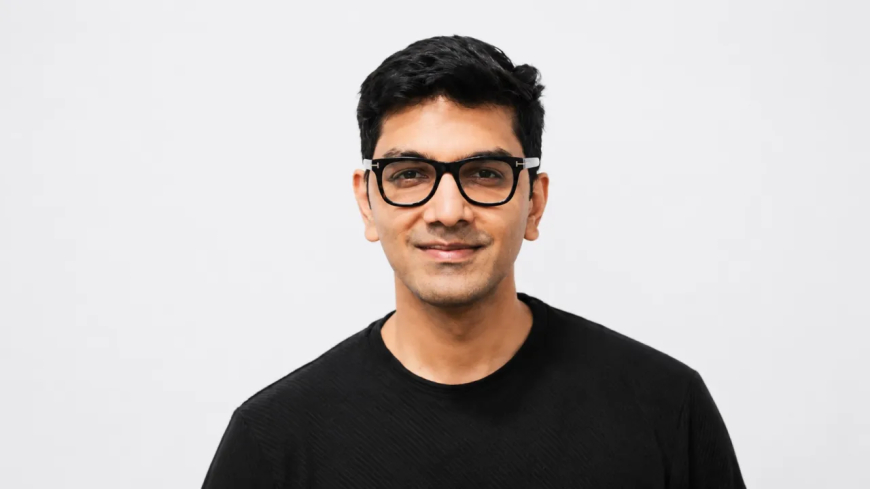
Previously operating under the name Project Mirage, Aina was founded by Apoorv Shankar, who formerly served as Vice President of Hardware at smart ring company Ultrahuman. Before joining Ultrahuman, Shankar founded LazyCo, a hardware interface startup that developed gadgets, including a smart ring capable of controlling smartphones. Ultrahuman later acquired LazyCo, bringing Shankar into the company before he eventually departed to launch his latest venture.
“I left Ultrahuman last year because I was just super curious about the space of AI interfaces,” Shankar said. “Devices like Rabbit and Humane Pin had launched, and I had my own disappointments with them. I’m excited we are seeing interfaces now. And as an engineer turned product designer, this was the hottest thing I could imagine myself building.”
Aina’s first commercial product is called Dune, a compact three-key, context-aware macro keyboard that functions as a programmable keypad. It can control a microphone and camera during video meetings while also executing predefined shortcuts or scripts depending on the application currently being used.
Alongside Dune, the company also developed two additional hardware concepts. Radiance is a tabletop controller for video conferencing that includes a volume dial and dedicated buttons for microphone controls, camera settings, AI note-taking, voice modulation, and joining meetings. The second device, called Shift, is a single-tap “agentic” button that connects to a smartphone and triggers an AI agent to perform repetitive tasks with a single press.
During early product testing, however, Aina found that users showed the strongest preference for Dune. The company concluded that many of the capabilities offered by Radiance and Shift could eventually be integrated into the keypad itself. That customer feedback ultimately led Aina to prioritise Dune as its first commercial product while gathering real-world insight into which tasks people actually want AI to automate.
According to the company, lessons learned from all three devices will influence the development of its next hardware product. Although Aina has not disclosed details about the upcoming device, it plans to begin testing it with a select group of users over the next few weeks.
Shankar suggested that the new product will move away from passive context-capturing devices, such as always-listening smart rings or AI meeting recorders like Plaud, and instead focus on giving users more direct control over AI agents.
“I think you have enough context; you have it on your phone and your laptop all the time, and we haven’t even started using that well. We are building an action-oriented device that will use the context to help you control and trigger workflows,” he said.
As AI coding platforms such as Claude Code and OpenAI’s Codex become increasingly popular among developers and knowledge workers, demand has also grown for hardware specifically designed to launch and manage AI agents. Earlier this week, OpenAI introduced a custom keypad for Codex developed in collaboration with Work Louder. The market also includes numerous alternatives, ranging from specialised keyboard manufacturers to independent developers creating their own programmable macro controllers.
Meanwhile, reports suggest that OpenAI is also working on a smart speaker featuring a built-in AI assistant, while Rabbit R1 continues positioning itself as a dedicated AI agent device. Qualcomm has also said it is experimenting with more than 40 different hardware concepts for interacting with AI. With no single form factor yet emerging as the industry standard—whether rings, pins, glasses, keypads, or speakers—the sector is expected to see a continued wave of new devices and funding as companies compete to define what the future of AI interaction will ultimately look like.
What's Your Reaction?
 Like
0
Like
0
 Dislike
0
Dislike
0
 Love
0
Love
0
 Funny
0
Funny
0
 Angry
0
Angry
0
 Sad
0
Sad
0
 Wow
0
Wow
0