




































AMI Labs CEO Rejects AGI Label as Startup Focuses on Real-World AI
AMI Labs CEO Alexandre LeBrun says terms like AGI and superintelligence lack clear definitions as the startup focuses on world models for robotics and physical AI.
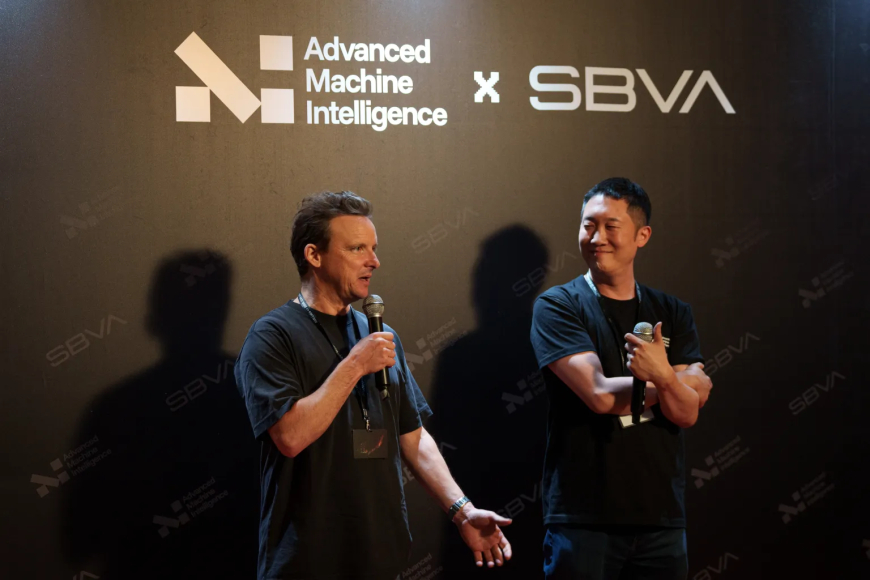
AMI Labs Chief Executive Officer Alexandre LeBrun is deliberately distancing his company from the artificial intelligence industry’s growing obsession with terms such as “artificial general intelligence” (AGI) and “superintelligence.” While many leading AI companies describe their latest systems with these labels, LeBrun believes they lack clear definitions and offer little value in discussing real technological progress. Instead, he says AMI Labs is focused on building AI systems that can better understand and interact with the physical world.
AMI Labs, co-founded by Turing Award winner Yann LeCun after he departed from Meta, is developing what are known as world models. Unlike large language models (LLMs), which are designed to predict the next word or text sequence, world models are built to predict how physical environments change over time. The company is still pre-product, but it has already begun working with partners in robotics, manufacturing and electronics as it develops its technology.
According to LeBrun, the industry’s terminology has evolved more quickly than the technology itself. He noted that AI companies previously focused on the term AGI before shifting attention to superintelligence, even though neither concept has a universally accepted definition. Rather than participating in that debate, AMI Labs prefers to concentrate on solving practical challenges that prevent AI from operating effectively outside controlled digital environments.
LeBrun explained that world models are designed to understand cause and effect in the physical world. As an example, if a glass is pushed toward the edge of a table, people instinctively know it is likely to tip over and spill. A world model aims to develop the same type of understanding by predicting what is likely to happen next in a real-world situation. This capability could allow AI-powered machines to react more safely and intelligently in changing environments.
While world models represent a different branch of AI research, LeBrun stressed that they are not intended to replace language models. Instead, he sees the two technologies as complementary. Large language models remain highly effective for processing language, generating text and reasoning over written information, while world models provide contextual awareness and an understanding of physical interactions. Combining both approaches could create AI systems that communicate naturally while also responding appropriately to real-world conditions.
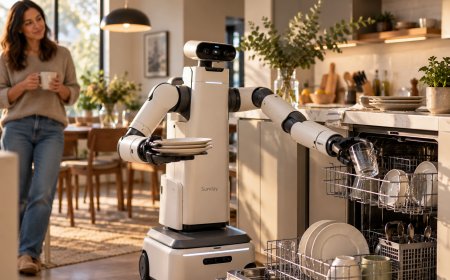
One of the sectors expected to benefit most from world models is robotics. According to LeBrun, most robots today operate by repeating fixed routines in carefully controlled settings. They perform well in factories where every movement is predefined, but they struggle when placed in homes, public spaces or other unpredictable environments. Current AI lacks the contextual awareness needed to interpret changing surroundings and respond safely to unexpected situations.
LeBrun pointed to examples where improved contextual understanding could prevent accidents involving robots operating around people. He argued that hardware has advanced rapidly in recent years, with robotics becoming increasingly sophisticated, but the intelligence required to interpret real-world situations safely has not kept pace. Giving robots a better understanding of their environment could significantly improve both safety and practical usefulness.
Healthcare is another industry where LeBrun believes world models could make a meaningful contribution. Drawing on his experience leading AI healthcare startup Nabla, he compared today’s language models to doctors who have studied medical textbooks but lack practical clinical experience. While LLMs can assist with documentation and medical knowledge, he argued they represent only a small portion of healthcare, where real-world observation and experience remain essential for decision-making.
Developing world models requires exposure to real environments rather than relying solely on laboratory simulations. For that reason, AMI Labs is actively seeking partnerships that provide access to factories, robotics deployments and other physical settings where its AI can learn from real-world interactions. LeBrun said this need for practical training is one of the reasons the company is looking toward Asia as it expands its research collaborations.
South Korea has emerged as a particularly attractive market because of its strengths in robotics, semiconductor manufacturing and advanced electronics. LeBrun also highlighted the country’s willingness to invest aggressively in artificial intelligence, describing its combination of industrial expertise and rapid technology adoption as a unique advantage. Investors supporting AMI Labs have likewise encouraged the company to establish an early presence in the region as South Korea increases investment in AI infrastructure, semiconductor production and physical AI technologies.
Despite attracting significant investor interest, AMI Labs has not yet announced when its first commercial product will be available. The startup raised $1.03 billion in March at a $3.5 billion pre-money valuation, reflecting strong confidence in its long-term vision. However, LeBrun said the company is not rushing its product roadmap and will introduce its technology only when it believes it is ready. Rather than competing over industry buzzwords, AMI Labs is focusing on building AI systems that understand the physical world and enable safer, more capable robotics in the years ahead.
What's Your Reaction?
 Like
0
Like
0
 Dislike
0
Dislike
0
 Love
0
Love
0
 Funny
0
Funny
0
 Angry
0
Angry
0
 Sad
0
Sad
0
 Wow
0
Wow
0