


































Ollama Secures $65 Million Funding as Open-Source AI Platform Nears 9 Million Users
Ollama has raised $65 million in fresh funding as the open-source AI developer platform approaches 9 million users. Learn how the investment will support local AI development, model deployment, and future growth.
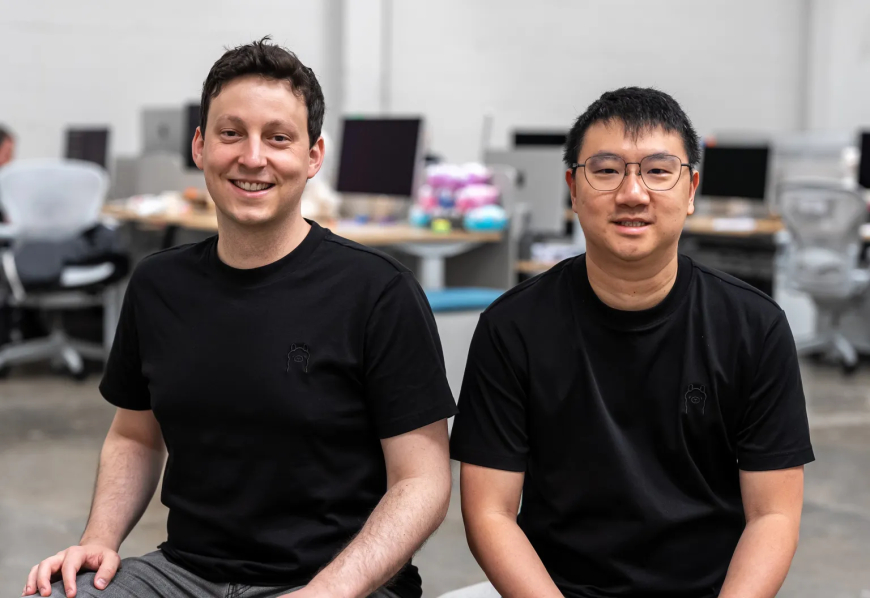
Open source AI platform Ollama has secured $65 million in a Series B funding round led by Theory Ventures and its founder and CEO, Jeff Morgan.
The latest investment follows a previous $15 million Series A led by Benchmark partner Peter Fenton, bringing the startup’s total funding to $88 million.
Founded in 2023, Ollama enables developers to run open-weight AI models directly on their PCs, allowing them to install and use models within minutes. The platform has become one of the most widely adopted open-source AI developer tools, earning praise across developer communities, tutorials, blogs, videos, and social media. It has also accumulated more than 176,000 stars and nearly 17,000 forks on GitHub.
In addition to running models locally, developers can use Ollama’s cloud platform to discover AI models and access larger, more advanced models hosted through its Neocloud service. The platform offers subscription plans ranging from free access to $100 per month and charges customers based on GPU usage rather than token limits.
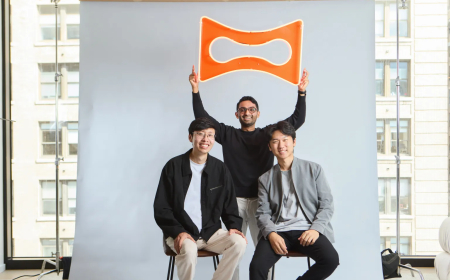
Morgan and co-founder Michael Chiang are no strangers to building developer tools. Before launching Ollama, the pair helped create Docker Desktop after Docker acquired their earlier startup, Kitematic. Docker simplified the process of moving applications between desktop and cloud environments by abstracting away hardware configuration challenges.
Morgan believes Ollama is doing something similar for artificial intelligence by making advanced AI models significantly easier for developers to use.
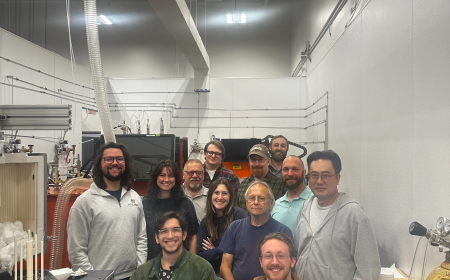
He said that when OpenAI models first emerged in 2023, they were largely built for researchers rather than software developers, making them difficult to install and operate. Ollama was created to eliminate that complexity. Three years after launch, the company says its platform is used by more than 8.9 million developers every month, is deployed across 85% of Fortune 500 companies, and has achieved that growth with a team of only 14 employees.
That experience in building widely adopted developer platforms was one of the reasons BBenchmark’sPeter Fenton decided to lead the company’s earlier funding round and join its board.
Fenton said Morgan and Chiang previously helped build Docker into a platform used daily by more than 10 million developers, describing the ability to create products that become standard tools for developers as an exceptionally rare achievement.
Neither Morgan nor Fenton disclosed Ollama’s current valuation or revenue. However, Morgan said the business reached an important turning point around January when increasingly capable OpenAI models began handling agentic tasks such as software development. The rapid adoption of AI coding assistants, including OpenClaw, demonstrated that open models were becoming powerful enough to perform meaningful real-world work.
Since then, many enterprises and fast-growing AI startups have increasingly explored using lower-cost open models for everyday workloads while reserving premium proprietary models, such as those from Anthropic, for specialised tasks.
Fenton believes the discussion around open versus closed AI models is often framed too narrowly. Rather than one replacing the other, he expects both to continue serving different roles. At the same time, he said organisations facing large AI inference costs have a strong incentive to migrate as much work as possible to open-weight models.
There is already growing evidence that enterprises and AI startups are making that transition, creating additional demand for services such as OOllama’scloud platform.
The company also reflects a broader trend across the AI industry, in which successful open-source projects are increasingly evolving into venture-backed businesses. Other examples include Inferact, the company behind vLLM; RadixArk, the creator of SGLang; OpenClaw and its alternatives such as NanoClaw; and startups like Arcee, which is building its own open AI models.
Not every member of the open source community has welcomed Ollama’s commercial expansion. Around a year ago, several developers criticised the company’s cloud offerings, arguing that they shifted attention away from the popular free desktop application and pointing to Ollama as an example of the growing “enshittification” of developer tools.
Morgan disagrees with that criticism, arguing that the cloud platform extends Ollama’s original mission by helping developers access powerful open models that are too large to run efficiently on personal computers. Instead of changing the company’s direction, he said the service makes advanced open models more accessible.
Fenton echoed that view, adding that nothing has changed for Ollama’s free desktop product. According to him, the company’s original promise remains intact: giving developers a simple way to discover, download, and run AI models locally while expanding access to larger models through its cloud infrastructure.
What's Your Reaction?
 Like
0
Like
0
 Dislike
0
Dislike
0
 Love
0
Love
0
 Funny
0
Funny
0
 Angry
0
Angry
0
 Sad
0
Sad
0
 Wow
0
Wow
0