



































NanoClaw founder rejects $20M acquisition offer and secures $12M seed funding
NanoClaw’s creator turned down a $20 million acquisition offer and instead raised $12 million in seed funding to expand the AI-powered automation startup.

NanoCo, the startup behind the security-focused OpenClaw alternative NanoClaw, has announced an oversubscribed $12 million seed funding round after the project gained significant attention following its rapid rise within the AI and developer communities.
The financing round was led by Valley Capital Partners and included participation from Docker, Vercel, Monday.com, Slow Ventures, and several prominent angel investors. Among them was Clem Delangue, the chief executive officer of Hugging Face.
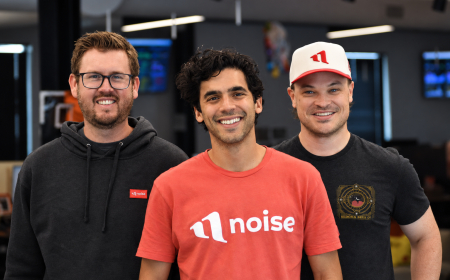
For NanoClaw creator Gavriel Cohen, the speed at which the project gained momentum was remarkable. Within only a few weeks, he went from developing the software while working from his couch to receiving endorsements from influential figures in artificial intelligence, attracting strong investor interest, and even turning down an acquisition proposal reportedly valued at approximately $20 million.
Gavriel and his brother and co-founder, Lazer Cohen, chose not to accept the acquisition offer despite the substantial valuation and the opportunity to continue operating the company under new ownership.
"It was under six weeks from committing the first lines of code to a term sheet," Gavriel said.
According to him, investor attention arrived almost immediately after the project began gaining visibility.
"There was a lot of inbound and interest," he explained. "People reaching out in DMs on X and sending emails."
Gavriel estimated that more than 50 founders, investors, and technology executives contacted him directly to express interest in participating in the company's funding round.
One of those messages came from Delangue, who contacted him with a brief note expressing support for the project.
"I like what you're doing with NanoClaw," Delangue wrote.
The exchange sparked a broader discussion between the two technology leaders. Gavriel responded by mentioning that he admired Hugging Face's compact robotics platform, Reachy Mini, and hoped to run NanoClaw on the device eventually.
The conversation gradually evolved into discussions about technology, artificial intelligence, and the project's future direction. Eventually, Gavriel asked whether Delangue would be interested in participating as an angel investor, and the answer was positive.
Interestingly, Gavriel says the NanoClaw open-source community has already begun experimenting with that vision. According to him, an active community contributor is currently working to bring NanoClaw functionality to Reachy Mini.
Interest in NanoClaw accelerated dramatically after well-known AI researcher Andrej Karpathy publicly praised the project online. That endorsement generated considerable attention throughout the AI community and introduced the project to a wider audience of developers and technology enthusiasts.
However, the momentum increased further after Singapore's foreign minister referred to NanoClaw as his "second brain" in a Facebook post that quickly gained widespread attention online. The viral post significantly boosted awareness of the project and helped attract additional users and supporters.
NanoClaw was originally developed as a more secure alternative to OpenClaw and was intended primarily to support the Cohen brothers' previous business. This AI-powered marketing company relied heavily on autonomous agents to perform much of its work.
The key difference was security. Instead of running directly on a user's computer with unrestricted access to applications, services, and credentials, NanoClaw operates inside an isolated container environment. This sandboxed approach is increasingly adopted to deploy AI agents while reducing potential security risks.
At the time NanoClaw was introduced, however, containerised AI agent environments were still relatively uncommon. The project quickly attracted attention for its approach, and community interest expanded far beyond the founders' original expectations.
As enthusiasm continued to grow, the Cohen brothers began seeking guidance from investors, entrepreneurs, and experienced founders. They faced an important decision: should NanoClaw remain a free open-source project, or should they transform it into a dedicated company and business?
One venture capitalist attempted to answer that question immediately by offering to purchase the project outright. Gavriel said the investor proposed a six-figure acquisition deal through one of the firm's portfolio companies.
While considering that proposal, the founders received advice from another entrepreneur that would ultimately influence their decision.
According to Gavriel, the founder explained that successful open-source projects become dramatically more valuable as their communities expand. Beyond increasing adoption, community members contribute code, improve features, identify bugs, and discover entirely new use cases for the technology.
The entrepreneur argued that if NanoClaw had the potential to become that kind of community-driven platform, the founders would need to commit to it fully and focus all of their efforts on growing the project.
"He was right," Gavriel said.
Soon afterwards, the brothers decided to shut down their previous business and dedicate themselves entirely to NanoClaw. Shortly after making that decision, the project received viral attention online and secured partnerships with Docker and Vercel.
Momentum continued to build rapidly.
Roughly two weeks after the initial acquisition approach, the founders received another offer. This proposal was significantly larger, reportedly worth around $20 million, and included employment opportunities that would allow the brothers to continue running the company after the acquisition.
Despite the attractive terms, they declined the offer.
"Since then, it's only escalated. We have many thousands of people using NanoClaw," Gavriel said.
As the user community expanded, NanoCo began identifying commercial opportunities emerging directly from customer demand. One of the most important developments is the growing interest from enterprise organisations seeking help deploying NanoClaw in their businesses.
According to Gavriel, many of NanoClaw's earliest users possess strong technical expertise and hold leadership positions at major technology companies. After successfully deploying NanoClaw for their own use, these individuals frequently found themselves approached by colleagues seeking help implementing similar setups.
Many of those users had little interest in becoming internal support personnel for NanoClaw deployments. NanoCo, however, saw an opportunity to fill that gap.
As a result, the company now offers implementation services through teams it calls forward-deployed engineers. These specialists assist organisations with installing NanoClaw, configuring AI agents for employees, and providing ongoing operational support.
Although NanoCo declined to publicly identify its enterprise customers, the founders stated that executives from major organisations are already using NanoClaw. They specifically mentioned individuals associated with companies such as Amazon, Gap, Google, Meta, SentinelOne, and Accenture.
With fresh capital, a rapidly expanding user base, growing enterprise adoption, and a thriving open-source community, NanoCo is entering its next phase of growth. What began as a security-focused side project has quickly evolved into a venture-backed company that is attracting attention from major technology leaders, investors, and organisations seeking secure ways to deploy AI agents at scale.
What's Your Reaction?
 Like
0
Like
0
 Dislike
0
Dislike
0
 Love
0
Love
0
 Funny
0
Funny
0
 Angry
0
Angry
0
 Sad
0
Sad
0
 Wow
0
Wow
0