

































AI Data Centres Expose Growing Risks to Power Grid Stability
A power line failure near Washington, D.C., exposed how rapidly growing AI data centres can destabilise the electrical grid, highlighting the need for smarter power management.
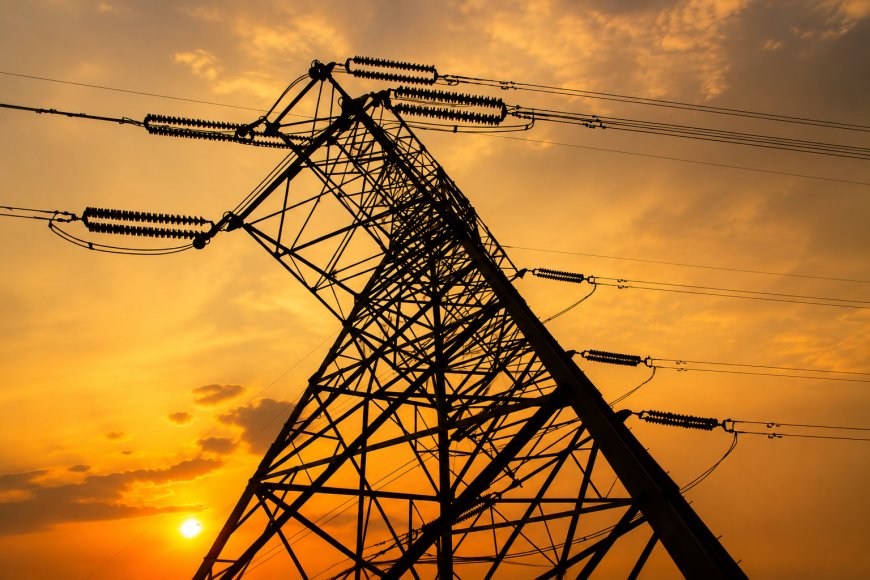
A single fallen power line outside Washington, D.C., has highlighted a growing challenge facing the U.S. electrical grid as artificial intelligence drives a surge in data centre construction. While utilities typically recover from such disruptions within seconds, this week’s incident took more than 10 minutes to stabilise after more than 3 gigawatts of data centre demand disappeared almost simultaneously.
According to data collected by Ting Labs, the event caused voltage spikes across the PJM Interconnection grid, stretching from Northern Virginia to Chicago. Although the disruption did not trigger a blackout, it caused lights to flicker across the region. It underscored how large clusters of AI data centres can amplify relatively minor grid disturbances.
Northern Virginia, home to the world’s largest concentration of data centres, sits within PJM’s service territory. Ricardo de Azevedo, chief technology officer at ON.Energy, described the incident as “the canary in the coal mine,” saying similar events involving large electricity loads are becoming increasingly common.
Why data centres intensified the disruption
When the transmission line failed, many nearby data centres immediately switched to backup power. PJM data shows that roughly 3.1 gigawatts of electricity demand vanished within about 30 seconds. Additional facilities disconnected shortly afterwards, leaving the grid with an excess of nearly 3.5 gigawatts before operators restored stability about 11 minutes later.
Reuters reported the disconnected facilities accounted for roughly 3% of PJM’s electricity demand at the time. While that may appear modest, power grids require supply and demand to remain in near-perfect balance. Sudden shifts can create voltage spikes or drops that activate protective systems across the network.
Rather than absorbing the disturbance, many data centres reacted almost simultaneously by disconnecting from the grid. As demand rapidly disappeared, electricity supply temporarily exceeded consumption, worsening voltage fluctuations instead of easing them.
Experts call for smarter coordination.
Ali Zain Banatwala, senior market models specialist at the Independent Electricity System Operator, said facilities located close together should disconnect and reconnect in sequence instead of responding all at once. A more coordinated approach would give grid operators greater control during disturbances and reduce the risk of cascading effects.
Another solution is to make data centres more resilient so they can remain connected during short-term power fluctuations. ON.Energy has developed a campus-wide uninterruptible power supply that protects not only servers but also cooling systems and other critical infrastructure.
The company’s system places large battery installations and advanced power electronics between the grid and the data centre, presenting utilities with a steady electrical load even as computing demand changes. During grid disturbances, the batteries can absorb excess electricity or provide power within milliseconds, helping stabilise voltage instead of contributing to swings.
De Azevedo said ON. Energy is currently deploying approximately 3 gigawatts of these systems across four data centre campuses.
Pressure grows as AI infrastructure expands.
Grid operators are also beginning to respond. De Azevedo said ERCOT, which manages most of Texas’ electricity grid, plans to require large electricity users such as data centres to ride through short disruptions instead of immediately disconnecting.
The urgency is increasing as AI infrastructure expands. A similar incident in 2024 saw about 60 data centres disconnect simultaneously, removing roughly 1.5 gigawatts of demand from PJM’s grid. At that time, data centres represented about 6% of the grid’s total load, according to Synapse Energy Economics. By 2040, that figure is expected to reach 24%, suggesting that without improved coordination and power management, similar events could become significantly more disruptive.
What's Your Reaction?
 Like
0
Like
0
 Dislike
0
Dislike
0
 Love
0
Love
0
 Funny
0
Funny
0
 Angry
0
Angry
0
 Sad
0
Sad
0
 Wow
0
Wow
0