


































South Korean Rocket Startup Unastella Secures $24 Million After Successful Domestic Launch
Unastella, an emerging South Korean rocket company, has raised $24 million following its successful launch operations in South Korea. The funding will support rocket development, satellite launch services, and expansion in the growing commercial space industry.
As SpaceX moves toward what could become one of the largest public offerings in history, competition in the global space launch industry continues to intensify. Across Asia, emerging rocket companies in countries such as South Korea, Japan, India, and Australia are racing to establish themselves in a sector long dominated by players in the United States and China.
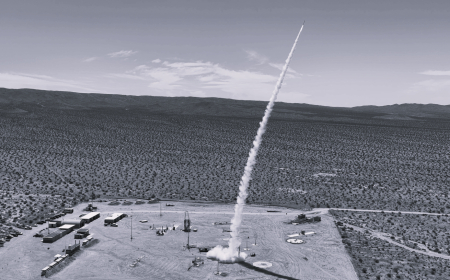
One of those companies is Unastella, a South Korean rocket startup that recently raised $24 million in a Series B funding round. The investment brings the company’s total funding to $44 million. The fundraising follows a significant achievement for the four-year-old company, which successfully launched its UNA EXPRESS-I rocket from South Korean soil in May 2025.
Headquartered in Seoul, Unastella is developing its own launch vehicles and propulsion systems with an initial focus on providing launch services for small satellites. Founder and CEO Jae Park said the company’s short-term goal is to validate both its technology and business model through orbital launch missions. At the same time, crewed suborbital spaceflight remains part of its longer-term vision.
The company relies on a kerosene-and-liquid-oxygen propulsion system, one of the most widely used and proven combinations in modern rocketry. The same fuel approach is also used in SpaceX’s Falcon rocket family. Unastella has additionally chosen to use an electric motor pump instead of a traditional turbo pump. The technology offers a simpler, more cost-effective alternative and has been successfully demonstrated by Rocket Lab.
The downside of electric motor pumps is their added weight, which reduces the amount of payload a rocket can carry. However, Park said the decision reflects the company’s commercial priorities.
“We’re not an R&D group trying to build the most impressive rocket,” Park said. “We’re a commercial launch company trying to get to market fast.”
According to Park, Unastella develops nearly every aspect of its technology internally, including vehicle design, manufacturing, ground systems, flight operations, and data analysis. The UNA EXPRESS-I launch served as the first comprehensive real-world test of the company’s complete launch system.
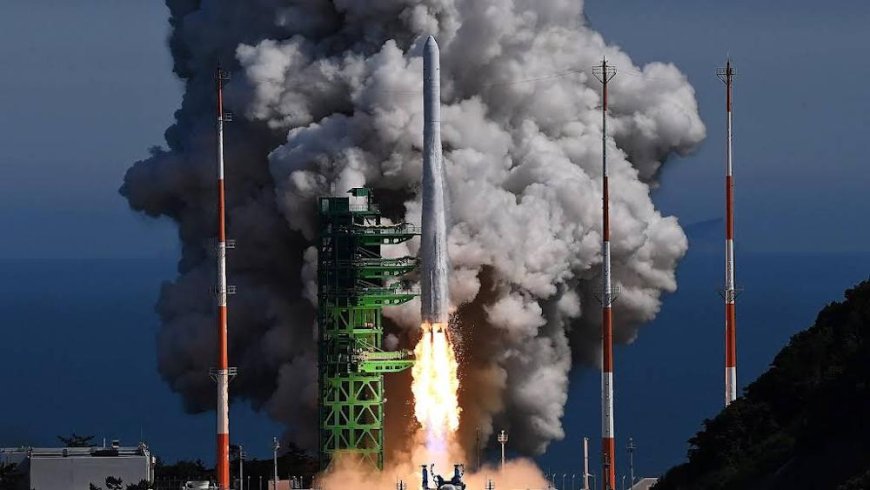
Before founding Unastella, Park spent years working on rocket engine technology. He contributed to South Korea’s Nuri rocket program, the country’s first domestically developed orbital launch vehicle created by the Korea Aerospace Research Institute (KARI). He later worked at the German Aerospace Centre in Berlin before returning to South Korea and eventually launching his own startup.
Although Unastella is not yet generating revenue, investors continue to support its long-term strategy. Altos Ventures led the Series B round, joined by Korea Development Bank, Strong Ventures, Hana Ventures, and several other backers.
The company is now focused on UNA EXPRESS-II, which is scheduled for launch next year. Reaching an altitude of 100 kilometres would represent a major milestone and could help the company secure partnerships with South Korea’s leading aerospace and defence organisations.
Unastella currently employs 22 people and has already built relationships with key government and research institutions. South Korea’s national space agency has flown components aboard UNA EXPRESS-I, while KARI has transferred electric motor pump technology to the company.
The startup is entering a market that continues to grow rapidly. According to Grand View Research, the global space launch market was valued at approximately $15 billion in 2023 and is expected to expand to around $41 billion by 2030.
South Korea’s commercial launch sector is still developing, but competition is increasing. Hanwha Aerospace now oversees the Nuri rocket program after obtaining full technology rights from KARI. Meanwhile, startups including Innospace and Perigee Aerospace are developing their own launch systems, although none have yet completed a commercial orbital launch.
The competitive landscape extends across Asia. China’s Galactic Energy, LandSpace, and iSpace have already conducted multiple launches, while Japan’s H3 rocket achieved its first successful mission in 2024. Australia’s Gilmour Space also attempted its first orbital launch this year. Rocket Lab, founded in New Zealand and now publicly traded on Nasdaq, remains the only Asian-founded company to build a commercially successful launch business on a global scale.
What's Your Reaction?
 Like
0
Like
0
 Dislike
0
Dislike
0
 Love
0
Love
0
 Funny
0
Funny
0
 Angry
0
Angry
0
 Sad
0
Sad
0
 Wow
0
Wow
0