














Court rules against Elon Musk in lawsuit against Sam Altman and OpenAI
Elon Musk has lost his lawsuit against Sam Altman and OpenAI after a jury ruled that the claims were filed too late, marking a significant legal victory for OpenAI.
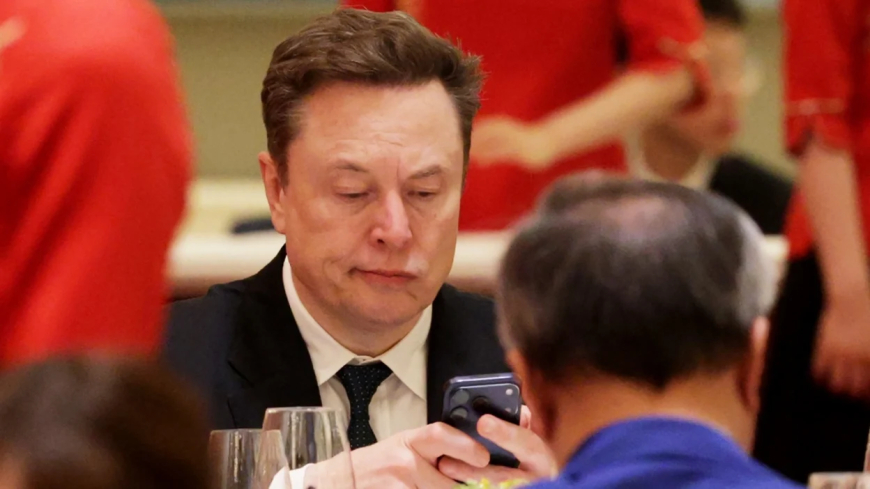
A California jury has ruled against Elon Musk in his legal battle against Sam Altman, Greg Brockman, OpenAI, and Microsoft, concluding that Musk’s claims were filed after the applicable legal deadlines had already passed.
The verdict was unanimous, with all nine jurors determining that Musk’s lawsuits had been brought too late under California law. As a result, his claims were rejected despite the broader arguments presented in the case.
Musk had alleged that OpenAI’s leadership effectively “stole a charity” by transforming the organisation from its original nonprofit structure into a business that included a for-profit affiliate. According to his lawsuit, Altman, Brockman, OpenAI, and Microsoft had benefited financially from changes that he argued violated the organisation’s original mission and commitments.
However, the jury ultimately found that any potential harm Musk claimed to have suffered occurred before the deadlines required for pursuing those claims in court.
The case attracted significant attention throughout the technology industry because it examined the highly publicised history of OpenAI and featured testimony from some of Silicon Valley’s most influential figures. Despite the high-profile nature of the dispute, the legal outcome ultimately rested on relatively narrow procedural issues rather than broader questions about OpenAI’s business model.
Much of the trial focused on whether promises had been made to Musk regarding OpenAI’s future structure and whether those commitments were later broken. Jurors, however, were not persuaded that Musk had established a legally valid claim that could proceed within the required timeframe.
A central element of OpenAI's defence concerned the statute of limitations. The company argued that any alleged wrongdoing identified by Musk had taken place before the legal deadlines for bringing the claims.
According to court proceedings, the relevant deadlines varied depending on the specific allegation. For the first claim, OpenAI argued that any harm would have needed to occur before August 5, 2021. For the second claim, the relevant date was August 5, 2022, while the third claim involved a deadline of November 14, 2021.
Jurors ultimately accepted OpenAI’s argument that the statute of limitations had expired, making the decision relatively straightforward once deliberations began.
Following the verdict, Yvonne Gonzalez Rogers commented on the strength of the evidence supporting the jury’s conclusion.
“There was a substantial amount of evidence to support the jury’s finding, which is why I was prepared to dismiss on the spot,” Judge Rogers said after the decision was announced.
The outcome removes what had been viewed as one of the most significant legal threats facing OpenAI. Had Musk prevailed, the lawsuit could have affected the company’s organisational structure and plans, including its reported ambitions for a public offering.
After the verdict, OpenAI’s lead attorney, Bill Savitt, strongly defended the company’s position and criticised Musk’s lawsuit.
“It did not take the jury two hours to conclude that Mr Musk’s lawsuit is nothing more than an after-the-fact contrivance that bears no relationship to reality,” Savitt said. “They kicked it exactly where it belongs — just to the side. This lawsuit is a hypocritical attempt to sabotage a competitor.”
Microsoft, which Musk had accused of aiding and abetting OpenAI’s alleged breach of charitable trust obligations, also welcomed the jury’s decision.
A spokesperson for Microsoft said the company remains committed to its partnership with OpenAI and to advancing and expanding artificial intelligence technologies for organisations and consumers worldwide.
The verdict was reached while the court was also considering what damages Musk might have been awarded if the jury had ruled in his favour. With the case dismissed, those discussions are no longer immediately relevant.
During those proceedings, however, Judge Rogers appeared sceptical of the arguments presented by Musk’s legal team regarding financial damages.
Musk’s lawyers had attempted to compare his charitable contributions to OpenAI with investments typically made in for-profit startups. The judge questioned whether that comparison accurately reflected the facts surrounding the case.
Addressing expert witness C. Paul Wazzan, who calculated what he described as OpenAI’s and Microsoft’s alleged wrongful gains at Musk’s expense, the judge expressed concerns regarding the methodology used.
“Your analysis seems to be devoid of connection to the underlying facts,” Rogers told Wazzan. Wazzan’s calculations estimated the value of OpenAI’s and Microsoft’s alleged gains at between $78.8 billion and $135 billion.
Following the ruling, Musk responded publicly on social media, suggesting that the dismissal on procedural grounds did not change his view of the underlying dispute. In a post following the verdict, Musk argued that the central issue was not whether OpenAI’s leaders benefited financially but rather when those actions allegedly occurred.
“There is no question to anyone following the case in detail that Altman & Brockman did in fact enrich themselves by stealing a charity. The only question is WHEN they did it!” Musk wrote.
He also stated that he intends to challenge the verdict through the appeals process.
According to Musk, he plans to file an appeal with the United States Court of Appeals for the Ninth Circuit, arguing that allowing the decision to stand could create a harmful legal precedent for charitable organisations in the United States.
“I will be filing an appeal with the Ninth Circuit, because creating a precedent to loot charities is incredibly destructive to charitable giving in America,” Musk said.
While the appeal process could extend the legal battle further, the jury’s decision represents a significant victory for OpenAI, Altman, Brockman, and Microsoft, bringing an end to one of the technology industry’s most closely watched courtroom disputes for now.
What's Your Reaction?
 Like
0
Like
0
 Dislike
0
Dislike
0
 Love
0
Love
0
 Funny
0
Funny
0
 Angry
0
Angry
0
 Sad
0
Sad
0
 Wow
0
Wow
0