

































How xAI is evolving into a neocloud infrastructure company
xAI is rapidly expanding beyond artificial intelligence models into large-scale computing infrastructure, fueling speculation that it is becoming a neocloud company.
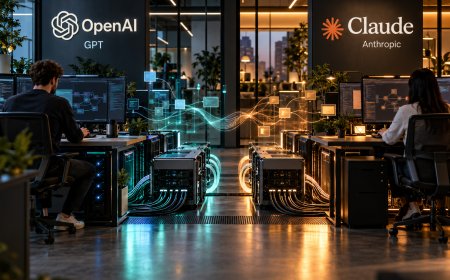
On Wednesday, xAI and Anthropic announced a surprising partnership in which Anthropic will purchase all available compute capacity at xAI’s Colossus 1 data centre. The facility, which reportedly offers around 300 megawatts of compute power, will now be dedicated to supporting Anthropic’s growing AI operations. The agreement is expected to be worth billions of dollars. It marks a major shift for xAI, transforming the company from primarily a consumer of computing infrastructure into a provider of large-scale AI compute resources.
The partnership also allowed Anthropic to immediately raise usage limits for its services, highlighting the growing pressure AI companies face to secure sufficient computational power to train and run advanced models. At first glance, the arrangement may appear tied to the ongoing tensions between Elon Musk and OpenAI. However, Musk explained on X that xAI had already transitioned much of its model training work to a newer facility, Colossus 2, leaving excess capacity at Colossus 1.
In the near term, the business logic behind the move is straightforward. xAI’s main consumer-facing product, Grok, has reportedly seen usage decline following several controversies surrounding its image-generation features earlier this year. By leasing spare data centre capacity to Anthropic, xAI can generate substantial revenue from infrastructure it may not currently need for its own products.
The timing is also notable, as xAI, now increasingly integrated with SpaceX, continues to move toward a potential public offering. Having a major AI company like Anthropic as a paying customer could strengthen investor confidence in Musk’s broader infrastructure ambitions, including his long-term plans for space-based data centres.
But beyond the immediate financial benefits, the partnership may reveal a deeper shift in xAI’s strategy. Rather than focusing solely on building consumer AI products, the company appears to be evolving into something closer to a “neocloud” infrastructure provider — a business model centred on acquiring large numbers of GPUs and renting computing power to other AI developers.
That would place xAI in a category alongside companies like CoreWeave that specialize in providing AI compute infrastructure. Unlike traditional AI labs such as Google, Meta, or OpenAI, whose primary goal is developing proprietary AI products, neocloud businesses focus on supplying the raw computing resources needed by the broader AI industry. This strategy differs sharply from the approach taken by other tech giants. Google CEO Sundar Pichai recently acknowledged that Google Cloud revenue had been limited due to the company being “capacity constrained.” Still, Google chose to prioritize internal AI development over renting additional compute to customers.
Meta has taken a similar path. The company has aggressively invested in building its own AI infrastructure, including entirely new cloud systems dedicated to supporting Mark Zuckerberg’s AI ambitions. Zuckerberg has repeatedly described infrastructure ownership as a long-term strategic advantage in the AI race. For companies like Google and Meta, compute power is viewed not just as a business opportunity but as a critical resource for building future AI products and maintaining competitive dominance.
xAI’s growing focus on infrastructure suggests a somewhat different direction. Instead of reserving all available compute for internal AI development, the company is increasingly monetizing its infrastructure by supplying competitors and partners.
Still, Musk’s version of a neocloud company is far more ambitious than most infrastructure providers. xAI has discussed plans for orbital data centres, which Musk hopes could eventually operate in space by 2035. The company is also pursuing chip manufacturing through the proposed Terafab semiconductor facility, a project designed to reduce reliance on Nvidia hardware over time.
Even with those ambitions, the economics of the neocloud business remain challenging. Companies in this sector are squeezed between the high costs of acquiring GPUs and the fluctuating demand cycles of AI customers. That reality is reflected in market valuations. xAI was reportedly valued at around $230 billion during its January funding round, while infrastructure-focused company CoreWeave, despite controlling a comparable amount of compute capacity, carries a valuation that is less than one-third of that figure.
As recently as February, xAI appeared heavily focused on software and AI product ambitions. During an internal company presentation earlier this year, executives reportedly outlined plans involving coding tools, AI-powered digital twins, and large-scale software systems connected to projects like Macrohard and partnerships such as the one with Cursor.
Those types of long-term AI products typically require enormous dedicated computing resources to succeed. Now, with xAI increasingly selling large portions of its compute capacity to outside companies, questions are emerging about how aggressively the company still plans to pursue some of its more ambitious software initiatives.
What's Your Reaction?
 Like
0
Like
0
 Dislike
0
Dislike
0
 Love
0
Love
0
 Funny
0
Funny
0
 Angry
0
Angry
0
 Sad
0
Sad
0
 Wow
0
Wow
0