




































Kin Health secures $9M funding to develop an AI-powered patient note-taking platform
Kin Health has raised $9 million to build an AI-powered patient note-taking platform designed to help individuals organise, understand, and manage their healthcare information.

The market for AI-powered note-taking tools has expanded rapidly across the United States, generating more than $600 million in revenue last year, according to a report from Menlo Ventures. As healthcare-focused startups such as Heidi Health and Freed have demonstrated, there is a growing demand for artificial intelligence tools to help physicians and medical practices document patient interactions, organise health records, and reduce administrative workloads.
However, most of these products have been designed primarily for healthcare providers rather than patients themselves. That is the opportunity Kin Health is targeting, developing an AI-powered note-taking platform to help patients record doctor appointments, understand medical guidance, and track recommended next steps.
To support its development plans, the company has secured $9 million in seed funding through a round led by Maveron.
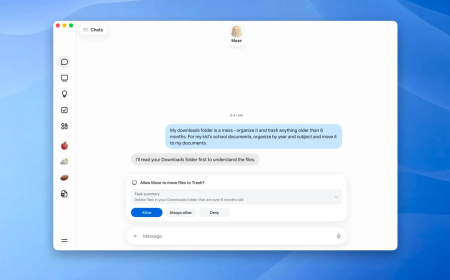
The application functions similarly to AI meeting assistants that summarise business conversations. Users can record their appointments with doctors, and the platform automatically generates an AI-produced summary of the discussion. The summary highlights key information from the visit, outlines follow-up actions, and can be shared with family members or friends if desired.
The platform also provides a space for patients to save questions to raise during future medical appointments, helping them better prepare for consultations and ongoing treatment discussions.
Kin Health says that all patient information stored on the platform is encrypted and that summaries remain private by default. Although the product is not HIPAA-certified because it operates as a patient-facing application rather than a provider-facing solution, the company says it adheres to the same privacy standards and security practices for protecting healthcare data.
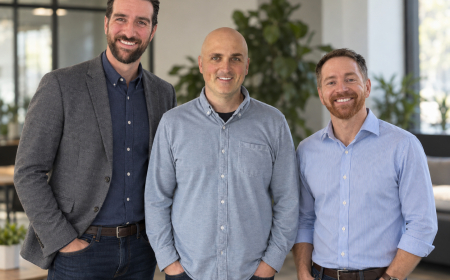
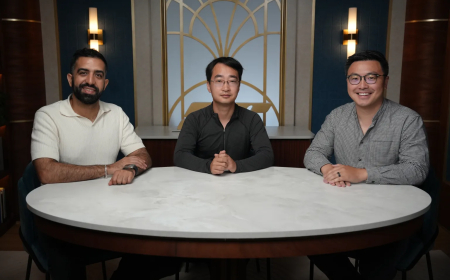
The startup was founded by physicians Arpan Parikh and Amit Parikh, along with Kyle Alwyn. Alwyn previously created the online prescription platform HeyDoctor, which GoodRx later acquired.
In addition, Doug Hirsch and Trevor Bezdek, co-founders of GoodRx, currently serve as founding partners and executive chairpersons at Kin Health.
"We have a lot of these storage cabinets where our health data can live, but we don't have a way to convert that into a utility that we can use to drive our behavioural change. Our goal is to create this health graph where we can store your information from multiple different sources," Alwyn said while discussing the company's long-term vision.
According to Kin Health, the AI-generated summaries are produced through several processing stages. The platform first transcribes the conversation that takes place during a medical visit. After transcription, proprietary algorithms transform the dialogue into a structured clinical narrative. That narrative is then converted into a patient-friendly summary that includes important information and actionable next steps.
The company says it relies on specialised medical AI models to support transcription and information processing. It also evaluates outputs at multiple stages of the workflow to improve reliability and maintain accuracy throughout the summarisation process.
Despite growing enthusiasm around AI tools in healthcare, the technology continues to face scrutiny from researchers, privacy advocates, and healthcare professionals.
Experts have raised concerns about several issues, including data protection, patient consent, the accuracy of AI-generated information, the quality of automated medical notes, and the ability of such systems to perform consistently well in real-world clinical environments.
Another challenge facing AI transcription systems is their difficulty in understanding regional accents and speech variations. Many AI-powered note-taking tools struggle to accurately transcribe conversations involving different accents, speech impairments, or speakers wearing masks.
Kin Health says it is actively working to improve performance across a wider range of speaking styles and situations, including users with strong regional accents, sore throats, or face coverings.
Rebecca Mishuris, chief health information officer and vice president at Mass General Brigham in Boston, emphasised the importance of physician oversight when AI is used to generate medical documentation.
"Generative AI will hallucinate; that is the nature of a technology built on patterns and prediction. That is why it is so important for clinicians to review the drafted notes before signing them. At the end of the day, the responsibility for the documentation falls to the clinician," she said.
Currently, Kin Health only displays notes and summaries generated from conversations recorded directly during consultations. However, the company says it plans to expand the range of information available through the platform significantly.
Later this year, Kin Health intends to incorporate data from additional healthcare sources, including physicians' own records through electronic health record (EHR) systems. The goal is to provide patients with a more complete view of their medical history and healthcare journey.
The startup has also stated that the application will remain free for users permanently. Rather than charging subscription fees, Kin Health plans to generate revenue through referrals to healthcare services, including specialists, diagnostic laboratories, and other medical providers.
The business model mirrors aspects of GoodRx's strategy, which provides its core consumer product at no cost while generating revenue through referral commissions and related healthcare partnerships.
Natalie Dillon, a partner at Maveron, believes the company addresses a different problem than many healthcare technology platforms currently on the market.
She noted that many provider-focused tools still expect patients to coordinate treatment plans and follow-up actions on their own.
"Kin is built to solve an entirely different consumer need: it can travel with them between specialists, systems, and providers. It's not beholden to any single health network or EHR relationship. It's built to serve the patient, not the institution, and that's a massive distribution advantage," Dillon said.
In addition to Maveron, the seed funding round included participation from Town Hall Ventures, Eniac Ventures, Flex Capital, Foundry Square Capital, Pear VC, and The Family Fund.
Additional backing came from GoodRx co-founders Hirsch and Bezdek, angel investors Jay Desai, Nabeel Quryshi, Alex Cohen, and Saharsh Patel, as well as more than 30 physicians who participated in the financing round.
What's Your Reaction?
 Like
0
Like
0
 Dislike
0
Dislike
0
 Love
0
Love
0
 Funny
0
Funny
0
 Angry
0
Angry
0
 Sad
0
Sad
0
 Wow
0
Wow
0