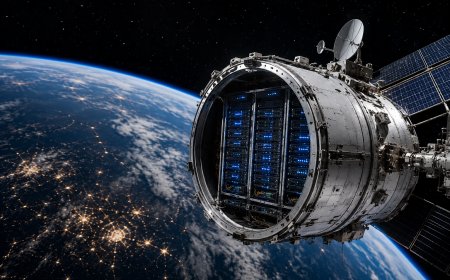
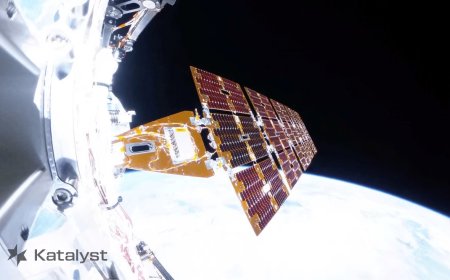
Blue Origin, the space company founded by Amazon executive chairman Jeff Bezos, is moving toward a new frontier by exploring the development of data centres in orbit. The company has requested approval from the U.S. government to deploy a massive constellation of more than 50,000 satellites designed to function as an orbital computing network.
In a filing dated March 19 with the Federal Communications Commission (FCC), Blue Origin’s legal team outlined plans for what it calls “Project Sunrise.” The initiative is described as a network of spacecraft capable of performing advanced computing tasks in space. The goal is to reduce the growing strain on land-based infrastructure by shifting energy- and water-intensive processing away from traditional data centres on Earth.
While the filing introduces the concept, it does not provide detailed technical specifications, leaving questions about the exact scale of computing power the system is expected to deliver. However, the company did indicate that the satellites would rely on another proposed constellation, known as TeraWave, which would serve as a high-capacity communications network supporting the data-processing satellites.
The idea of relocating computing workloads to space has gained attention due to several potential advantages. Solar energy can be harvested continuously in orbit, and space-based operations may face fewer regulatory limitations compared to terrestrial facilities. Proponents of this concept believe that as artificial intelligence becomes more widely adopted, a significant portion of the computational workload — particularly inference tasks — could eventually be handled off-planet.
Blue Origin is not alone in pursuing this direction. SpaceX has already applied for permission to launch a vast network of up to one million satellites for distributed computing purposes. Meanwhile, the startup Starcloud has proposed a constellation of 60,000 spacecraft, and Google is exploring a similar concept under its “Project Suncatcher,” which involves collaboration with Planet Labs to deploy demonstration satellites in the near future.
Despite growing enthusiasm, the practical and economic challenges remain substantial. Technologies required to support such systems — including advanced cooling methods for processors and laser-based communication links between satellites — must be developed and scaled cost-effectively. Additionally, researchers are still studying how high-performance computing hardware behaves in the harsh radiation environment of space.
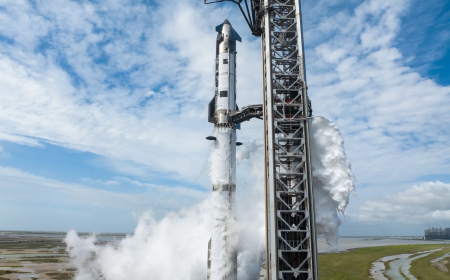
One of the most critical factors is the cost of launching equipment into orbit. Many companies are relying on the expectation that launch costs will decrease significantly with the introduction of next-generation rockets like SpaceX’s Starship, which is still under development and could see its first launch attempt as early as 2026.
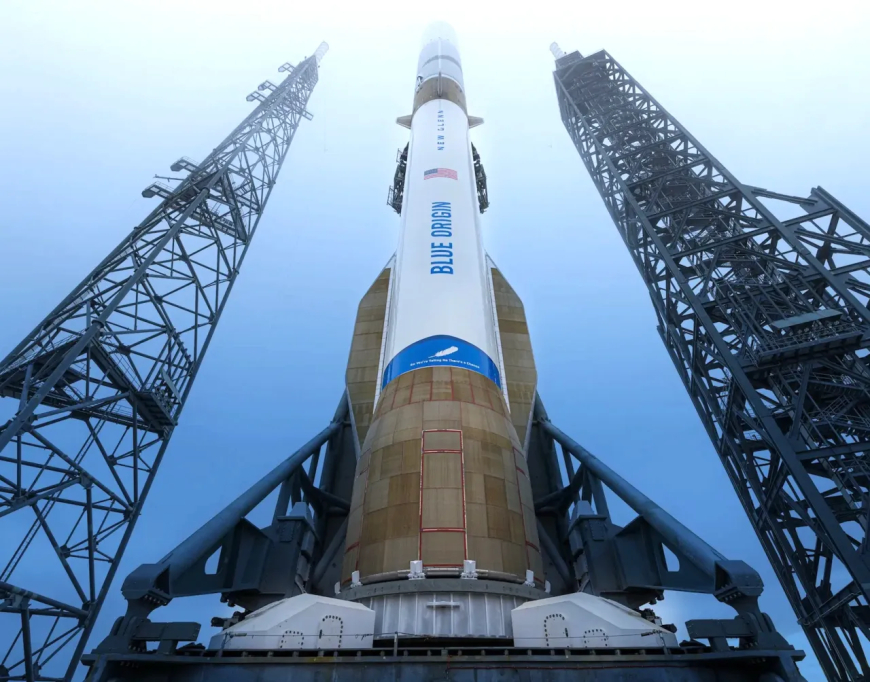
In this regard, Blue Origin may have a strategic advantage. Its New Glenn rocket, which completed its first flight last year, is among the most powerful operational launch vehicles currently available. If the company can achieve regular launches and efficiently reuse its rockets, it could replicate the benefits of vertical integration that have helped SpaceX dominate satellite communications through its Starlink network.
However, challenges extend beyond cost and technology. The increasing number of satellites in low Earth orbit is raising concerns about congestion and collision risk. Deploying tens of thousands of additional satellites would intensify these risks. Furthermore, the standard practice of deorbiting satellites at the end of their life cycle — causing them to burn up in the atmosphere — may have environmental consequences, with scientists warning about potential impacts on atmospheric chemistry and the ozone layer.









































 Like
0
Like
0
 Dislike
0
Dislike
0
 Love
0
Love
0
 Funny
0
Funny
0
 Angry
0
Angry
0
 Sad
0
Sad
0
 Wow
0
Wow
0