



































Starcloud secures $170 million Series A to develop space-based data centers
Starcloud raises $170M Series A funding to build data centres in space, aiming to revolutionise cloud computing with orbital infrastructure.
Starcloud has secured $170 million in a Series A funding round, bringing its valuation to $1.1 billion and positioning it among the fastest startups to achieve unicorn status after emerging from Y Combinator. The round, completed just 17 months after its demo day debut, was led by Benchmark and EQT Ventures.
The funding highlights growing interest in moving data centre infrastructure into orbit, as constraints on land, energy, and regulation continue to slow development on Earth. However, the model still depends on largely unproven technologies and demands significant capital investment.
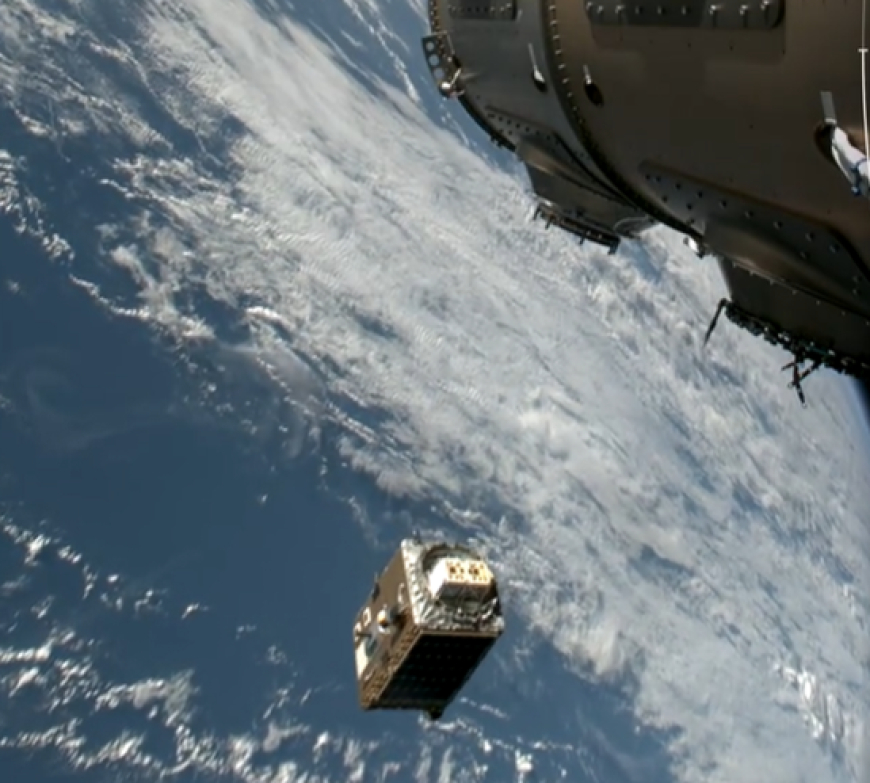
With this latest round, Starcloud has raised a total of $200 million. The company successfully launched its first satellite in November 2025, equipped with an Nvidia H100 GPU. It now plans to deploy a more advanced system, Starcloud 2, later this year. This upgraded version will feature multiple GPUs, including an Nvidia Blackwell chip, an Amazon Web Services server blade, and even a bitcoin mining system.
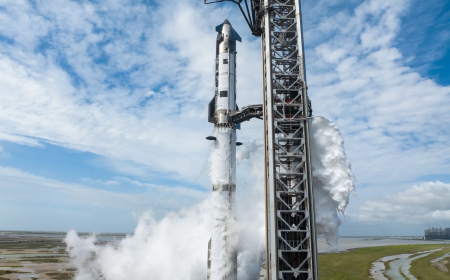
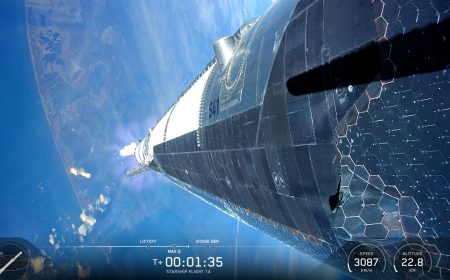
Looking ahead, the company is developing a larger data centre spacecraft known as Starcloud 3. This system is designed to launch aboard Starship, the heavy-lift, reusable rocket being developed by SpaceX under the leadership of Elon Musk. Starcloud 3 is expected to be a three-ton spacecraft with a 200-kilowatt power capacity and will utilise the “PEZ dispenser” deployment system originally designed for Starlink satellites.
CEO and founder Philip Johnston believes this platform could become the first orbital data centre capable of competing with terrestrial facilities on cost, estimating energy costs at around $0.05 per kilowatt-hour, assuming launch prices fall to approximately $500 per kilogram.
However, a key challenge remains: Starship has yet to begin regular operations. Johnston expects commercial availability between 2028 and 2029, which aligns with broader industry expectations that large-scale space computing will remain cost-prohibitive until next-generation launch systems operate at high frequency—potentially not until the 2030s.
In the meantime, the company plans to continue launching smaller systems using Falcon 9. Johnston acknowledged that cost competitiveness in energy will not be achievable until Starship launches become routine.
Starcloud is currently exploring two primary business models. One involves selling processing power directly to other spacecraft in orbit. For example, its first satellite has already been used to analyse data from Capella Space radar satellites. The second, longer-term vision involves distributed orbital data centres handling workloads traditionally managed on Earth, once launch costs decrease significantly.
The sector itself is still in its early stages. When Jensen Huang introduced Nvidia’s Vera Rubin Space-1 modules, it was noted that none had been produced or distributed to development partners yet. Currently, only a limited number of advanced GPUs are operating in orbit, while Nvidia is estimated to have sold millions of GPUs to terrestrial data centres in 2025 alone.
The scale gap is also evident when comparing infrastructure. SpaceX’s Starlink network, with around 10,000 satellites, generates roughly 200 megawatts of power, while data centres exceeding 25 gigawatts are under construction in the United States.
Despite these differences, Johnston argues that Starcloud has already achieved a milestone by deploying a terrestrial-grade GPU in orbit. The system was used to train an AI model and run a version of Gemini, offering valuable insights into operating high-performance chips in space. He noted that not all hardware performs reliably in such conditions, citing a failed launch involving an Nvidia A6000 GPU.
The company still faces numerous engineering hurdles, including efficient power generation and thermal management. Starcloud 2 is expected to include the largest deployable radiator ever flown on a private satellite, with further iterations planned to refine the technology.
Another major challenge is synchronisation. Large-scale AI workloads typically require hundreds or thousands of GPUs working together. Achieving this in space would either require significantly larger spacecraft or advanced laser communication links between satellites operating in formation. Most companies expect simpler inference workloads to come first before tackling full-scale training operations in orbit.
Starcloud is not alone in this emerging field. Other players include Aetherflux, Google’s Project Suncatcher, and Aethero, which launched Nvidia’s first Jetson GPU into space in 2025.
At the same time, SpaceX is pursuing its own ambitions, reportedly seeking approval to deploy up to one million satellites for distributed space-based computing. While this presents a formidable competitive challenge, Johnston believes there is room for multiple approaches in the market.
According to him, SpaceX is primarily focused on serving internal workloads such as Grok and Tesla-related applications. In contrast, Starcloud is positioning itself as an energy and infrastructure provider for a broader set of use cases.
As the race to extend computing infrastructure into orbit accelerates, the success of these ventures will depend not only on technological breakthroughs but also on the economics of launching and operating systems beyond Earth.
What's Your Reaction?
 Like
0
Like
0
 Dislike
0
Dislike
0
 Love
0
Love
0
 Funny
0
Funny
0
 Angry
0
Angry
0
 Sad
0
Sad
0
 Wow
0
Wow
0