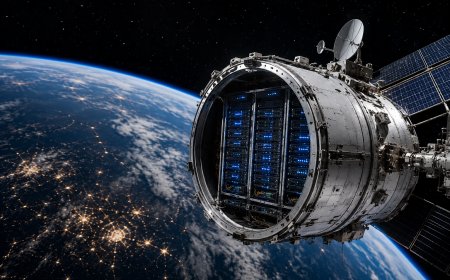
A satellite startup is preparing to launch one of the most powerful spacecraft ever built, aiming to demonstrate technologies that could support future data centres in orbit.
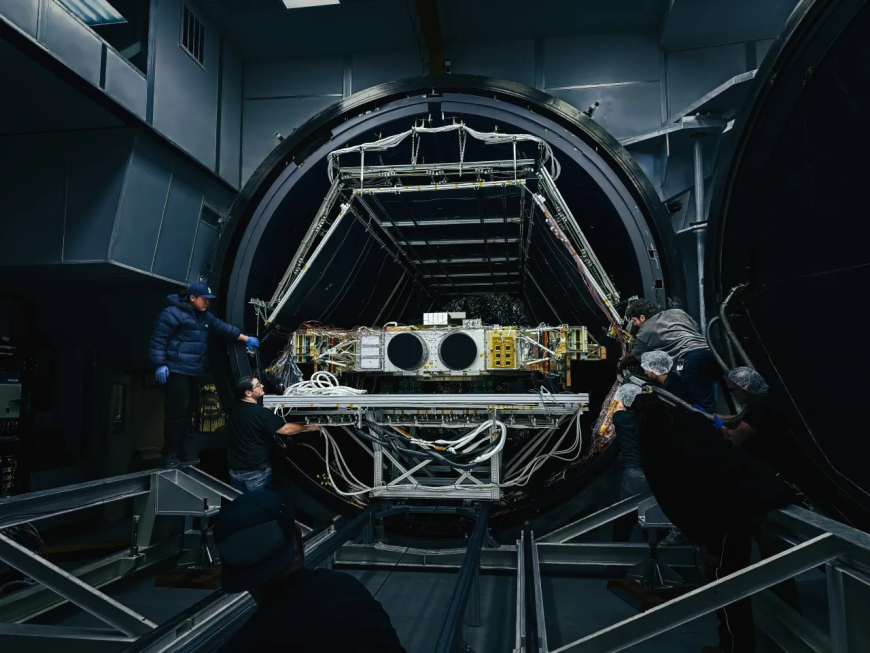
K2 Space, founded in 2022 by brothers and former SpaceX engineers Karan and Neel Kunjur, has integrated its satellite, Gravitas, into a SpaceX Falcon 9 rocket, with launch expected as early as the end of this month. The spacecraft has a mass of two metric tons and, once deployed, will extend to a wingspan of 40 meters through its solar panels. Gravitas's primary focus is its high power output. The satellite can generate up to 20 kilowatts of electricity to support payloads such as advanced sensors, communications systems, and onboard computing. For context, larger satellites like ViaSat-3 produce just over 25 kilowatts, while SpaceX's planned Starlink V3 satellites are expected to reach similar levels. Most satellites currently in operation generate only a few kilowatts.
K2 CEO Karan Kunjur emphasised that increasing power capacity is key to the future of space infrastructure. The company has raised $450 million to support this vision and was valued at $3 billion as of December 2025. The Gravitas launch represents its first operational mission in space and marks the beginning of an iterative development process, according to Kunjur.
The Gravitas mission will carry 12 payload modules from various customers, including the U.S. Department of Defence. It will also feature a 20-kilowatt electric thruster, which K2 expects to be the most powerful of its kind deployed in space.
The mission will be evaluated in stages. Initially, K2 will assess whether the satellite can successfully deploy and generate power. The next phase will involve activating payloads and testing the electric thruster. If successful, the final stage will attempt to use the thruster to move the satellite to a higher orbit, potentially thousands of kilometres above its starting position.
Kunjur acknowledged the challenges of launching a new spacecraft, especially since approximately 85% of its components were developed internally. He noted that collecting as much operational data as possible will be critical for refining future designs. The company plans to launch 11 additional satellites over the next two years, combining demonstration missions with commercial deployments. By 2028, K2 aims to begin producing satellites for customers looking to establish high-powered space networks.
As the role of satellites in the global economy continues to grow, increased power capacity is expected to unlock new applications. Kunjur believes the immediate impact will be seen in communications, where higher power enables greater data throughput and more resilient signals. Over time, the ability to process data directly in orbit will require even more powerful spacecraft.
However, one of the major challenges for large satellites and space-based data centres is launch costs. K2's original strategy relied on the anticipated capabilities of SpaceX's Starship, which is expected to significantly reduce launch costs. While Starship's timeline remains uncertain, the demand for higher-powered satellites continues to rise.
This demand is being driven by developments such as large-scale communication networks like Starlink and Amazon's low Earth orbit initiatives, as well as interest from hyperscale computing companies exploring orbital data processing. Additionally, the Pentagon's plans for a $185 billion missile defence system involving thousands of satellites further highlight the need for higher-power systems in space.
K2 maintains that its satellites remain economically viable even under current launch costs. The company estimates that launching Gravitas on a Falcon 9 could cost around $7.2 million at customer rates, compared to a potential future cost of $600,000 if next-generation launch systems like Starship achieve their projected efficiencies. With a price of approximately $15 million, Gravitas is positioned as a more affordable option compared to traditional high-powered satellites while offering greater capability than similarly priced smaller spacecraft.
Looking ahead, K2 is already planning larger, more powerful designs. Kunjur said the company has completed designs for a 100-kilowatt satellite, with plans laid out at its manufacturing facility. He noted that K2 aims to be ready to scale quickly once larger launch vehicles such as Starship and Blue Origin's New Glenn become widely available.
"The thinking is, let's build all the components that we're going to need to be a first mover when Starship and New Glenn are available for everybody else," Kunjur said.









































 Like
0
Like
0
 Dislike
0
Dislike
0
 Love
0
Love
0
 Funny
0
Funny
0
 Angry
0
Angry
0
 Sad
0
Sad
0
 Wow
0
Wow
0