





































AI cloud startup Runpod hits $120M in ARR — and it all began with a Reddit post
AI cloud startup Runpod has reached $120 million in annual recurring revenue, tracing its rapid growth back to an early Reddit post that sparked demand.
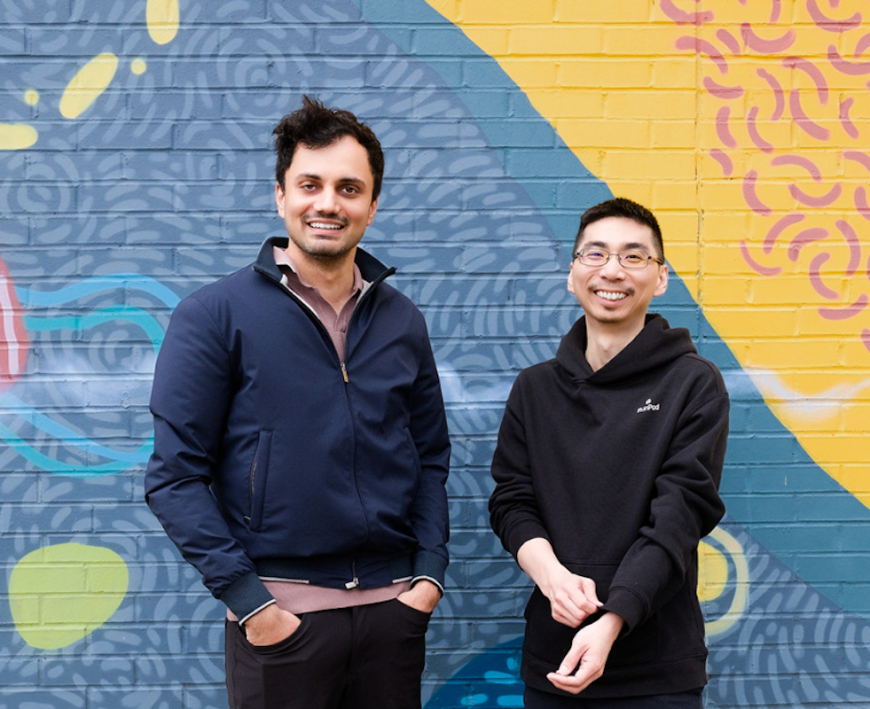
Runpod, an AI application hosting platform founded four years ago, has reached an annual revenue run rate of $120 million, according to co-founders Zhen Lu and Pardeep Singh. The company’s growth story is a striking example of how strong execution, product timing, and community-driven adoption can turn an unconventional start into a significant business.
The startup’s journey includes bootstrapping to $1 million in revenue, raising a $20 million seed round after a venture capitalist discovered the company on Reddit, and attracting a prominent angel investor after he personally used the product and contacted the founders through customer support.
Runpod’s origins trace back to late 2021, when Lu and Singh were working as corporate developers at Comcast. At the time, the two friends shared a side hobby: building Ethereum mining rigs in their basements in New Jersey. While they managed to mine some cryptocurrency, the returns were not enough to recoup their investment. With Ethereum’s planned network upgrade, “The Merge,” approaching, the long-term viability of mining was also fading.
Beyond the economics, the hobby quickly lost its appeal. After investing an estimated $50,000 between them — and persuading their spouses to support the expense — Lu and Singh were under pressure to find a more productive use for the GPUs they had already purchased.
Given their professional backgrounds in machine learning, the pair decided to repurpose their mining rigs into AI servers. This was before ChatGPT or even DALL-E 2 had entered the mainstream. As they worked with the hardware, they encountered what they saw as a significant problem: the software ecosystem for developing and deploying workloads on GPUs was inefficient and difficult to use.
As developers, they saw an opportunity to fix a problem they personally experienced. Runpod was created to address what Lu described as a poor development experience when working with GPU infrastructure.
By early 2022, the founders were ready to launch their platform publicly. Runpod positioned itself as a developer-focused AI hosting service, emphasising performance, simplified hardware configuration—including serverless options—and tools such as APIs, command-line interfaces, and integrations. At launch, the platform supported only a small number of integrations, including Jupyter notebooks.
Finding early users was the next challenge. With no prior experience in startup marketing, Lu turned to Reddit. The founders posted in several AI-focused subreddits, offering free access to their AI servers in exchange for feedback. The strategy worked. Early testers became paying customers, and within nine months, Runpod reached $1 million in revenue, and both founders left their corporate jobs.
Rapid growth introduced new challenges. Business customers began asking for infrastructure better suited to production workloads, rather than servers located in private homes. Instead of immediately seeking venture funding, Lu and Singh formed revenue-sharing partnerships with data centres to expand capacity. While effective, the approach required constant planning to ensure sufficient GPU availability.
According to Singh, maintaining capacity was critical. If customers could not access resources when needed, they would quickly move to competitors.
As Runpod’s user base expanded — particularly on Reddit and Discord — interest from venture capital firms began to follow. Radhika Malik, a partner at Dell Technologies Capital, first noticed the company through Reddit posts and initiated contact. At the time, Lu had little experience pitching investors, but Malik helped explain how venture capital firms evaluate startups and remained in touch.
Despite growing investor interest, Runpod operated for nearly two years without outside funding. The company never offered a free tier, choosing instead to ensure the business could sustain itself financially. Unlike other AI cloud services that evolved from crypto mining operations, the founders avoided taking on debt.
By May 2024, as demand for AI infrastructure surged, Runpod’s early decision to focus on AI hosting proved well-timed. The company had grown to 100,000 developers and closed a $20 million seed round co-led by the venture arms of Dell and Intel. The round also included participation from notable investors such as Nat Friedman and Hugging Face co-founder Julien Chaumond, who had discovered Runpod by using the product and contacting the team directly.
Runpod has not raised additional funding since then but is preparing for a future Series A round. Today, the company reports serving approximately 500,000 developers, ranging from individual users to Fortune 500 enterprise teams spending millions of dollars annually.
Its cloud infrastructure spans 31 regions worldwide, with customers including Replit, Cursor, OpenAI, Perplexity, Wix, and Zillow.
Competition in the AI cloud space remains intense, with developers choosing between major cloud providers such as AWS, Microsoft, and Google, as well as specialised players like CoreWeave and Core Scientific. However, Runpod sees itself as distinctively developer-centric.
According to Lu, while programming is evolving alongside AI, it is not disappearing. Instead, developers are becoming builders and operators of AI agents.
“Our goal,” he said, “is to become the platform this next generation of software developers grows up using.”
What's Your Reaction?
 Like
0
Like
0
 Dislike
0
Dislike
0
 Love
0
Love
0
 Funny
0
Funny
0
 Angry
0
Angry
0
 Sad
0
Sad
0
 Wow
0
Wow
0