

























Tesla is killing off the Model S and Model X
Tesla says it will end production of the Model S and Model X, marking the retirement of two vehicles that helped define the modern electric-car era as the company shifts its focus toward autonomy and robotics.
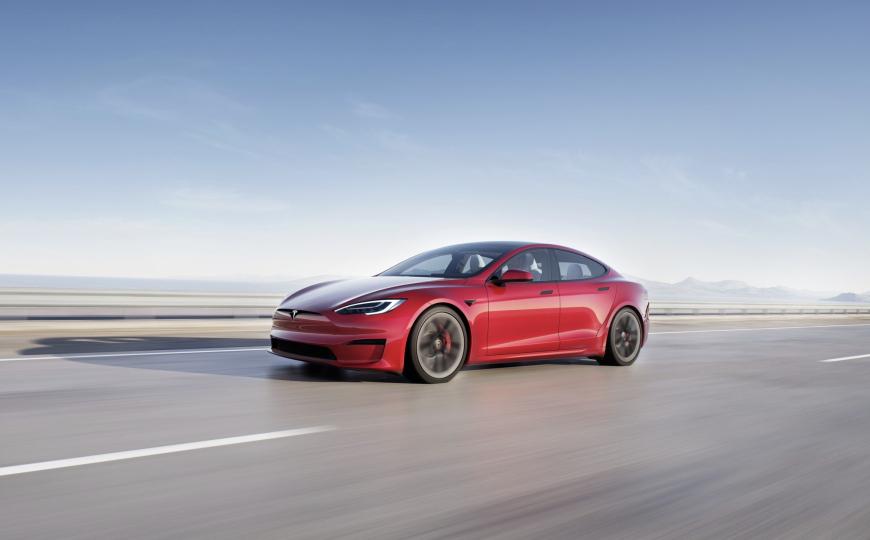
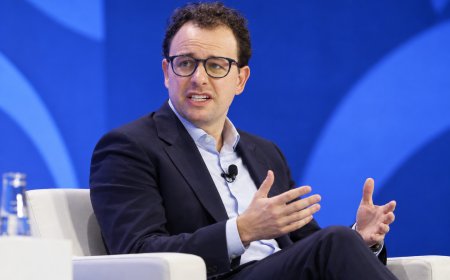
Tesla is bringing production of its Model S sedan and Model X SUV to an end, CEO Elon Musk said Wednesday during the company’s quarterly earnings call.
Musk said Tesla will build the final versions of both vehicles next quarter. He added that the company will continue to support existing owners of the Model S and Model X “for as long as people have the vehicles.”
“It’s time to basically bring the Model S and X programs to an end with an honorable discharge, because we’re really moving into a future that is based on autonomy,” Musk said. “So if you’re interested in buying a Model S and X, now would be the time to order it.”
Both vehicles are currently manufactured at Tesla’s Fremont, California factory. Once production winds down, the space will be repurposed for building Tesla’s Optimus humanoid robots, according to Musk. Production of the company’s Cybertruck, which is assembled at Tesla’s facility outside Austin, Texas, will continue.
Tesla first launched the Model S in 2012, and it is widely credited with making electric vehicles broadly appealing to mainstream consumers. The Model X followed as Tesla’s second major electric vehicle program.
From the start, Tesla expected its lower-priced vehicles — the Model 3 sedan and Model Y SUV — to outsell its more expensive S and X models significantly. In recent years, however, sales of the Model S and Model X have stagnated despite multiple design updates. Tesla has also faced growing competition in the luxury EV segment from traditional automakers and newer rivals such as Rivian and Lucid Motors.
“So that is slightly sad, but it’s… it is time to bring the S and X programs to an end,” Musk said.
Tesla’s first ground-up design
Although the Model S was not Tesla’s first vehicle — that distinction belongs to the original Roadster — it was the first car the company designed entirely from the ground up.
That clean-sheet approach allowed Tesla to eliminate many of the compromises found in the Roadster. It helped establish the Model S as one of the earliest truly mass-market electric vehicles.
When Tesla introduced the Model S in 2012, it carried a starting price of $57,400. Its floor-mounted battery pack made the car roomier and far more engaging to drive than most of the all-electric vehicles available at the time. Tesla also offered multiple battery options, allowing buyers to pay more for additional driving range.
Demand was immediate. Tesla collected more than 10,000 reservations before the first deliveries began in June 2012. By the following year, the Model S had earned MotorTrend’s Car of the Year award, beating out top internal combustion vehicles from around the world.
“At its core, the Tesla Model S is simply a damned good car you happen to plug in to refuel,” MotorTrend wrote at the time.
Tesla continued refining the Model S over the years, frequently adjusting battery configurations and even offering software-limited battery packs to encourage customers to unlock additional range later. The Model S was also the first Tesla vehicle to receive “Ludicrous Mode,” enabling 0-to-60 mph acceleration in as little as 2.8 seconds — a feature that became one of the company’s most effective word-of-mouth marketing tools.
Despite continued improvements, including a significant interior and exterior refresh in 2021 and class-leading range figures, the Model S gradually faded into the background as Tesla’s growth became increasingly driven by the more affordable Model 3 and Model Y.
The Fabergé SUV
The Model X followed a more complicated path.
Tesla first teased the SUV ahead of the Model S launch in 2012, but the Model X did not reach customers until 2015. When it arrived, it featured distinctive “Falcon Wing” rear doors that folded upward, making entry and exit unusually easy.
Those doors, however, became emblematic of the Model X’s production challenges. Their complexity — along with the SUV’s broader design — made the vehicle difficult to manufacture at scale while maintaining consistent quality. Musk later described the Model X as the “Fabergé of cars,” referencing both its luxury and its fragility.
While the Model X sold reasonably well alongside the Model S and received a significant redesign in 2021, production issues persisted. In early 2022, Musk acknowledged that Tesla had made a mistake by pausing production before the refreshed Model X was ready for high-volume manufacturing.
A long time coming
Looking back, the decision to retire the Model S and Model X appears less sudden than it might seem.
Musk himself said in 2019 that Tesla continued producing the vehicles primarily for sentimental reasons, calling them “niche” products that were “really of minor importance to our future.”
At the time, Tesla was still selling tens of thousands of Model S and Model X vehicles each quarter. But the company’s next major project was already looming: the Cybertruck.
Unveiled in 2019, the Cybertruck was positioned as a transformative product, with Tesla promising a base price of $40,000 and annual production of up to 250,000 units. Manufacturing delays caused by the COVID-19 pandemic and the vehicle’s unconventional design pushed its launch far beyond initial timelines.
When the Cybertruck finally reached customers, it struggled to gain traction. The widely cited backlog of 2 million orders never materialised, and the promised $40,000 entry-level version never appeared. Tesla has since sold only a few thousand Cybertrucks per quarter, even as the company continues to publicly back the vehicle, including during Wednesday’s earnings call.
The Cybertruck’s disappointing performance may have indirectly prolonged the life of the Model S and Model X. Not only did those legacy vehicles help partially offset the truck’s weak demand, but Tesla also grouped all three under an “other models” category in its quarterly sales reports, making it difficult to gauge the Cybertruck’s actual performance.
Ultimately, Musk says Tesla is now focused on autonomy — both in vehicles and robotics — and that shift appears to have sealed the fate of the Model S and Model X.
They may have been described as being of “minor importance” to Tesla’s future years ago. But the vehicles remain central to the company’s early success and to the rise of Musk himself, whose influence now extends far beyond the auto industry.
What's Your Reaction?
 Like
0
Like
0
 Dislike
0
Dislike
0
 Love
0
Love
0
 Funny
0
Funny
0
 Angry
0
Angry
0
 Sad
0
Sad
0
 Wow
0
Wow
0