





































Tesla reports Q1 revenue growth fueled by EV demand and FSD subscriptions
Tesla’s Q1 revenue increased, supported by strong electric vehicle sales and rising adoption of its Full Self-Driving (FSD) subscription service.
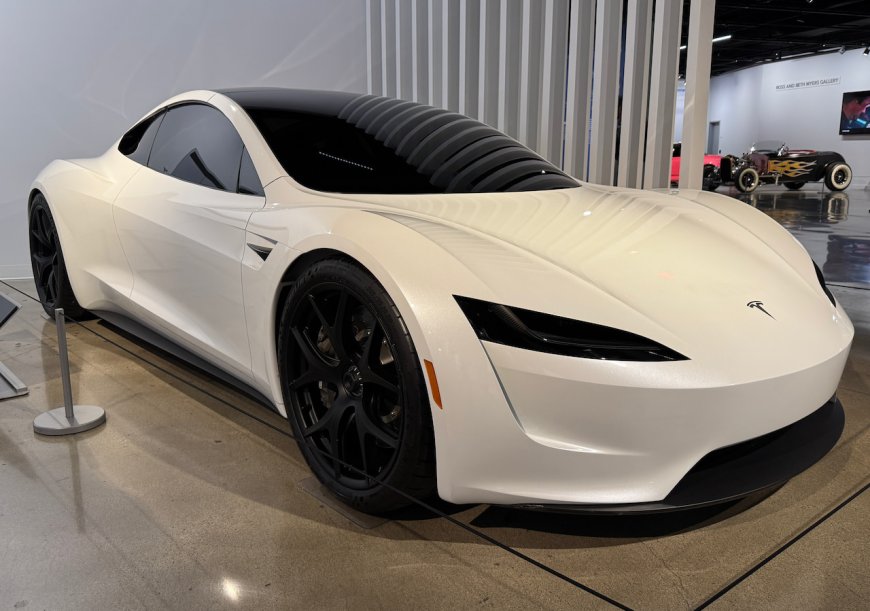
Tesla reported a year-over-year increase in revenue and profit, supported by stronger automotive sales and growth in services, including rising subscriptions to its Full Self-Driving (Supervised) advanced driver assistance system, which reached 1.28 million active subscriptions.
Tesla shares initially rose 4% in after-hours trading following the release of its first-quarter earnings report, driven by higher free cash flow and improved revenue and profit compared to the same period last year. However, the gains were short-lived, with the stock moving into negative territory during the company's earnings call.
The company reported revenue of $22.38 billion on Wednesday, a 16% increase from $19.3 billion in the first quarter of 2025. Automotive revenue also climbed to $16.2 billion, up from $13.96 billion in the same period a year earlier. Tesla also posted positive free cash flow of $1.44 billion, more than double the figure recorded in the first quarter of 2025. The result came in ahead of analysts' expectations, who had anticipated weaker cash generation in the quarter.
The revenue performance, which aligned with analyst expectations surveyed by Yahoo Finance, provided some positive momentum for the company amid ongoing challenges in EV demand. Tesla delivered 358,023 vehicles globally in the first three months of the year, slightly below analyst estimates of around 368,000 vehicles. During the same period, the company produced 408,386 vehicles, exceeding deliveries by a significant margin.
The company also benefited from higher average vehicle selling prices, growth in services, and increased adoption of FSD subscriptions, which rose 51% year-over-year to 1.28 million.
Despite the revenue increase, Tesla's broader financial performance showed pressure in 2025, with profits falling 46% year-over-year to $3.8 billion. The decline was largely attributed to weaker EV sales, a trend also seen across the automotive industry following the end of the $7,500 U.S. federal EV tax credit under the Trump administration.
Looking at a broader timeline, Tesla's first-quarter performance remains weaker compared to previous quarters. The company reported $24.9 billion in revenue in Q4 and $28 billion in Q3, with those figures boosted by consumers rushing to purchase EVs ahead of the tax credit expiration.
The latest results also highlight Tesla's continued reliance on its core EV business, as well as services and subscription revenue. At the same time, its longer-term bets on artificial intelligence and robotics have yet to contribute to earnings materially.
Tesla reported net income of $477 million, compared to $409 million in the first quarter of 2025. However, that prior-year profit represented a sharp 71% decline from the same period in 2024. Similar to revenue trends, Tesla's current-quarter profit remains below the levels seen in the previous three quarters, with Q4 net income at $840 million and Q3 at $1.37 billion.
The company said its improved bottom line was supported by higher average vehicle prices, increased deliveries, growth in services, and one-time automotive benefits linked to warranty and tariffs.
CEO Elon Musk has repeatedly warned that Tesla is undergoing a difficult transition from a traditional automaker to an AI and robotics-focused company. The company has yet to scale production of its Optimus humanoid robot, which will be manufactured at its Fremont, California, facility, or significantly expand its robotaxi operations. Tesla said preparations for its "first large-scale Optimus factory" will begin in the second quarter.
Tesla currently operates a limited robotaxi service without safety drivers in Austin, with early expansion into Dallas and Houston, although availability remains highly restricted.
The company also signalled major future investment plans, stating it expects capital expenditures of $25 billion in 2026—roughly three times its historical spending levels. Tesla CFO Vaibhav Taneja added that the company expects to experience negative cash flow for the remainder of the year as it continues funding its long-term transition strategy.
What's Your Reaction?
 Like
0
Like
0
 Dislike
0
Dislike
0
 Love
0
Love
0
 Funny
0
Funny
0
 Angry
0
Angry
0
 Sad
0
Sad
0
 Wow
0
Wow
0