





























Hermeus secures $350M to develop unmanned hypersonic fighter aircraft
Hermeus raises $350M to develop uncrewed hypersonic fighter jets, advancing high-speed defence technology and next-generation military aviation systems.
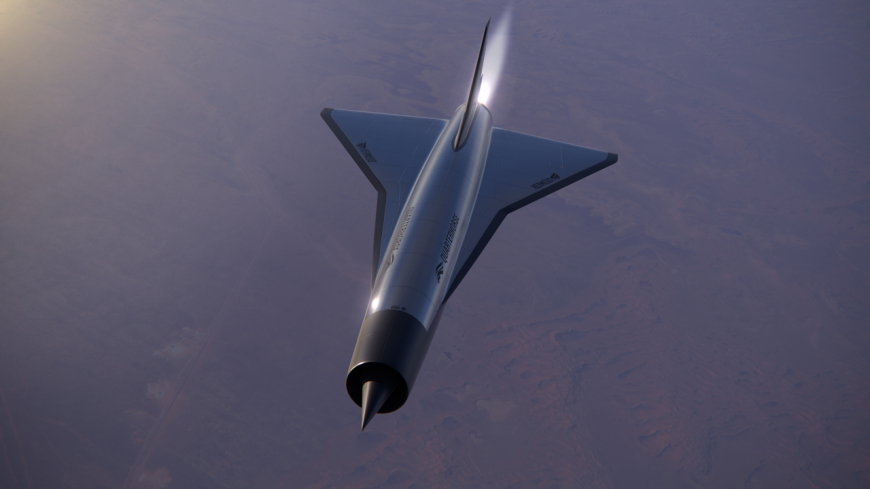
Hermeus has secured $350 million in new funding to continue developing what it describes as the "fastest unmanned aircraft," with the latest round pushing the company's valuation to approximately $1 billion.
The Los Angeles-based startup announced Tuesday that $200 million of the total comes from equity financing led by Khosla Ventures. Existing investors, including Canaan Partners, Founders Fund, In-Q-Tel, and RTX Ventures, also participated in the round. Additional funding came from new backers such as the venture arm of Cox Enterprises and the publicly traded investment company Destiny Tech100.
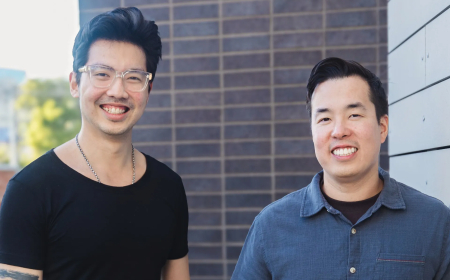
The remaining $150 million has been raised as debt financing. Co-founder and CEO AJ Piplica said this approach allows the company to fund its growing capital needs while minimising dilution for existing stakeholders.
He noted that the company's heavy focus on hardware development and expanding manufacturing capabilities makes non-dilutive financing especially valuable.
Hermeus' funding comes amid a broader surge in investment in defence technology startups. According to PitchBook, venture capital funding in the defence sector exceeded $9 billion across 265 deals globally last year, with corporate investors contributing an additional $2 billion across 28 rounds.
However, Piplica emphasised that Hermeus' progress is not solely due to favourable market conditions. He pointed to a key strategic shift the company made in its technical approach. Initially, Hermeus spent considerable time and resources developing its own engine. That direction changed after engaging with RTX Ventures, part of RTX Corporation.
Instead of continuing with a proprietary engine, the company chose to collaborate with RTX subsidiary Pratt & Whitney to modify the F100 engine for use in its hypersonic aircraft. This decision enabled Hermeus to accelerate development using a proven engine platform, allowing for faster testing cycles and improved reliability.
The shift also helped the startup secure contracts with the U.S. government and broaden its development strategy. Rather than focusing exclusively on achieving Mach 5 speeds as a single milestone, the company began pursuing multiple parallel efforts to advance its technology and meet near-term defence needs.
Company president Zach Shore said this approach strengthens both the technical roadmap and the business model, aligning development with the Department of Defence's immediate demand while continuing progress toward long-term goals.
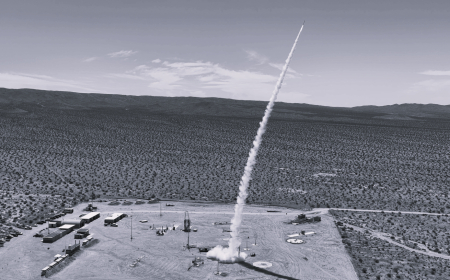
Recently, Hermeus conducted a test flight of a demonstrator aircraft roughly the size of an F-16 fighter jet. The company aims for the next version to reach supersonic speeds, with a third iteration already under development.
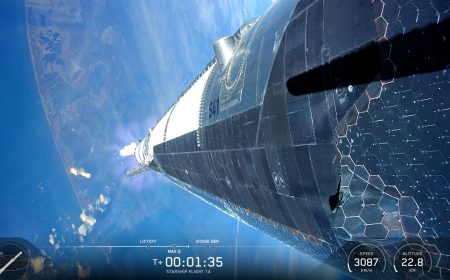
Piplica highlighted that this rapid prototyping strategy — building, testing, learning, and iterating quickly — is uncommon in the aviation industry. He pointed to SpaceX as an example of how iterative development can accelerate progress.
He added that one of the company's biggest challenges is developing the specialised talent required to build new aircraft at such a pace, noting that few organisations today operate on annual full-scale aircraft development cycles.
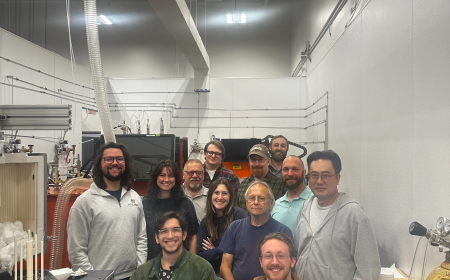
Hermeus currently employs nearly 300 people, and the new funding will support further hiring and the continued expansion of its manufacturing and testing capabilities.
While the company has completed two test flights — including an earlier, smaller demonstrator — Piplica acknowledged that setbacks are an expected part of the development process. He stressed that taking calculated risks is essential to advancing complex aerospace systems.
He noted that building multiple aircraft prototypes is critical to speeding up progress, as relying on fewer test vehicles can significantly slow development timelines.
What's Your Reaction?
 Like
0
Like
0
 Dislike
0
Dislike
0
 Love
0
Love
0
 Funny
0
Funny
0
 Angry
0
Angry
0
 Sad
0
Sad
0
 Wow
0
Wow
0