


































AI Startup CVector Raises $5M to Build an Industrial “Nervous System”
Industrial AI startup CVector has raised $5 million in seed funding to expand its software platform that helps manufacturers and utilities connect operations with real-time economic outcomes.

Industrial AI startup CVector has built what it describes as a digital brain and nervous system for large-scale industry. Now, co-founders Richard Zhang and Tyler Ruggles face a broader challenge: demonstrating to customers and investors how that AI-driven software layer translates into measurable cost savings across complex industrial operations.
The New York–based company has gained early traction following its pre-seed funding round last July. CVector’s system is now deployed with real customers, including public utilities, advanced manufacturing plants, and chemical producers. Working with those clients has helped the founders better define the problems their technology can address — and quantify the financial impact of doing so.
“One of the core things we’re seeing,” Zhang said, is that customers don’t really have the tools to understand how a small action — like turning a valve on or off — translates into whether that decision actually saved money.”
While it may seem surprising that something as simple as a valve adjustment could materially affect a company’s bottom line, such insights have helped propel CVector to its next milestone. The company has now raised a $5 million seed round, Zhang and Ruggles told TechCrunch.
The funding was led by Powerhouse Ventures and included a combination of venture and strategic investors. Participants included early-stage firms such as Fusion Fund and Myriad Venture Partners, as well as Hitachi’s corporate venture arm.
With the round closed, CVector has begun sharing more details about its early customer base — and the wide range of industries it now serves.
“The highlight of the last six to eight months has been traveling to the industrial heartland,” Zhang said. “These are places that feel remote, but they’re home to massive production facilities that are actively reinventing themselves and changing how they make decisions.”
One of those customers is ATEK Metal Technologies, an Iowa-based metals processing company that manufactures aluminium castings for Harley-Davidson motorcycles, among other products. At ATEK, CVector’s software helps identify potential issues that could lead to equipment downtime, track plant-wide energy efficiency, and monitor commodity price fluctuations that affect raw material costs.
“For me, that’s a great example of highly skilled labor that can really benefit from better tools,” Zhang said. “The software and technology side can help those teams evolve their operations and keep the business growing.”
While optimising legacy facilities may seem like an obvious use case, CVector has also attracted younger companies as customers. One example is Ammobia, a San Francisco–based materials science startup working to reduce the cost of ammonia production. Despite the differences between Ammobia and ATEK, Zhang said the underlying work CVector performs for both customers is remarkably similar.
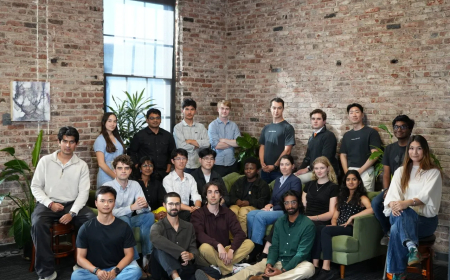
CVector itself is expanding as well. The company now employs 12 people and has secured its first physical office in Manhattan’s financial district. Zhang said much of the company’s hiring has focused on talent from fintech and finance, including hedge funds, where professionals are already accustomed to using data to gain an economic advantage.
“That’s really the core of our pitch,” Zhang said. “We call it ‘operational economics.’ Our platform sits between what’s happening on the plant floor and the financial reality of margins and profitability.”
Public utilities remain a key focus area for the company, Zhang added — including the type of infrastructure where small operational decisions can have outsized financial consequences. He also noted that customers have become far more comfortable discussing AI than they were a year ago.
“When Tyler and I started the company almost exactly a year ago, talking about AI was still almost taboo,” Zhang said. “There was a real chance customers would either embrace it or dismiss it outright. But over the last six months especially, everyone is asking for more AI-native solutions, even when the return on investment isn’t immediately clear. That adoption momentum is real.”
Ruggles said that growing interest ultimately comes down to financial pressure. With increasing uncertainty across global markets, companies are paying closer attention to costs and supply chain risks.
“We’re at a moment when businesses are deeply concerned about supply chain volatility and cost management,” Ruggles said. “Being able to layer AI on top of operations to build an economic model of a facility has really resonated — whether it’s long-established industrial plants in the heartland or new energy producers trying to do something entirely different.”
What's Your Reaction?
 Like
0
Like
0
 Dislike
0
Dislike
0
 Love
0
Love
0
 Funny
0
Funny
0
 Angry
0
Angry
0
 Sad
0
Sad
0
 Wow
0
Wow
0