






































Chinese EVs inch closer to the US as Canada slashes tariffs
Canada has sharply reduced tariffs on Chinese electric vehicles, a move that could bring Chinese EV makers closer to the US market amid shifting global trade dynamics.
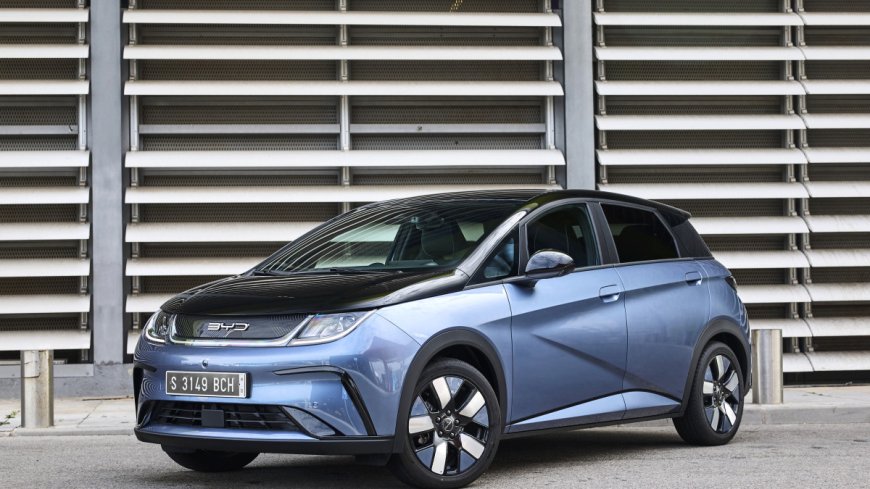
Canadian Prime Minister Mark Carney announced Friday that Canada will reduce its import tariff on Chinese electric vehicles from 100% to 6.1%, a move that could allow companies such as Geely, BYD, Xiaomi, and others to gain a more substantial presence in the North American automotive market.
Canada is not immediately opening the door to Chinese EVs. The country will initially cap annual imports at 49,000 vehicles, with the limit gradually increasing to roughly 70,000 vehicles over the next five years, according to the Associated Press.
The decision comes as China seeks to expand electric vehicle exports, particularly amid the European Union's consideration of lowering its tariffs on Chinese-made EVs. The United States remains an outlier, though President Donald Trump said this week he would be open to Chinese automakers building EV factories in the U.S.
China has already been exporting gasoline, hybrid, and electric vehicles to Mexico, where EV imports surged in 2025. Several leading Chinese EV manufacturers have been signalling interest in entering the U.S. market. Geely, for instance, recently held a drive event at the Consumer Electronics Show in Las Vegas. While the vehicles showcased were positioned for the Mexican market, a Geely executive suggested the company could announce U.S. entry plans within the next two to three years.
Automotive journalists, industry influencers, and executives — including Jim Farley of Ford — have praised the quality of Chinese EVs in recent years. However, a 100% U.S. tariff on Chinese vehicles has so far prevented them from entering the American market, despite their lower prices compared with U.S.-sold cars. Those prices are often driven by lower capital and labour costs as well as aggressive pricing strategies to gain market share.
Price competition is not the only concern. The U.S. has spent years attempting to reduce its reliance on China's EV supply chain due to national security concerns under both the Biden and Trump administrations. Additional legal barriers also exist. Last year, the U.S. Department of Commerce Bureau of Industry and Security issued rules restricting the import and sale of certain connected vehicles and related hardware and software linked to China or Russia.
On Thursday, Avery Ash, CEO of Securing America's Future Energy, warned against allowing Chinese automakers to manufacture vehicles in the United States.
"We've seen this strategy backfire in Europe and elsewhere — it would have potentially catastrophic impacts on our automotive industry, ripple effects across our defense industrial base, and make every American less secure," Ash said. "We urge the president to stay firm toward China and protect American auto manufacturers and workers."
What's Your Reaction?
 Like
0
Like
0
 Dislike
0
Dislike
0
 Love
0
Love
0
 Funny
0
Funny
0
 Angry
0
Angry
0
 Sad
0
Sad
0
 Wow
0
Wow
0