
































H-1B Visa for Indians: Complete and Updated Guide to Work in the USA (2026)
A complete and updated guide to the H-1B visa for Indians in 2026, covering eligibility, application process, lottery system, salary rules, H-4 work rights, and green card options.
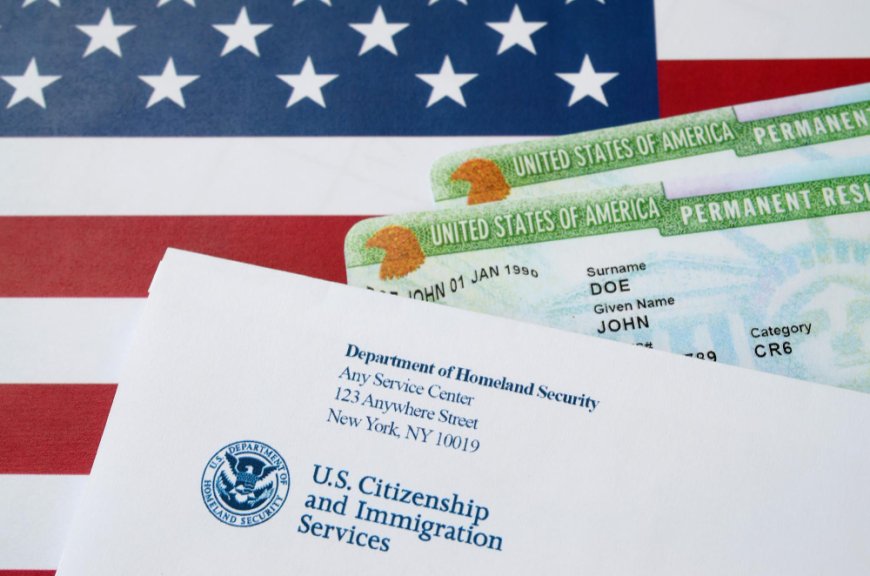
For many Indian professionals, working in the United States represents career growth, financial stability, and global exposure. For decades, the H-1B visa has been the most commonly used legal route for Indians to enter the U.S. workforce.
Despite rising competition, policy changes, and long green card wait times, the H-1B visa remains a central part of U.S. employment-based immigration. This article explains the H-1B visa in detail, using verified government data, and presents it clearly and in a human, non-technical way.
Understanding the H-1B Visa
The H-1B visa is a temporary, non-immigrant work visa issued by the U.S. government. It allows U.S. employers to hire foreign professionals for roles that require specialised skills and formal education.
These jobs usually demand at least a bachelor’s degree in a specific field. The visa is employer-sponsored, which means the employee cannot apply independently.
Official USCIS page:
https://www.uscis.gov/working-in-the-united-states/h-1b-specialty-occupations
Why the H-1B Visa Matters So Much to Indians
India supplies a large portion of the global technology and engineering workforce. U.S. companies rely on Indian professionals to fill skill shortages, especially in software development, artificial intelligence, cloud computing, data analytics, healthcare, and academic research.
Every year, Indians account for the majority of H-1B approvals, particularly in the technology sector. Many prominent American companies have long-standing recruitment ties with India.
Who Can Apply for an H-1B Visa?
To qualify for an H-1B visa, an Indian applicant must meet several conditions:
You must have a confirmed job offer from a U.S.-based employer.
The position must be a speciality occupation, meaning it requires specific academic knowledge.
You must hold a relevant bachelor’s degree or higher. Degrees from Indian universities are accepted, but USCIS may require a credential evaluation.
The employer must agree to pay the prevailing wage set by the U.S. Department of Labour.
Department of Labour or reference:
https://www.dol.gov/agencies/whd/immigration/h1b
How the H-1B Lottery Works
The U.S. government limits the number of new H-1B visas each year. Because applications far exceed the number of available visas, USCIS uses a computerised random lottery.
Employers first submit an online registration during the registration window, usually in March.
If selected, the employer may file the full petition.
Applicants with a U.S. master’s degree receive an additional chance under a separate quota.
USCIS lottery details:
https://www.uscis.gov/h-1b-registration-process
Detailed H-1B Application Process
The H-1B process always starts with the employer.
First, the employer registers the candidate in the USCIS lottery system.
Once selected, the employer files a Labour Condition Application (LCA) with the Department of Labour. This confirms salary, job location, and working conditions.
After LCA approval, the employer submits Form I-129, along with supporting documents such as job descriptions, educational certificates, and letters of experience.
USCIS reviews the petition and may approve it, deny it, or issue a Request for Evidence.
Visa Stamping and Interview in India
If the petition is approved, Indian applicants outside the U.S. must attend a visa interview.
Interviews are conducted at U.S. consulates in Chennai, Hyderabad, Mumbai, New Delhi, and Kolkata.
Consular officers verify the job role, employer legitimacy, education, and intent to work legally.
Official U.S. State Department information:
https://travel.state.gov/content/travel/en/us-visas/employment/h-1b-visa.html
Salary Requirements and Wage Protection
The U.S. government enforces strict wage rules for H-1B workers.
Employers must pay at least the prevailing wage for the job and geographic area.
This rule is designed to protect both U.S. workers and foreign employees from exploitation.
Wage violations can result in penalties, visa revocations, and blocklisting of employers.
Changing Employers on an H-1B Visa
One of the key advantages of the H-1B visa is job mobility.
An H-1B holder can change employers by having the new employer file a transfer petition.
The employee may begin work as soon as USCIS receives the petition.
Family Members and H-4 Visas
Spouses and unmarried children under 21 can accompany H-1B holders on H-4 visas.
Some H-4 spouses are eligible to apply for an H-4 EAD, which allows them to work legally.
USCIS H-4 EAD page:
https://www.uscis.gov/working-in-the-united-states/temporary-workers/h-4-dependent-spouses
H-1B Visa Extensions and Green Card Process
The H-1B visa is typically granted for three years and can be extended up to six years.
Because the visa allows dual intent, Indian professionals can apply for a green card while on H-1B status.
Most Indian applicants apply through the EB-2 or EB-3 categories.
Due to high demand, green card wait times for Indian nationals are long, but extensions beyond six years are permitted while the process continues.
Green card reference:
https://www.uscis.gov/green-card/green-card-eligibility-categories
Common Risks and Things to Watch Out For
Indian applicants should be cautious of fake consultancies, forged experience letters, and unrealistically low salary offers.
USCIS conducts background checks, and any false information can permanently affect future immigration options.
Always rely on genuine employers and official sources.
Frequently Asked Questions
1. What is the H-1B visa, and why is it essential for Indians?
The H-1B visa is a U.S. work visa that allows U.S. employers to hire foreign professionals in specialised fields such as IT, engineering, healthcare, finance, and research. For Indians, it is the most important and widely used legal pathway to work in the United States. Over the years, Indian professionals have received the highest number of H-1B approvals, driven by strong demand for skilled talent from India. The visa not only allows legal employment but also provides a long-term pathway toward permanent residency.
2. Can an Indian citizen apply for an H-1B visa without a job offer?
No, an Indian citizen cannot apply for an H-1B visa without a job offer. The H-1B visa is strictly employer-sponsored. This means a U.S.-based employer must first offer you a job and then file the H-1B petition on your behalf. Individuals cannot self-petition for this visa. Any website or agent claiming otherwise should be treated with caution.
3. How does the H-1B lottery system work for Indians?
Due to limited visa numbers and high demand, the U.S. government uses a lottery system to select H-1B applicants. Employers register candidates during the registration period, usually in March. If the number of registrations exceeds the annual cap, USCIS conducts a random selection. Indian applicants with a U.S. master’s degree are eligible for an additional opportunity under a separate quota. Selection is purely random and not based on experience or salary level.
4. Are Indian degrees accepted for H-1B visa applications?
Yes, degrees from Indian universities are accepted for H-1B visa applications. However, USCIS often requires a credential evaluation to confirm that the Indian degree is equivalent to a U.S. bachelor’s degree or higher. If your education does not precisely match the job role, USCIS may issue a Request for Evidence asking for additional proof of qualification.
5. What are the salary requirements for Indian H-1B workers?
U.S. law requires employers to pay H-1B workers at least the prevailing wage for the job and location. This rule is designed to protect both U.S. and foreign workers from unfair labour practices. Many H-1B petitions are scrutinised when the salary is deemed too low for the role. Indian applicants should ensure that the offered salary aligns with industry standards, as wage issues are a common reason for delays or denials.
6. Can an Indian H-1B visa holder change jobs in the U.S.?
Yes, H-1B visa holders can change jobs. This is known as an H-1B transfer. The new employer must file a new H-1B petition on your behalf. Once USCIS receives the petition, you are legally allowed to start working for the new employer. A new lottery is not required for job transfers, making the H-1B visa more flexible than many other work visas.
7. What happens if an Indian H-1B worker loses their job?
If an H-1B worker loses their job, U.S. immigration rules usually allow a 60-day grace period. During this time, the individual can look for a new employer, change visa status, or prepare to leave the U.S. If a new employer files an H-1B transfer within this period, the worker can remain in the country legally. Failing to act within the grace period may result in loss of legal status.
8. Can spouses of Indian H-1B holders work in the U.S.?
Spouses of H-1B holders receive H-4 visas. Some H-4 spouses are eligible to apply for an H-4 Employment Authorisation Document (EAD). This benefit is available only under specific conditions, usually when the H-1B holder has reached certain stages of the green card process. The H-4 EAD has helped many Indian families achieve financial stability in the U.S.
9. Is the H-1B visa a direct path to a green card for Indians?
The H-1B visa itself is not a green card, but it allows dual intent. This means Indian H-1B holders can apply for permanent residency while working in the U.S. Most Indians apply through employment-based green card categories such as EB-2 or EB-3. Due to high demand from India, green card wait times can be very long. However, U.S. law allows H-1B extensions beyond six years while the green card process is ongoing.
10. Is the H-1B visa still worth it for Indians in 2026?
Yes, despite increased competition and long wait times, the H-1B visa remains the most reliable and lawful option for Indians seeking to work in the United States. It offers access to global companies, competitive salaries, family benefits, and a pathway to permanent residency. For professionals with strong skills and strong employer support, the H-1B visa remains a valuable opportunity in 2026.
Final Thoughts
For Indian professionals, the H-1B visa remains a critical bridge to working in the United States. While the system is competitive and tightly regulated, those who follow the rules, rely on official information, and choose legitimate employers continue to succeed.
What's Your Reaction?
 Like
0
Like
0
 Dislike
0
Dislike
0
 Love
0
Love
0
 Funny
0
Funny
0
 Angry
0
Angry
0
 Sad
0
Sad
0
 Wow
0
Wow
0