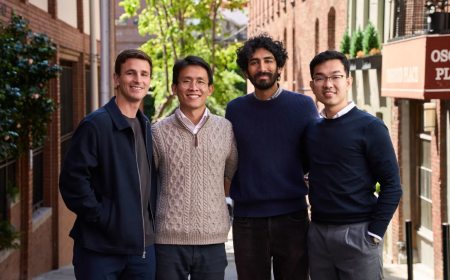
Henry Soong is developing a vertical microdrama series that doesn’t feel disposable or low-quality. That ambition sets the Watch Club founder apart in a multibillion-dollar industry dominated by apps that churn out formulaic, often cringe-inducing content and rely on aggressive tactics to drive in-app spending.
“Ninety per cent of these stories are, ‘I’m a poor girl! I fell in love with a secret billionaire! He’s a werewolf, and his mother is a vampire, and she disapproves of me,” Soong told TechCrunch. “There’s a market for that, and we shouldn’t laugh at that, but I think this can be so much bigger than just sloppy, AI-adjacent romance soap operas.”
Soong’s critique may sound combative, but it reflects fundamental dynamics in the market. Competing microdrama platforms have proven how lucrative the format can be: ReelShort generated about $1.2 billion in in-app purchases last year, while DramaBox brought in roughly $276 million. Yet Soong argues the quality bar remains so low that much of the content could plausibly be produced using AI-generated scripts.
That raises a larger question: what would the revenue potential look like for a microdrama app that produces shows people actually enjoy and talk about?
Soong is addressing that with Watch Club, an app featuring short-form drama series created by SAG-AFTRA and Writers Guild of America talent. Most leading microdrama platforms, including DramaBox and ReelShort, do not work with union actors or writers.
A former product manager at Meta, Soong describes himself as “a fangirl, through and through.” He believes what makes television culturally powerful isn’t just the content itself, but the communities that form around it. Drawing on his background in building social products, Soong aims to differentiate Watch Club by embedding a social network directly into the app.
“I think you can actually build such a more interesting business if you take what makes TV truly the most fun,” he said, pointing to “Heated Rivalry” as an example. “You watch it, and then you just want to gossip with your three best friends about it, or see what 100,000 funny, clever other young women or gay people on the internet are saying.”
Today, viewers debate Severance theories on Reddit, react to the Stranger Things finale on Tumblr, and once had to dodge spoilers for Succession or The White Lotus on Twitter before it became X. Soong sees an opportunity to combine the show and the fan conversation in a single destination.
Regarding monetisation, Soong is intentionally leaving that question open for now. Like many early-stage, venture-backed startups, Watch Club is focused first on understanding how users engage with the product. Advertising is one possible path, but the concept alone was compelling enough to attract seed funding led by GV. Additional backing came from Jack Conte, founder and CEO of Patreon, as well as current and former executives from Hulu, HBO Max, and Meta. Upside Ventures, run by prominent U.K. YouTubers Sidemen, also participated.
Because Soong doesn’t come from a film background, he brought in Devon Albert-Stone as founding producer. He said Watch Club plans to hire WGA writers and develop an initial slate of 10 shows.
“We work with brilliantly talented people when they have a few months free to go work on something that may not be huge budget because we offer them huge creative latitude to go do something that Amazon would never let them do, at a speed and velocity that feels way more exciting than the glacial pace of the television industry,” Soong said.
He added: “I’m really good at figuring out how to monetise businesses that seem almost impossible to monetise.”
At Meta, Soong’s role from 2016 to 2019 focused on generating revenue in China, where Meta’s products were blocked. By the time he left in 2019, he said Meta was generating about $5 billion in annual ad revenue from Chinese companies advertising to audiences outside the country.
That experience, while far removed from Hollywood, gave Soong insight into the economics behind microdrama apps, which surged in China toward the end of the last decade.
“Right around the time that I was leaving Meta [in 2019] is when these Chinese microdrama apps started spending all this money buying ads on Instagram so that Americans and Germans would download ReelShort and DramaBox,” he said. “I know this business playbook. I know how expensive and capital-intensive it is, and I think you can build a way better microdrama business if you aren’t 100% dependent on paid user acquisition.”
Watch Club will soon test its thesis with the release of its first original series, Return Offer, which will debut on the app with daily episodes. On Tuesday, the company released the first trailer for the show, which follows a group of tech interns in San Francisco competing for a coveted return offer.
“My goal is to prove that our high-quality stories can give birth to the thing that supplants streaming television,” Soong said, “and part of doing that is by building welcoming, creative sets with talented professionals, where people are having fun, despite small budgets, making something wonderful.”


























 Like
0
Like
0
 Dislike
0
Dislike
0
 Love
0
Love
0
 Funny
0
Funny
0
 Angry
0
Angry
0
 Sad
0
Sad
0
 Wow
0
Wow
0