






























Inside Rivian’s big bet on AI-powered self-driving
Rivian is making a significant push into AI-powered self-driving with its new Large Driving Model, debuting on second-generation R1 vehicles. The company plans to launch Universal Hands-Free driving this month and expand to point-to-point hands-free navigation in 2026. Rivian’s shift to an AI-first autonomy platform, new custom hardware, and lidar integration highlights its long-term bet on advanced driver assistance amid growing competition from Tesla.
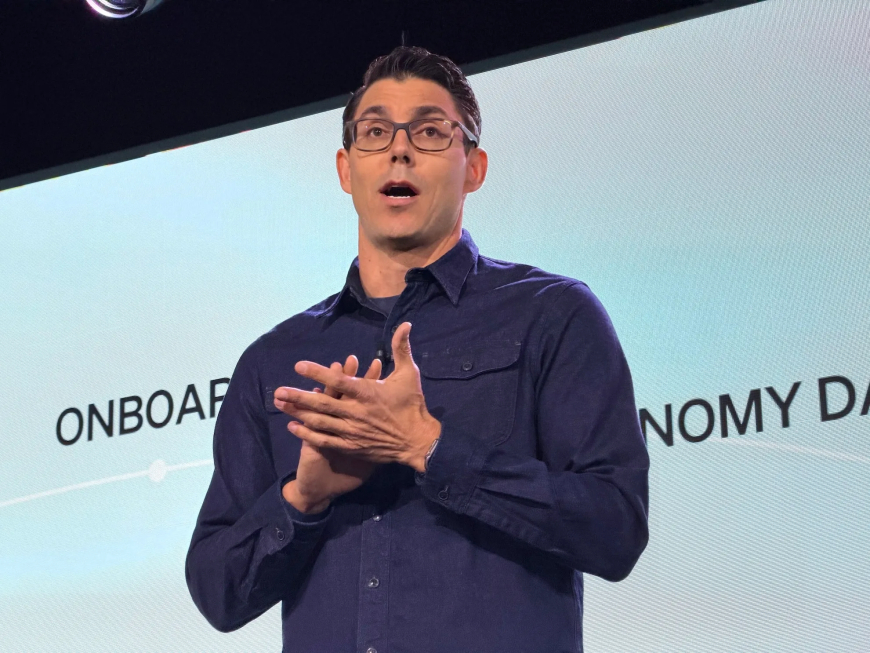
Rivian CEO RJ Scaringe says the company’s earlier driver-assistance system was built around deterministic, human-coded rules.
“Everything the vehicle did was the result of a prescribed control strategy written by humans,” he said.
That changed in 2021. As transformer-based AI models advanced rapidly, Scaringe quietly reorganised Rivian’s autonomy team and began transitioning the company toward an AI-driven approach. After several years of development, the new system debuted in 2024 on Rivian’s second-generation R1 vehicles, which run on Nvidia’s Orin processors.
According to Scaringe, real progress only emerged once Rivian began training the system on large volumes of fleet data.
The company now believes that feeding its Large Driving Model (LDM) with this data will enable Rivian to roll out “Universal Hands-Free” later this month. With that update, R1 owners will be able to drive hands-free across 3.5 million miles of roads in the U.S. and Canada, assuming lane lines are present. A point-to-point hands-free navigation feature, similar to the demo Rivian provided, is planned for late 2026.
The challenge of progressing from “hands off” to “eyes off”
Beginning in 2026, Rivian intends to ship its smaller, more affordable R2 SUV, equipped with a new autonomy computer and lidar sensor. These upgrades are expected to enable hands-off, and eventually eyes-off, driving. Full autonomy, however, remains dependent on how fast Rivian can train the LDM.
One complication is timing: the advanced hardware will not be ready until months after the first R2 vehicles reach buyers. Customers seeking eyes-off capability will need to wait, even though the R2 is a crucial model for Rivian following slower sales of its first-generation cars.
Scaringe acknowledged this misalignment.
“When tech is moving as fast as it is, there’s always going to be some level of obsolescence,” he said. Early R2 buyers will still receive hands-off point-to-point driving, but not full eyes-off capability.
Some customers may choose to delay their purchase, he said, while others may buy early and trade up later. Rivian expects demand for the R2 to remain high regardless.
“In a perfect world, everything times at the same time,” Scaringe said. “But the timeline of the vehicle and the timeline of the autonomy platform are just not perfectly aligned.”
A long-standing vision reemerges
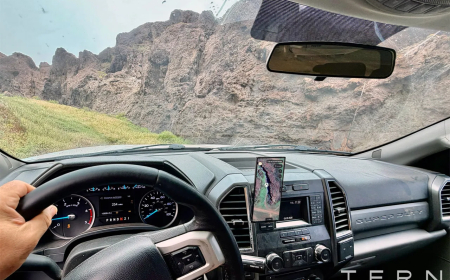
During my first interview with Scaringe in 2018 — before Rivian had unveiled its first vehicles — he outlined a vision that has stuck with me: a Rivian capable of dropping a driver at one end of a hiking trail and then meeting them at the other.
It was an ambitious idea, emblematic of the self-driving optimism of that era, and aligned with Rivian’s adventure-oriented brand.
Scaringe still believes this scenario could become reality, though not until Rivian deploys its more advanced R2 models and the LDM is trained on more complex roads, including ones without lane markings.
Could Rivian reach Level 4 autonomy within the next few years?
“We could,” Scaringe said, though he emphasised it hasn’t been a significant development focus yet. He believes the LDM could eventually handle unmarked or off-road surfaces.
But Rivian is not aiming for extreme off-road feats.
“We’re not putting any resources into rock crawling autonomously,” he said. “But getting to the trailhead? For sure.”
This story has been updated to note that Rivian’s Universal Hands-Free update will launch later this month.
What's Your Reaction?
 Like
0
Like
0
 Dislike
0
Dislike
0
 Love
0
Love
0
 Funny
0
Funny
0
 Angry
0
Angry
0
 Sad
0
Sad
0
 Wow
0
Wow
0