







































Shrunk Down into an M5 Chip: Apple’s Next Big Leap in Silicon Technology
Apple’s M5 chip is expected to be smaller, faster, and more efficient. Learn how the process shrink boosts performance, AI, battery life, and thermal efficiency.
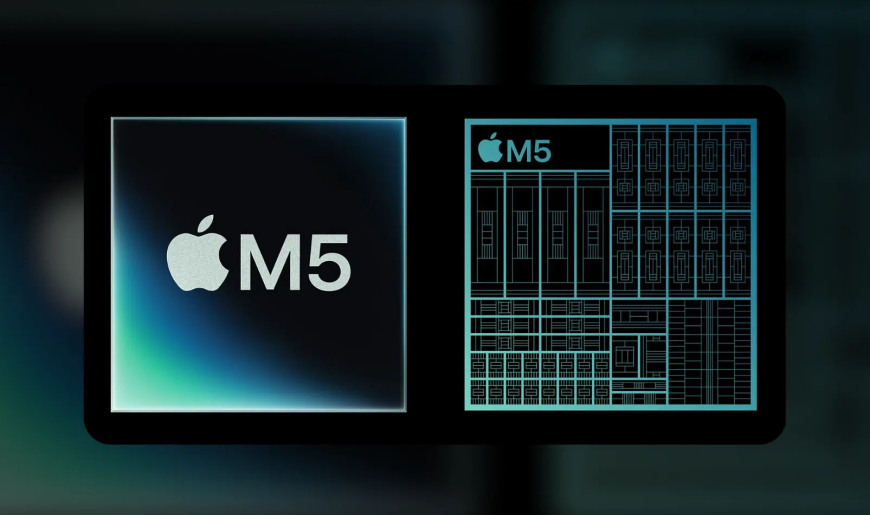
Apple’s custom silicon journey has transformed the computing industry, redefining performance, efficiency, and power management across Macs, iPads, and beyond. With the future of Apple silicon now pointing toward the M5 chip, expectations are higher than ever.
As reports suggest that Apple’s next-generation processor will be “shrunk down” using an even more advanced manufacturing process, the M5 chip could mark one of the most significant performance-per-watt gains in Apple’s history.
This blog explores what “shrunk down” really means, what improvements the M5 chip could bring, and why it matters for future Apple devices.
What Does “Shrunk Down” Mean in Chip Design?
When a chip is described as being “shrunk down,” it refers to a smaller semiconductor manufacturing process, measured in nanometers (nm). A smaller process allows more transistors to be packed into the same physical space while improving efficiency.
For the M5 chip, this likely means:
- Smaller transistors
- Higher transistor density
- Reduced power consumption
- Improved thermal efficiency
Shrinking the chip does not necessarily make the device physically smaller—but it dramatically improves performance and efficiency.
Apple Silicon Evolution So Far
Since transitioning away from Intel, Apple has followed a consistent strategy: incremental architectural improvements combined with significant efficiency gains.
Each generation of Apple silicon has delivered:
- Faster CPU and GPU performance
- Better battery life
- Improved AI and machine learning capabilities
- Lower heat output
The M5 chip is expected to continue this trajectory, but with a more significant leap forward enabled by advanced fabrication technology.
Expected Manufacturing Process of the M5 Chip
Industry analysts suggest the M5 chip could be built using a next-generation 2nm or enhanced 3nm process, depending on production readiness.
Benefits of a Smaller Process Node
- Significant power efficiency improvements
- Higher sustained performance without throttling
- Better performance in thin and fanless devices
- Improved reliability and longevity
This process shrink is especially important for laptops, tablets, and future hybrid devices.
Performance Gains: More Power, Less Energy
Shrinking the M5 chip is expected to deliver:
- Faster single-core and multi-core CPU performance
- Improved integrated GPU capabilities
- Enhanced memory bandwidth
- Better multitasking and professional workload handling
Instead of focusing solely on raw speed, Apple prioritises performance per watt, benefiting both professionals and everyday users.
AI and Machine Learning Improvements
One of the most essential upgrades to the M5 chip is likely its Neural Engine.
With more transistors available, Apple can:
- Expand on-device AI processing
- Improve real-time image and video analysis
- Enhance voice recognition and generative AI tasks
- Reduce reliance on cloud processing
This aligns with Apple’s focus on privacy-first, on-device intelligence.
Thermal Efficiency and Silent Performance
A minor chip produces less heat, which has significant real-world benefits:
- Quieter devices
- Less need for active cooling
- Better sustained performance under load
- Increased device lifespan
The M5 chip could further enable mighty, fanless Macs and iPads without sacrificing performance.
Devices Likely to Use the M5 Chip
The M5 chip is expected to power a wide range of Apple products, including:
- MacBook Air and MacBook Pro
- iPad Pro
- Mac mini
- Possibly future mixed-reality or hybrid devices
A more efficient chip enables thinner designs, longer battery life, and new form factors.
Why the M5 Chip Matters
The M5 chip is not just another incremental upgrade—it represents Apple’s long-term silicon strategy:
- Complete vertical integration
- Reduced dependence on third-party chipmakers
- Stronger differentiation from competitors
- Industry-leading efficiency and performance balance
As competitors struggle with heat and power efficiency, Apple continues to push the limits of what mobile and desktop processors can achieve.
Final Thoughts
“Shrunk down into an M5 chip” is more than a technical phrase—it signals Apple’s relentless drive toward smaller, faster, and more efficient silicon. With a reduced process node, expanded AI capabilities, and improved thermal behaviour, the M5 chip could redefine expectations for performance and battery life across Apple’s ecosystem.
While official details remain under wraps, one thing is clear: Apple’s silicon roadmap shows no signs of slowing down—and the M5 chip may be its most impressive step yet.
What's Your Reaction?
 Like
0
Like
0
 Dislike
0
Dislike
0
 Love
0
Love
0
 Funny
0
Funny
0
 Angry
0
Angry
0
 Sad
0
Sad
0
 Wow
0
Wow
0