





























In 2026, AI will move from hype to pragmatism
A detailed look at the top AI coding apps that help developers write code in minutes, along with an honest explanation of why these tools matter and where they fall short.
If 2025 was the year AI underwent a reality check, 2026 is shaping up to be the year the technology becomes practical. Attention is already drifting away from the race to build ever-larger language models and toward the more difficult task of making AI genuinely helpful. That shift means deploying smaller models where they make sense, embedding intelligence into physical products, and building systems that integrate smoothly into how people actually work.
Experts who spoke to TechCrunch describe 2026 as a transitional year — one marked by a move away from brute-force scaling and toward new architectures, from flashy demonstrations to focused deployments, and from agents that promise autonomy to tools that genuinely augment human labour.
The AI boom isn’t ending, but the industry is beginning to sober up.
Scaling laws won’t cut it.
In 2012, Alex Krizhevsky, Ilya Sutskever, and Geoffrey Hinton published their landmark ImageNet paper, demonstrating that AI systems could learn to recognise objects by processing millions of images. The approach was computationally expensive but feasible thanks to GPUs, ushering in a decade of intensive AI research focused on inventing new architectures for different tasks.
That era peaked around 2020, when OpenAI released GPT-3, demonstrating that dramatically increasing model size could unlock new capabilities such as reasoning and coding without explicit training. This moment marked what Kian Katanforoosh, CEO and founder of AI agent platform Workera, calls the “age of scaling” — a period dominated by the belief that more compute, more data, and larger transformer models would inevitably lead to breakthroughs.
Today, many researchers believe the industry is approaching the limits of those scaling laws and must return to deeper research. Yann LeCun, Meta’s former chief AI scientist, has long argued that reliance on scaling alone is insufficient and that better architectures are needed. Sutskever has also said in a recent interview that pretraining gains are flattening, signalling the need for new ideas.
“I think most likely in the next five years, we are going to find a better architecture that is a significant improvement on transformers,” Katanforoosh said. “And if we don’t, we can’t expect much improvement on the models.”
Sometimes less is more.e
While large language models excel at general-purpose tasks, many experts believe the next wave of enterprise adoption will be driven by smaller, more specialised models fine-tuned for specific domains.
“Fine-tuned SLMs will be the big trend and become a staple used by mature AI enterprises in 2026,” said Andy Markus, chief data officer at AT&T. “The cost and performance advantages will drive usage over out-of-the-box LLMs.”
French open-weight AI startup Mistral has made a similar case, arguing that its smaller models outperform larger ones on specific benchmarks after fine-tuning. Jon Knisley, an AI strategist at the enterprise AI firm ABBYY, said that the’ efficiency and adaptability of smaller models make them ideal for precision-focused applications. Their size also makes them better suited for local deployment, a trend accelerated by advances in edge computing.
Learning through experience
Humans learn not just through language but through experience. Large language models, by contrast, predict text rather than truly understanding how the world works. Many researchers believe the next major leap will come from world models — systems that learn how objects move and interact in three-dimensional spaces.
Momentum around world models is building quickly. LeCun has left Meta to start his own lab focused on the approach. Google DeepMind has been developing its Genie models, while startups like Decart and Odyssey have released demos. Fei-Fei Li’s World Labs recently launched its first commercial world model, Marble. New entrants such as General Intuition and Runway have also entered the space.
While long-term potential lies in robotics and autonomy, near-term impact is expected in gaming. PitchBook projects the world model gaming market could grow from $1.2 billion between 2022 and 2025 to $276 billion by 2030, driven by more interactive environments and lifelike characters.
Agentic nation
AI agents failed to meet expectations in 20, 2, primarily because they struggled to integrate with real-world systems. Without access to tools and context, most agents remained trapped in pilot projects.
Anthropic’s Model Context Protocol (MCP) — often described as a “USB-C for AI” — addressed that gap by enabling agents to connect with databases, APIs, and search engines. OpenAI and Microsoft have embraced MCP, and Anthropic recently donated it to the Linux Foundation’s new Agentic AI Foundation. Google has also begun deploying managed MCP servers.
With these connections in place, 2026 may finally be the year agentic workflows move from demos into daily use. Rajeev Dham of Sapphire Ventures expects agent-first systems to assume system-of-record roles across sectors such as healthcare, proptech, and customer support.
Augmentation, not automation
Despite fears of job losses, Katanforoosh argues that 2026 will be “the year of the humans.” He says the industry is realising that AI has not yet achieved genuine autonomy and that the focus will shift toward augmenting human work rather than replacing it.
He predicts new hiring in areas such as AI governance, safety, transparency, and data management, and remains optimistic about employment levels. “People want to be above the API, not below it,” added General Intuition founder Pim de Witte.
Getting physical
Advances in small models, world models, and edge computing are setting the stage for more physical AI applications. Vikram Taneja, head of AT&T Ventures, expects robotics, autonomous vehicles, drones, and wearables to enter the mainstream in 2026.
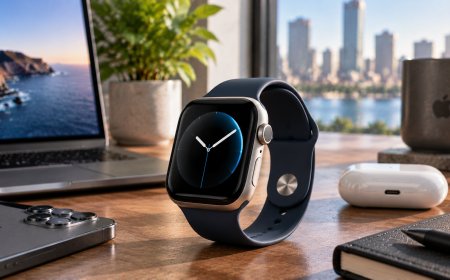
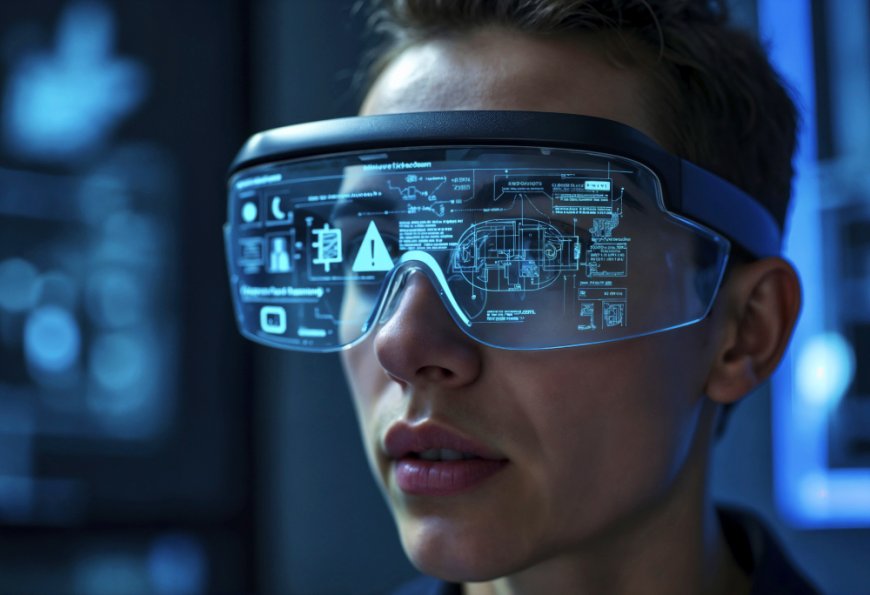
While robotics and AVs remain expensive to deploy, wearables offer a more accessible path. Smart glasses like the Ray-Ban Meta and emerging AI-powered health rings and smartwatches are normalising always-on, on-body inference. Connectivity providers, Taneja noted, will need to adapt their networks to support this new generation of AI-powered devices.
In 2026, the promise of AI won’t be louder — it will be more grounded.
What's Your Reaction?
 Like
0
Like
0
 Dislike
0
Dislike
0
 Love
0
Love
0
 Funny
0
Funny
0
 Angry
0
Angry
0
 Sad
0
Sad
0
 Wow
0
Wow
0