




































Social Media Follower Counts Have Never Mattered Less, Creator Economy Execs Say
Social media follower counts matter less in 2025 as creators navigate algorithm-driven platforms. New strategies, such as clipping and niche communities, are shaping the future of the creator economy.
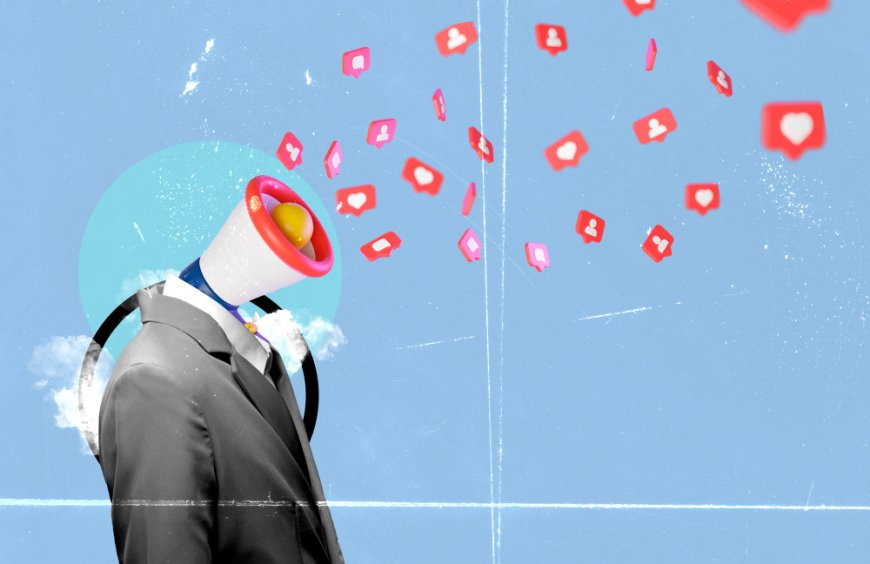
As social media becomes increasingly reliant on algorithmic feeds, creators are adapting to a new reality: just because you post something doesn't mean your followers will see it.
"I think that 2025 was the year where the algorithm completely took over, so followings stopped mattering entirely," said Amber Venz Box, CEO of LTK, speaking to TechCrunch.
This isn't new for creators — Patreon CEO Jack Conte has been voicing similar concerns for years — but throughout 2025, the industry at large began reacting to this shift in different ways, from influencers to streamers.
According to the executives TechCrunch spoke to about the future of the creator economy, creators are finding new ways to engage and strengthen their relationships with their followers. Some are acting as a counter to AI-generated content, while others are flooding the market with their own content, albeit less sophisticated.
Box's company, LTK, connects creators with brands through affiliate marketing, allowing creators to earn commissions on products they recommend. This model relies heavily on audiences trusting individual creators, but concerns about fragmentation in creator-audience relationships could pose an existential threat to the company.
However, a study commissioned by Northwestern University found that trust in creators increased 21% year over year, which was a pleasant surprise for Box.
"If you asked me at the beginning of 2025, 'Hey, is trust in creators going to go up or down?' I would have probably said down, because people understand it's an industry – they understand how it's working," she said. "But actually, AI pushed people to rotate trust to real humans who they know have real-life experiences."
This means consumers are more likely to seek out content from creators they know and trust. According to the study, 97% of CMOs plan to increase influencer marketing budgets in the coming year.
That doesn't mean building and owning these relationships is simple. LTK creators, who rely on affiliate income, are betting that this AI-induced scepticism will drive people toward more direct relationships, through paid fan communities or less algorithm-driven platforms like LTK. For other types of creators, like streamers, video podcasters, and short filmmakers, owning their audience more closely resembles growth hacking.
Teenage Clipping Armies
As Sean Atkins, CEO of short-form video production company Dhar Mann Studios, put it: "In a world driven by AI and algorithms, where people trust another human being more in this micro-atomization of attention, how do you market when you can't control that?"
According to Eric Wei, cofounder of Karat Financial, a financial services company for creators, creators have a new weapon: armies of teenagers on Discord, whom creators pay to make clips of their content, which these teens then post en masse on algorithm-driven platforms.
"That's been going on for a while," Wei explained. "Drake does it. A lot of the biggest creators and streamers in the world have been doing it – Kai Cenat [a top Twitch streamer] has done it, hitting millions of impressions... If it's algorithmically determined, clipping suddenly makes sense, because it can come from any random account that just has really good clips."
Wei believes that clipping will become even more popular in 2026, as it reflects the fragmentation of relationships on social media. Even the biggest creators are struggling to reach their fans directly, which is why they turn to clipping. While going viral on these platforms is easier if you have a large following, you don't need a track record to get noticed — the algorithm might still decide that your video should be distributed more broadly. When these "clippers" post highlights from specific creators' streams, they can earn revenue based on the number of views.
"Clipping feels like an evolution of meme accounts," said Glenn Ginsburg, president of QYOU Media, which produces content for young audiences. "It's become a race among creators to push content out far and wide, competing to get the most views on the same IP."
Reed Duchscher, founding CEO of Night (a talent management company representing Kai Cenat and other top creators), helps creators maximize their virality. Having previously managed MrBeast, Duchscher cultivated a fast-paced, attention-grabbing style that turned MrBeast into an empire. However, Duchscher isn't entirely convinced about the broader potential of clipping.
"Clipping is important if you're a creator, because you need to flood the zone with content, and it's a good way to get your face out there," Duchscher said. "It's also very hard to get to scale, because there are only so many clippers on the internet. To spend large media budgets... there are just a lot of complications."
The More Niche, the Better
The prevalence of "slop" on social media — low-quality or spammy content — has become such a threat that Merriam-Webster even named it its word of the year.
"Over 94% of people say social media is no longer social, and over half of them are rotating time elsewhere into smaller, niche communities they know are real and that they can interact with," said Box, pointing to platforms like Strava, LinkedIn, and Substack.
As relationships between creators and their audiences become increasingly challenging to maintain, Duchscher predicts that creators serving niche audiences will thrive. He believes "macro creators," such as MrBeast, PewDiePie, and Charli D'Amelio, who have amassed hundreds of millions of followers, will become even harder to emulate.
Pointing to creators like Alix Earle and Outdoor Boys, who have millions of followers but don't necessarily appeal to the masses, Duchscher adds, "Algorithms have gotten so good at giving us exactly the content we want. It's much harder for a creator to break out into every niche algorithm."
Atkins agrees, noting that the creator economy goes far beyond entertainment. "The creator economy is viewed through this lens of entertainment, but that's a mistake, because it's more like thinking about the internet or AI – it's going to affect everything."
Atkins cites Epic Gardening, a YouTube channel that has expanded into the gardening space. "Epic Gardening bought the third-largest seed company in the U.S., so now he's the third-largest seed company owner as a content creator," he said.
Though the creator economy is in flux, it's a resilient industry — one accustomed to navigating algorithmic whims, even if it may seem like a new realm for outsiders.
Creators are "literally impacting everything," Atkins said. "I bet there's a creator who's an expert at cement mixing for skyscrapers."
What's Your Reaction?
 Like
0
Like
0
 Dislike
0
Dislike
0
 Love
0
Love
0
 Funny
0
Funny
0
 Angry
0
Angry
0
 Sad
0
Sad
0
 Wow
0
Wow
0