



































Current is a new RSS reader that’s more like a river than an inbox
Current is a modern RSS reader designed as a continuous stream rather than a traditional inbox, offering a calmer way to follow blogs, newsletters, and independent publishers.

A new app called Current is taking a different approach to RSS readers, aiming to create a reading experience that feels more like dipping into a flowing stream of updates and less like working through an inbox. By doing so, the app could make RSS a more welcoming way to follow news and information for people who aren’t reading for work or who don’t think of themselves as hardcore information junkies.
Current’s developer, Terry Godier, said he noticed he always felt guilty when he came back to his feed reader after being away for a few days. He traced that feeling to how most RSS readers were built to resemble email clients, complete with unread counters and bold formatting for new items.
“Email’s unread count means something specific: these are messages from real people who wrote to you and are, in some cases, actively waiting for your response. The number isn’t neutral information. It’s a measure of social debt,” Godier wrote in a blog post about building Current, a side project he worked on in his spare time.
“But when we applied that same visual language to RSS…we imported the anxiety without the cause,” he added.
For readers who may not be familiar, RSS — short for Really Simple Syndication — is a format that lets users pull in updated information from websites in a structured way. That means new headlines and stories from a favourite site can appear automatically as fresh entries inside an RSS reader, also sometimes called a news reader or feed reader.
RSS was hugely popular in the early 2000s. Still, its mainstream momentum faded after Twitter launched in 2006, prompting many people to switch to another platform for real-time news and information sharing. Over the next few years, users moved away from Google’s widely loved RSS reader, Google Reader, in favour of Twitter’s short posts, and Google Reader later shut down entirely. (Many people still miss it.)
Even so, RSS itself never disappeared. In addition to serving as the underlying system for podcast distribution, RSS is still used to syndicate website content through apps like Feedly, NetNewsWire, Inoreader, Reeder, and others.
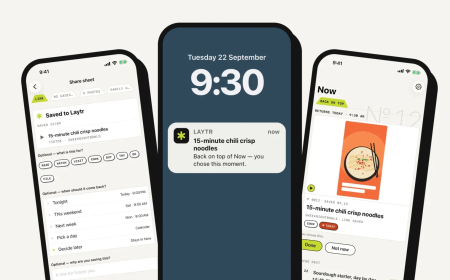
Current is proposing a different RSS experience, rather than organising feeds as lists to process — or as unread counts that feel like they must be driven down to zero — Current’s main screen is designed as a river.
“You’re not watching content drift past like a screensaver. It’s a river in the sense that matters: content arrives, lingers for a time, and then fades away,” Godier wrote.
In Current, every piece of content ages differently. Items dim over time before fading out completely and becoming invisible. Breaking news stays bright for about three hours, daily news articles may remain visible for around 18 hours, essays can linger for three days, and evergreen pieces like tutorials can stay in the River for up to a week. As users scroll, they can keep up with what’s new and interesting without the pressure of explicitly marking everything as read.
When users set up Current, they choose one of five speeds for each source: Breaking, News, Article, Essay, or Tutorial. Instead of marking articles as read, users dismiss content by pushing cards off the screen with a long left swipe, or by tapping a release button at the end of an article they finish, which takes them back to the River. There’s also an undo option.
Current includes other features that are likely to appeal to RSS power users.
The app can fetch full article text from the web even when a site truncates its RSS feeds to encourage direct visits. Users can also label sources as webcomics to enable an image-first reader experience. Sources can be muted for a week, and important feeds can be pinned to the top of the rRiver
Current also adds some intelligence to the experience. If a site is flooding the feed, the app will suggest quieting or rate-limiting it. It also notices reading habits — such as sources users frequently skip or read enthusiastically — and will recommend removing feeds that aren’t being read often, or pinning those that are.
Notably, the app lets users follow individual writers through a dedicated section called Voices, which separates blogs or newsletters authored by individuals from feeds published by larger outlets. Users can tap any Voice to filter their feed and focus only on that person’s work.
Godier is interested in surfacing authorship behind content and has previously created a specification called Byline that adds author context to RSS, Atom, and JSON feeds.
Voices is one of three built-in categories in Current, which the app refers to as “currents,” a tie to its name. The other two are the main feed, called RRiver and a Read Later category. Users can also create their own currents — such as “tech” or “design” — or wait for the app to suggest custom ones based on reading patterns.
Overall, the app leans on subtle design choices like typography, gestures, and themes to make RSS feel less stressful — something even heavy news consumers may appreciate. Current is available as a one-time purchase for $9.99 on Apple’s App Store for iOS, iPad, and Mac. It includes iCloud Sync and OPML import, and it does not include in-app purchases or subscriptions. A web version is planned for the future.
What's Your Reaction?
 Like
0
Like
0
 Dislike
0
Dislike
0
 Love
0
Love
0
 Funny
0
Funny
0
 Angry
0
Angry
0
 Sad
0
Sad
0
 Wow
0
Wow
0