A lot of the AI conversation today centres on cloud capacity and the massive data centres needed to run models. Companies such as Apple and Qualcomm are only beginning to make on-device AI more practical. In the middle of that shift, a 14-person technical team at London-based Mirai is focused on improving how AI models run on phones and laptops.
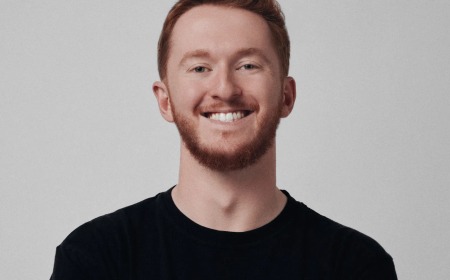
Mirai, which is backed by a $10 million seed round led by Uncork Capital, was founded last year by Dima Shvets and Alexey Moiseenkov. Both founders have a history of building scalable consumer apps. Shvets co-founded the face-swapping app Reface, which was backed by a16z, and he later became a scout for the venture firm. Moiseenkov was CEO and co-founder of Prisma, the viral AI filters app of the last decade.
Shvets said that as consumer developers, he and Moiseenkov had been thinking about machine learning and AI on devices even before generative AI became mainstream.
“When we met together in London, we started to chat about technology, and we realised that within the hype of GenAI and more AI adoption, everybody speaks about cloud, about servers, about AGI coming. But the missing piece is on-device [AI] for consumer hardware,” he told TechCrunch.
The founders wanted to build an AI-based pipeline that would let them run more complex tasks on a phone, which led to the creation of Mirai. When they spoke with other consumer app developers, they also heard a recurring demand for better cost optimisation and higher margins per token usage.
Today, Mirai is developing a framework that helps models perform better on-device. The company has built an inference engine for Apple Silicon that optimises on-device throughput. With Mirai’s upcoming SDK, developers will be able to integrate the runtime into their apps using just a few lines of code, the company said.
“One of the visions why we started the company was that we wanted to give developers, like this Stripe-like, eight lines of code [integration] experience…you basically go to our platform, integrate the key, and start working with summarisation, classification, or whatever your use case is,” Shvets said.
Mirai built its engine in Rust and claims it can increase a model’s generation speed by up to 37%. The company said that when tuning a model for a specific platform, it does not modify the model’s weights to avoid any loss in output quality.
For now, Mirai’s stack is focused on improving text and voice modalities on the platform, and the company plans to add support for vision in the future. The team has begun working with frontier model providers to tune models for edge use and is also in discussions with chipmakers. Over time, Mirai plans to bring its engine to Android as well.
Mirai also wants to publish on-device benchmarks that model makers can use to test device performance. Shvets acknowledged that not all AI workloads can realistically run on-device, and to support a mixed operating model, the team is building an orchestration layer that sends requests that cannot be handled locally to the cloud.
Although Mirai is not yet directly working with apps, the company said its engine could eventually power on-device assistants, transcribers, translators, and chat applications.
Andy McLoughlin, managing partner at Uncork Capital, said he previously invested in an edge machine learning company in the last decade, which was early to the space and later sold its business to Spotify. He said the environment today looks different.
“Given the cost of cloud inference, something has to change… For now, VCs are happy to continue funding rocket-ship companies and spend inordinate sums on cloud inference. But that won’t last — at some point, people will focus on the underlying economics of these businesses and realise that something has to change,” he said. “It feels like every model maker will want to run part of their inference workloads at the edge, and Mirai feels very well-positioned to capture this demand.”
Mirai’s seed round also included participation from a range of individual investors, including Dreamer CEO David Singleton, YC Partner Francois Chaubard, Snowflake co-founder Marcin Żukowski, ElevenLabs co-founder Mati Staniszewski, former Google AdSense product manager and Coinbase board member Gokul Rajaram, Groq investor Scooter Braun, Turing.com CTO Vijay Krishnan, Theory Forge Ventures’ Ben Parr and Matt Schlicht, and former Netflix technical leader Aditya Jami.



































 Like
0
Like
0
 Dislike
0
Dislike
0
 Love
0
Love
0
 Funny
0
Funny
0
 Angry
0
Angry
0
 Sad
0
Sad
0
 Wow
0
Wow
0