



































How one startup is using prebiotics to try and ease the copper shortage
A mining technology startup is using prebiotics to improve microbial performance in copper extraction, aiming to boost production and reduce the risk of a global copper shortage.

Within the next five years, the world could face a shortage of copper, a critical mineral used in technologies ranging from data centres to electric vehicles. Without changes to production methods, global demand could outpace supply as early as 2040, with a potential shortfall of up to 25%.
Rising demand has already attracted significant investment. AI-driven mining startup KoBold, for example, raised $537 million last year to develop a copper deposit in Zambia.
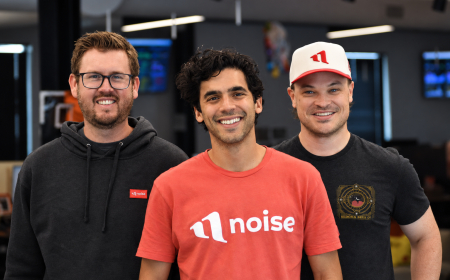
But one startup believes biology could help producers extract more copper from existing mines. Transition Metal Solutions says it can increase copper production by 20% to 30% by improving the performance of microbes already used in mining operations. The company likens its approach to using prebiotics for copper mines.
To scale its technology, Transition Metal Solutions has raised a $6 million seed round, according to TechCrunch. The funding was led by Transition Ventures, with participation from Astor Management AG, Climate Capital, Dolby Family Ventures, Essential Capital, Juniper VC, Kayak Ventures, New Climate Ventures, Possible Ventures, SOSV, and Understorey Ventures.
Microbes play a crucial role in copper mining by helping separate the metal from its mineral form so it can be refined. For years, mining companies have attempted to increase yields by isolating or engineering individual microbial strains and applying them to ore heaps. According to Sasha Milshteyn, co-founder and CEO of Transition, that approach has largely fallen short.
“Often they will see kind of a boost early on and then it just kind of falls off — or they don’t see any boost at all,” Milshteyn said.
One reason, he explained, is that microbes function within complex communities rather than as isolated organisms. Increasing the presence of a single strain does little if the surrounding ecosystem is out of balance. Another challenge is that scientists still understand only a small fraction of the microbes present in ore heaps.
“When you look into the microbial community that’s present in the material, typically well over 90% of it are things that we’ve never seen before,” Milshteyn said.
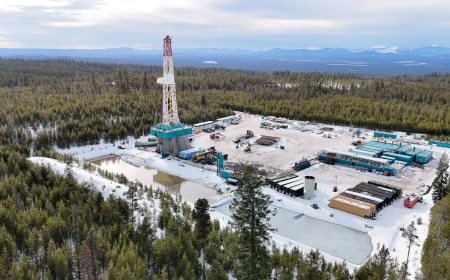
Conditions inside heap leaches — acid-soaked piles of crushed ore — are challenging to recreate in laboratory settings. Extremely low pH levels and the presence of clays and metals interfere with many standard molecular analysis tools. As a result, researchers have focused on the small percentage of microbes that can be grown in labs, often around 5% of the total population.
Rather than targeting individual strains, Transition aims to improve the overall performance of the microbial community. The company uses low-cost, mostly inorganic compounds already present at mining sites to encourage microbes to operate more efficiently.
“What we’re focused on is not necessarily boosting one or two species, but nudging the community toward a higher functional state,” Milshteyn said.
In laboratory tests, Transition’s proprietary mixture increased copper recovery from about 60% to roughly 90%. In real-world mining environments, Milshteyn expects results to be slightly lower but still significant. Traditional heap leaching typically recovers 30%-60% of available copper, while Transition believes its approach could increase that to 50%-70% or more.
Because microbial communities differ from mine to mine, the company plans to customise its additives based on early testing at each site. Over time, Milshteyn expects the company will be able to predict what a mine needs in advance as more data is collected.
Before commercial deployment, Transition plans to validate its results with a well-known third-party metallurgy laboratory. “Without third-party results, nobody’s going to believe you,” Milshteyn said. Funding from the seed round will support this phase of testing.
If those trials succeed, the company intends to apply its treatment to a large demonstration heap containing tens of thousands of tons of material, followed by deployments at copper mines globally.
“We’re leaving 65% of material behind at typical mines,” Milshteyn said. “We may as well get as much out of it as we can.”
Update: This article previously referred to Transition’s additives as probiotics instead of prebiotics.
What's Your Reaction?
 Like
0
Like
0
 Dislike
0
Dislike
0
 Love
0
Love
0
 Funny
0
Funny
0
 Angry
0
Angry
0
 Sad
0
Sad
0
 Wow
0
Wow
0