





































Ammobia Says It Has Reinvented a Century-Old Technology
Startup Ammobia says it has modified the century-old Haber-Bosch process to cut ammonia production costs and emissions, backed by new funding.
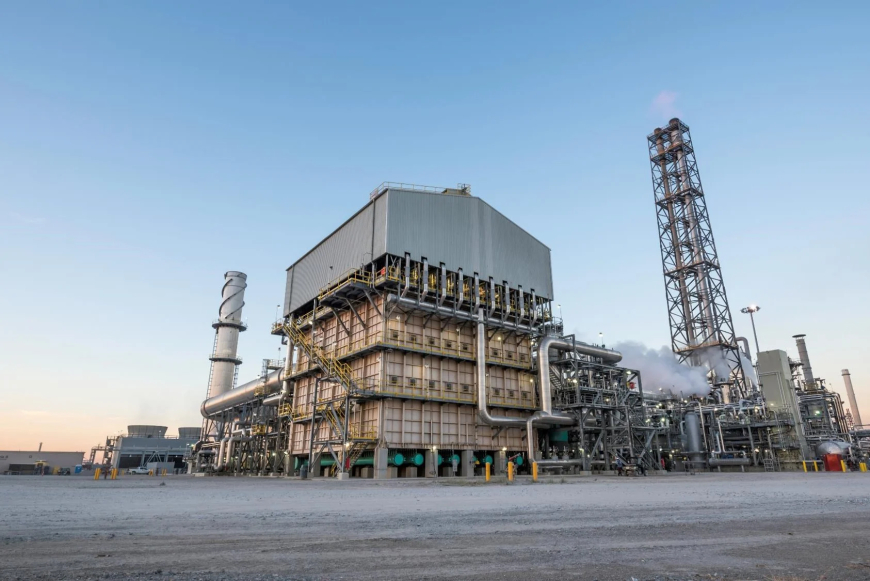
Ammonia is one of the most important — and often overlooked — chemicals in the world. Without it, modern agriculture would grind to a halt, leaving billions without enough food.
Large-scale ammonia production began just over a century ago, and the underlying method, known as the Haber-Bosch process, has remained essentially unchanged ever since. Now, a new startup called Ammobia says it has modified the process to cut production costs by up to 40%.
To demonstrate that its approach can work beyond the lab, Ammobia has raised a $7.5 million seed round, according to TechCrunch. Backers include Air Liquide’s venture arm ALIAD, Chevron Technology Ventures, Chiyoda Corporation, MOL Switch, and Shell Ventures.
If successful, the company’s technology could help expand ammonia’s role well beyond fertiliser. Ammonia is increasingly viewed as a potential alternative to hydrogen for decarbonising heavy industry and transportation. Countries such as Japan and South Korea have published roadmaps that rely on ammonia, partly because hydrogen is less energy-dense and lacks mature transportation infrastructure.
“The big advantage of ammonia is that it’s much easier and more cost-effective to transport and store,” said Ammobia co-founder and CEO Karen Baert. “That opens up a range of opportunities.”
Those opportunities, however, depend on improving how ammonia is produced. The Haber-Bosch process is responsible for nearly 2% of global greenhouse gas emissions, making it one of the most polluting industrial chemical processes in use today.
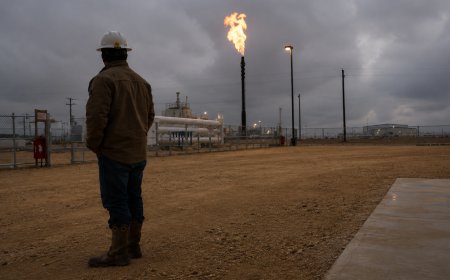
Traditional Haber-Bosch plants use an iron catalyst to drive the reaction between nitrogen and hydrogen, a process that requires extremely high temperatures—around 500°C—and pressures of roughly 200 bar. Both are typically achieved by burning fossil fuels. Fossil fuels also supply much of the hydrogen feedstock, which is commonly produced by extracting hydrogen from methane in natural gas.
Ammobia says its version of the process operates at temperatures about 150°C lower and at pressures roughly ten times lower. Even if producers continue to rely on fossil fuels, those changes could significantly reduce emissions.
Lower operating requirements also translate into lower capital costs. Because its process does not require extreme heat and pressure, Ammobia can use less expensive pumps and equipment.
That matters in an industry where nearly every producer relies on Haber-Bosch and has had limited options to reduce costs — usually by sourcing cheaper heat or hydrogen. In many regions, including the U.S., natural gas remains the lowest-cost option.
For now, Ammobia isn’t trying to replace those inputs outright. The company says its system works with any hydrogen or heat source. But the design could make cleaner alternatives more attractive. Running at lower pressure makes it easier to scale production up and down, which could allow ammonia plants to use surplus renewable electricity to generate hydrogen when power is abundant and cheap.
“Our technology is very compatible with renewable energy,” Baert said. “That leads to additional cost reductions because you don’t need to store hydrogen or electricity. In those cases, we have the strongest cost advantage.”
Lower temperatures and pressures also enable Ammobia to build smaller systems. Most existing ammonia plants produce between 1,000 and 3,000 tons per day. Ammobia’s commercial-scale units are designed to produce approximately 250 tons per day, and customers can install multiple units as needed.
The company has not disclosed the full technical details of its approach. However, it has a pending patent on a reactor system that uses a sorbent to remove ammonia as it forms, freeing catalyst sites for continued reactions. Researchers have also explored alternative catalysts, such as manganese nitride, that require less energy than iron-based systems.
Ammobia has been running a small demonstration unit for about a year. The new funding will support the construction of a pilot plant that incorporates all elements of the commercial design at a smaller scale, producing roughly 10 tons per day.
“With a modular approach, we can build projects faster and start at a medium scale,” Baert said. “We’re seeing strong interest from customers looking for that kind of solution, and there really isn’t one available today.”
What's Your Reaction?
 Like
0
Like
0
 Dislike
0
Dislike
0
 Love
0
Love
0
 Funny
0
Funny
0
 Angry
0
Angry
0
 Sad
0
Sad
0
 Wow
0
Wow
0