Rare-earth elements may make up only a small portion of the global metals market, but they play an outsized role in global politics and trade. China currently holds a dominant position in this space, often using its control over supply as leverage during international negotiations.
In response, countries such as the United States have begun efforts to reduce reliance on Chinese supply chains. New mining projects are underway, and more companies are emerging to produce components like magnets and motors. However, progress has been slow, largely because China’s leadership in this sector has been built over decades.
According to Zach Detweiler, co-founder and CEO of Radify Metals, a key part of the supply chain has not received enough attention. He points to the stage where metal oxides are converted into pure metals as a critical gap. He described this stage as a “missing middle,” explaining that supporting a full industrial ecosystem requires every part of the supply chain to be balanced in capacity.
Traditional refining methods rely on heat or chemical processes involving water and other elements to remove oxygen from metal oxides. While these techniques are effective, they tend to produce significant pollution.
An alternative approach, plasma-based refining, has existed for some time but was considered too expensive for widespread use. This method uses plasma — a high-energy state of matter composed of charged particles — to separate oxygen from metals, leaving behind pure material. The only byproduct of this process is water vapour.
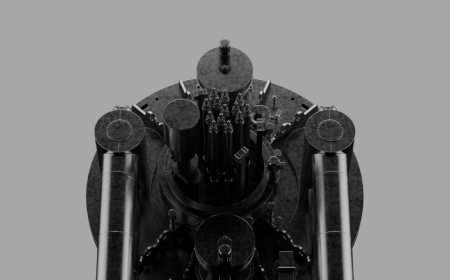
Radify believes it has found a way to make this approach commercially viable. By combining more efficient power electronics with improved methods for handling metal powders, the company has developed a new type of reactor. The startup recently provided a closer look at its technology and has raised just under $3 million from investors,s including Overture, Founders Inc., Mana Ventures, and Acequia Capital.
The company says its reactor can process a wide variety of metal oxides. For now, its focus is on dysprosium and samarium, both of which are essential for producing magnets and electronic components.
The process begins by heating hydrogen until it forms plasma. Metal oxide powder is then introduced into the chamber, where the plasma removes the oxygen, leaving behind pure metal. The system is designed to be adaptable, meaning different metals can be produced by adjusting operating conditions.
One advantage of Radify’s approach is the smaller size of its reactors compared to traditional industrial equipment. This could lower manufacturing costs and provide greater flexibility in production.
Detweiler noted that this flexibility could help the company navigate market fluctuations. If prices for certain rare-earth elements drop due to competitive pressures, the system can be adjusted to produce other metals instead, improving resilience against industry volatility.
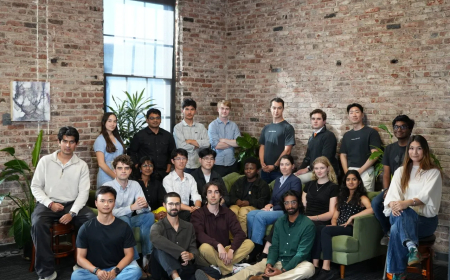
Currently, Radify’s team of five is continuing to refine the technology at its facility in Campbell, California. The company aims to reach a production level of several kilograms of pure metal per day by the end of the year. It also plans to raise additional funding to build a pilot reactor capable of producing up to 100 kilograms of fuel per day.
If the technology can scale successfully, it could provide meaningful competition to existing suppliers. At present, rare-earth elements produced outside China often cost significantly more. Detweiler believes Radify could reduce that gap, initially producing materials at about 50% above Chinese prices, with the potential to reach price parity or even lower, as production expands.
Beyond rare-earth elements, the company is exploring applications of other metals, including hafnium, uranium, scandium, and titanium, which are widely used in electronics, aerospace, and other industries. The plasma-based system can also be applied to more common metals, such as iron and aluminium. However, it is not yet efficient enough to compete with established production methods in those areas. Detweiler suggested that if the technology eventually reaches that level of efficiency, it could fundamentally transform how metals are produced, reshaping manufacturing processes worldwide.









































 Like
0
Like
0
 Dislike
0
Dislike
0
 Love
0
Love
0
 Funny
0
Funny
0
 Angry
0
Angry
0
 Sad
0
Sad
0
 Wow
0
Wow
0