


































Claude dominates conversations at the HumanX conference
Claude emerged as a key topic at the HumanX conference, with industry leaders चर्चा focusing on AI advancements, safety, and real-world applications.
At the HumanX conference in San Francisco this week, thousands of technology professionals gathered at the Moscone Centre, where discussions largely revolved around how agentic AI is reshaping business operations. These AI agents, designed to automate workflows such as coding and enterprise tasks, are increasingly being deployed across industries, often through both enterprise-grade and consumer-facing chatbots.
Amid all the conversations, one chatbot name kept surfacing repeatedly: Claude.
The company behind it, Anthropic, was frequently mentioned during panel discussions and in conversations with vendors across the exhibition floor. In contrast, ChatGPT was notably less talked about. One vendor even remarked that his team relies heavily on Claude, while expressing the view that ChatGPT and OpenAI have declined in quality — echoing a broader sentiment often summarised online as the platform having “fallen off.”
This perception does not appear to be isolated. Despite OpenAI securing a reported $122 billion funding round and preparing for a potential IPO, there is growing uncertainty around its strategic direction. It remains unclear what might reverse the impression that the company has lost momentum or is still figuring out its next move.
Part of the challenge may lie in how OpenAI is perceived to be juggling multiple priorities. Recently, the company stepped back from several ongoing initiatives — including its AI video tool, Sora, and a controversial plan to introduce a more provocative version of ChatGPT — and instead shifted its focus toward enterprise solutions and coding tools. At the same time, external factors have added to the scrutiny, including a detailed profile in The New Yorker that questioned CEO Sam Altman’s credibility. Additional criticism has stemmed from the company’s collaboration with the Trump administration and its move to introduce advertising into ChatGPT.
During a HumanX panel, Bret Taylor — co-founder and CEO of Sierra and chairman of OpenAI’s board — addressed these concerns when asked about the New Yorker article by journalist Alex Heath. Taylor defended Altman, stating, “I think Sam is one of the most visible leaders and executives in the world. If you want to seek out detractors for him, you’ll find them, and they’ll be very vocal about it.” He added, “I think Sam’s remarkable. I think he’s a remarkable leader of AI, and I really trust his character as someone who’s worked with him.”
Even so, ongoing controversies and shifting priorities can make OpenAI’s actions appear reactive rather than forward-looking, as though the company is responding to developments instead of actively shaping them. Despite this perception, OpenAI and Anthropic remain closely matched in terms of influence and revenue growth. According to an analysis by The Wall Street Journal, both companies rank among the fastest-growing businesses in tech history. From that perspective, claims that OpenAI is “falling off” may reflect the fact that it no longer dominates the field in the absence of competition.
Meanwhile, OpenAI continues to take steps to maintain its position. This week, the company introduced a new $100 monthly subscription tier for ChatGPT, offering significantly increased access to its coding tool Codex. The move appears aimed at encouraging broader adoption and potentially drawing users away from competing tools like Claude Code.
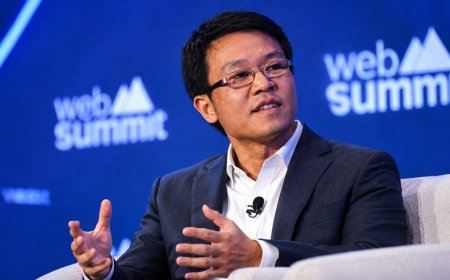
Speaking at another session during the conference with Bloomberg reporter Rachel Metz, Srinivas Narayanan, OpenAI’s CTO for B2B applications, highlighted the rapid pace of change in the AI space.
“We are in this incredible moment in technology, where every month, and sometimes every day, we are all looking forward to something new,” Narayanan said. Referring to agentic coding, he added, “We knew AI was going to impact software engineering; people have been using assistive coding over the last year, but even in just the last few months, the entire field has changed.”
Agent-based systems are currently a major focus within the tech community, particularly as other AI applications — such as creative tools — have yet to fully meet expectations. Even so, the extent to which companies are already delegating work to automated systems has been notable, especially given how quickly these developments have unfolded.
In such a rapidly evolving environment, where advancements are happening at an almost constant pace, the competitive landscape remains fluid — and the long-term outcome is still far from settled.
What's Your Reaction?
 Like
0
Like
0
 Dislike
0
Dislike
0
 Love
0
Love
0
 Funny
0
Funny
0
 Angry
0
Angry
0
 Sad
0
Sad
0
 Wow
0
Wow
0