




































Uber adopts Amazon’s AI chips for its growing tech needs
Uber is turning to Amazon’s AI chips to power its infrastructure, highlighting growing adoption of AWS hardware for scalable AI and cloud computing needs.
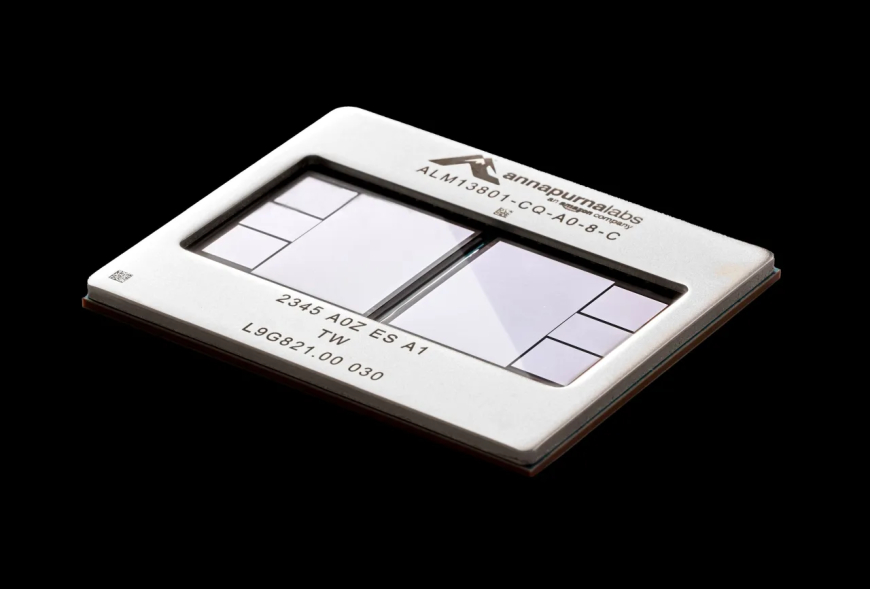
On Tuesday, Amazon announced that Uber is expanding its agreement with AWS to run more of its ride-hailing operations on Amazon-designed chips. As part of this move, Uber will increase its use of AWS’s Graviton processors — low-power, ARM-based server CPUs — and begin testing Trainium3, Amazon’s AI chip designed to compete with Nvidia.
The agreement reflects less of a direct challenge to Nvidia and more of a competitive signal from Amazon aimed at rival cloud providers such as Google and Oracle.
Uber previously operated much of its infrastructure through its own data centres. However, in 2023, the company made a significant shift by signing long-term cloud agreements with Oracle and Google. The goal was to migrate most of its IT operations from internal infrastructure to external cloud platforms.
Even as recently as December, Uber reaffirmed this transition strategy, noting in a blog post that it had begun moving workloads from on-premise data centres to cloud environments powered by Oracle Cloud Infrastructure (OCI) and Google Cloud. This shift also involved adopting ARM-based computing systems within an ecosystem that had traditionally relied on x86 architecture.
Uber specifically highlighted its use of ARM processors developed by Ampere Computing within Oracle’s cloud environment, adding another layer to the evolving landscape of cloud and chip partnerships.
Ampere itself has a complex history within Silicon Valley. Renee James founded the company after her tenure at Intel. Leveraging her connections, including her role at private equity firm Carlyle and her position on Oracle’s board, she secured funding to launch the company. Oracle held a significant stake in Ampere, which led James to step down as an independent director.
James had also been involved in Oracle’s $9.3 billion acquisition of NetSuite in 2016, a deal that later drew scrutiny and led to a shareholder lawsuit alleging overpayment, though the case was ultimately unsuccessful.
In December, SoftBank acquired Ampere, and Oracle sold its stake, realising a pre-tax gain of $2.7 billion. James departed Oracle’s board at the end of 2024 and is no longer affiliated with Ampere.
Meanwhile, Oracle has been aggressively raising capital to expand data centre capacity, particularly for projects tied to OpenAI and the Stargate initiative. Oracle chairman Larry Ellison has stated that the company no longer sees designing its own chips as a strategic advantage and instead prefers to source hardware externally, including through major agreements with Nvidia.
Oracle, SoftBank, and Nvidia are also interconnected through various partnerships linked to OpenAI’s large-scale data centre expansion efforts, illustrating the tightly woven relationships within the technology sector.
Against this backdrop, AWS’s announcement highlights that it has secured a larger role with Uber — one of Oracle’s major cloud customers — by offering its own in-house chip technology.
Uber now joins a growing list of major technology companies, including Anthropic, OpenAI, and Apple, that are increasing their reliance on AWS’s custom silicon. In December, Amazon CEO Andy Jassy noted that Trainium had already become a multibillion-dollar business, underscoring the company’s push to strengthen its position in the AI infrastructure market.
What's Your Reaction?
 Like
0
Like
0
 Dislike
0
Dislike
0
 Love
0
Love
0
 Funny
0
Funny
0
 Angry
0
Angry
0
 Sad
0
Sad
0
 Wow
0
Wow
0