



































OpenAI says it has finally cracked an 80-year-old mathematical challenge
OpenAI claims a breakthrough on an 80-year-old mathematical problem using advanced AI reasoning, marking a significant development in mathematics and artificial intelligence research.
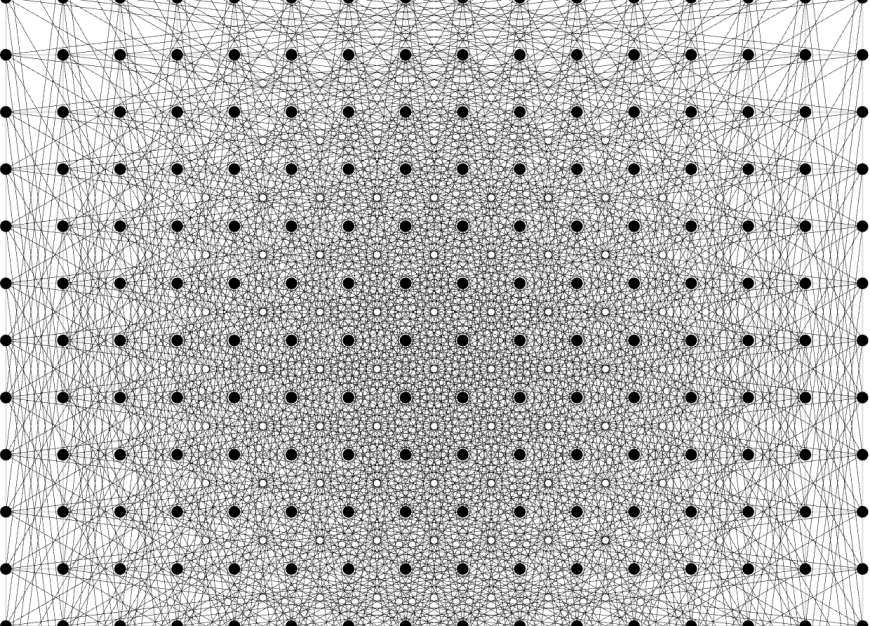
OpenAI says one of its latest reasoning-focused AI models has achieved what researchers describe as a breakthrough in mathematics, producing an original proof disproving a well-known geometric conjecture that has remained unresolved since it was introduced by mathematician Paul Erdős in 1946.
The announcement may sound familiar because OpenAI has previously faced scrutiny over similar claims. About seven months ago, former OpenAI vice president Kevin Weil wrote on X that GPT-5 had discovered solutions to 10 previously unsolved Erdős problems and had advanced work on 11 more.
Those claims were later found to be inaccurate. Rather than solving new problems, GPT-5 identified solutions already available in the mathematical literature.
The episode drew criticism from several prominent figures in the AI community, including Yann LeCun and Google DeepMind CEO Demis Hassabis. Weil subsequently removed the post from X. This time, however, OpenAI says it took additional steps to validate the result before making any public announcement. Along with unveiling the proof, the company released supporting comments from mathematicians, including Noga Alon, Melanie Wood, and Thomas Bloom, who manages the Erdős Problems website and had previously described Weil’s earlier statement as “a dramatic misrepresentation.”
In a post shared on X, OpenAI stated that mathematicians had spent decades believing the best-known solutions to the problem resembled square-grid structures. According to the company, its AI model identified a completely new family of constructions that outperform those traditional approaches, effectively disproving the long-standing assumption.
OpenAI described the achievement as the first instance in which an AI system has independently solved a major open problem that sits at the heart of a mathematical field. The company emphasised that the proof was generated by a new general-purpose reasoning model rather than by software built specifically for mathematics or for tackling this particular conjecture.
According to OpenAI, the development highlights growing AI capabilities in maintaining lengthy chains of reasoning and linking concepts across different disciplines in ways that human researchers may not have previously considered.
The company believes those advances could eventually have broader implications beyond mathematics, potentially benefiting scientific research in areas such as biology, physics, engineering, and medicine.
“AI is helping us to more fully explore the cathedral of mathematics we have built over the centuries,” Bloom said in a statement. “What other unseen wonders are waiting in the wings?”
What's Your Reaction?
 Like
0
Like
0
 Dislike
0
Dislike
0
 Love
0
Love
0
 Funny
0
Funny
0
 Angry
0
Angry
0
 Sad
0
Sad
0
 Wow
0
Wow
0