



























Sam Altman addresses ‘incendiary’ New Yorker article following reported attack on his home
Sam Altman responds to an “incendiary” New Yorker article after a reported attack on his home, raising concerns about media coverage and personal safety.
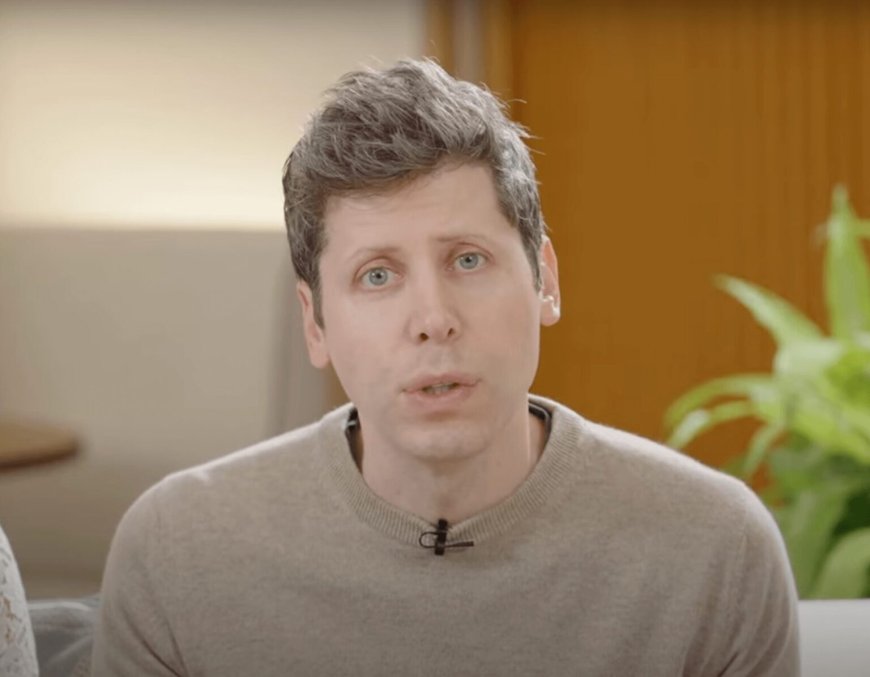
Sam Altman, the chief executive of OpenAI, published a blog post on Friday evening addressing both a reported attack on his residence and a recent in-depth profile that questioned his leadership and character.
According to authorities, an individual allegedly threw a Molotov cocktail at Altman’s home in San Francisco early Friday morning. No injuries were reported. Police later arrested a suspect at OpenAI’s headquarters, where the individual was reportedly making threats to set the building on fire, as confirmed by the San Francisco Police Department.
While law enforcement has not publicly identified the suspect, Altman noted that the incident occurred just days after the release of what he described as “an incendiary article” about him. He added that someone had warned that the timing of the article — during a period of heightened concern about artificial intelligence — could increase the risk to his safety.
“I brushed it aside,” Altman wrote. “Now I am awake in the middle of the night and pissed, and thinking that I have underestimated the power of words and narratives.”
The article referenced by Altman was published by The New Yorker and authored by Ronan Farrow and Andrew Marantz. The investigative piece drew on interviews with more than 100 individuals familiar with Altman’s business dealings. Many of those sources characterised him as having a strong drive for influence and control, describing what the article called “a relentless will to power.”
The report also echoed criticisms that have surfaced in previous profiles, with some sources questioning Altman’s reliability. One anonymous board member was quoted as saying that Altman blends “a strong desire to please people” with what they described as “a sociopathic lack of concern for the consequences” of misleading others.
In his blog post, Altman reflected on his leadership and acknowledged past mistakes. He said that, in hindsight, he can point to both achievements he is proud of and decisions he regrets.
He identified his tendency to avoid conflict as one of his key shortcomings, stating that it has caused significant difficulties for both him and OpenAI.
“I am not proud of handling myself badly in a conflict with our previous board that led to a huge mess for the company,” Altman wrote, referring to the high-profile episode in 2023 when he was briefly removed and then reinstated as CEO. “I have made many other mistakes throughout the insane trajectory of OpenAI; I am a flawed person in the centre of an exceptionally complex situation, trying to get a little better each year, always working for the mission.”
He added that he regrets the impact of his actions on others, writing, “I am sorry to people I’ve hurt and wish I had learned more quickly.”
Altman also commented on the broader competitive environment within the artificial intelligence sector, describing it as filled with intense rivalries and what he called “Shakespearean drama.” He suggested that the pursuit of dominance in artificial general intelligence (AGI) can create a “ring of power” dynamic that drives extreme behaviour.
Clarifying his position, Altman said he does not view AGI itself as the problem, but rather the mindset of wanting exclusive control over it. He argued that a better approach would be to distribute the technology widely so that no single entity holds disproportionate power.
He concluded his statement by expressing openness to constructive criticism and emphasising his belief in the positive potential of technological advancement.
“While we have that debate, we should de-escalate the rhetoric and tactics and try to have fewer explosions in fewer homes, figuratively and literally,” he said, calling for a more measured and responsible discourse around AI and its future.
What's Your Reaction?
 Like
0
Like
0
 Dislike
0
Dislike
0
 Love
0
Love
0
 Funny
0
Funny
0
 Angry
0
Angry
0
 Sad
0
Sad
0
 Wow
0
Wow
0