


































Poke simplifies AI agents, making them as easy to use as texting
Poke introduces a simple way to use AI agents, allowing users to interact with advanced automation tools as easily as sending a text message.

Is Poke the consumer-friendly version of tools like OpenClaw? That’s the direction a new startup is aiming for, with an AI agent that works directly through everyday messaging platforms such as iMessage, SMS, Telegram, and in select regions, WhatsApp.
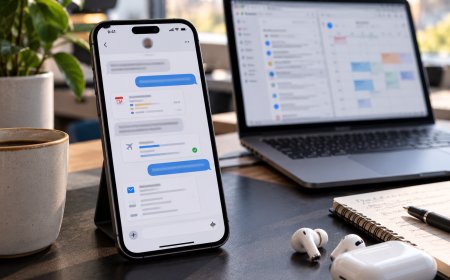
The AI assistant, called Poke, officially launched in March and introduces a different way for people to interact with AI — not through apps or dashboards, but through simple text conversations. It allows users to rely on a personal assistant that can actually perform tasks on their behalf, all within a familiar chat interface.
Right now, Poke can handle a wide range of everyday activities. It can assist with planning your day, organising your calendar, tracking health and fitness goals, controlling smart home devices, editing photos, and more — all through messaging.
While users may still turn to tools like ChatGPT or Claude for research or answering questions, Poke is positioned as something different: a tool designed for execution. It focuses on getting things done quickly or automating tasks to save time.
For example, users can ask Poke to notify them about important emails, such as messages from their boss or family members. It can send reminders about weather conditions, like whether you need to carry an umbrella in the morning. It can also track workouts, provide sports updates, send medication reminders, or deliver daily news briefings. Users can even build their own automations in plain text and share them with others.
The startup behind Poke has secured backing from firms such as Spark Capital and General Catalyst, as well as several angel investors. Recently, it raised an additional $10 million, bringing its total seed round to $15 million. The company is now valued at $300 million post-money.
The launch comes at a time when interest in AI agents is rapidly growing. OpenAI has already acquired the creator of OpenClaw, while Jensen Huang has emphasised that businesses need strategies around such agent-based systems.
However, for most people, tools like OpenClaw remain difficult to use because of their technical complexity. Setting them up often involves working with command-line tools, handling dependencies, and solving technical issues. There are also security concerns due to the deep system-level access these tools require. Poke’s team is trying to eliminate these barriers.
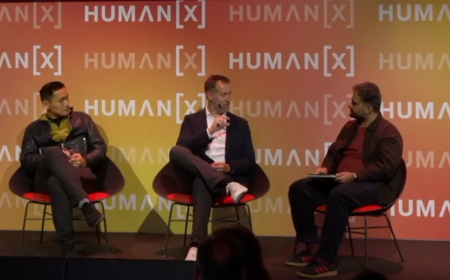
Marvin von Hagen, co-founder of The Interaction Company of California — the Palo Alto startup behind Poke — explained that the idea evolved from observing how users interacted with an earlier product focused on email assistance.
He noted that even when the product was limited to email, users were already trying to use it for broader purposes, like reminders, weather updates, and sports results. This behaviour made it clear that users wanted a more general-purpose assistant, especially one that felt human and approachable.
That realisation led the team to expand Poke into a more versatile and proactive assistant.
Unlike technical AI agent tools, Poke requires no installation to get started. Users visit the website, enter their phone number, and begin interacting with the assistant via text messaging.
Behind the scenes, Poke selects the AI model best suited to the task at hand. This can include models from major AI providers or open-source systems, depending on what delivers the best result.
Von Hagen highlighted this flexibility as a key advantage, noting that many competitors are tied to their own ecosystems — for instance, Meta AI relies on Meta’s models, while ChatGPT uses OpenAI’s systems.
To operate across messaging platforms, Poke uses a system called Linq, which enables AI assistants to function within messaging apps. While it broadly supports SMS and Telegram, WhatsApp integration remains limited due to Meta-imposed restrictions that previously blocked general-purpose chatbot integrations.
There is ongoing regulatory pressure in regions like the EU, Italy, and Brazil regarding these restrictions, which could eventually expand Poke’s availability on WhatsApp.
At launch, Poke includes a range of pre-built “recipes,” which are essentially ready-made automations. These cover areas like productivity, health, finance, travel, home management, education, and even developer workflows. Users can install them with a single click and connect them to services they already use.
These integrations include tools like Gmail, Google Calendar, Outlook, Notion, and others. For fitness and health tracking, Poke can connect to platforms such as Strava, Fitbit, and Oura. It also supports smart home systems such as Philips Hue and Sonos.
For developers, Poke integrates with tools like GitHub, Vercel, Supabase, and more, allowing automation of technical workflows.
Security has been a major focus for the company. Poke uses multiple layers of protection, including regular security testing and strict permission controls. By default, the team cannot access user data unless explicit permission is granted.
In recent weeks, users have created thousands of additional recipes, which the company plans to add to its public directory. To encourage this ecosystem, Poke is offering small payments to creators for each new user they bring in through shared automations.
Pricing is designed to be flexible. The service is free for basic use, especially for tasks that don’t require real-time processing. More complex automations — such as those involving constant data updates — may incur costs. During early testing, users even negotiated pricing directly with the AI, typically landing between $10 and $30 per month.
For now, the company is prioritising. Von Hagen said the goal is to bring Poke into everyday life and eventually reach a global user base.
The startup, co-founded by Felix Schlegel, has not disclosed exact user numbers but says adoption has grown tenfold in recent months. It has also attracted notable angel investors, including founders and executives from companies such as Stripe, PayPal, and Dropbox, signalling strong interest in its approach to making AI agents more accessible.
What's Your Reaction?
 Like
0
Like
0
 Dislike
0
Dislike
0
 Love
0
Love
0
 Funny
0
Funny
0
 Angry
0
Angry
0
 Sad
0
Sad
0
 Wow
0
Wow
0