




























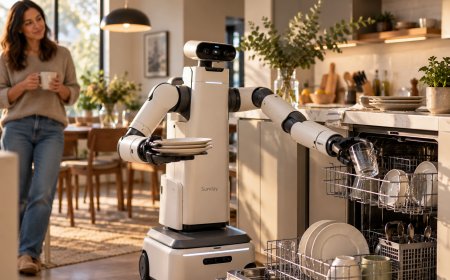










Lululemon bets Epoch Biodesign can eat its shorts, literally
Lululemon partners with Epoch Biodesign to tackle textile waste using enzymes that can break down fabrics, advancing sustainable fashion solutions.
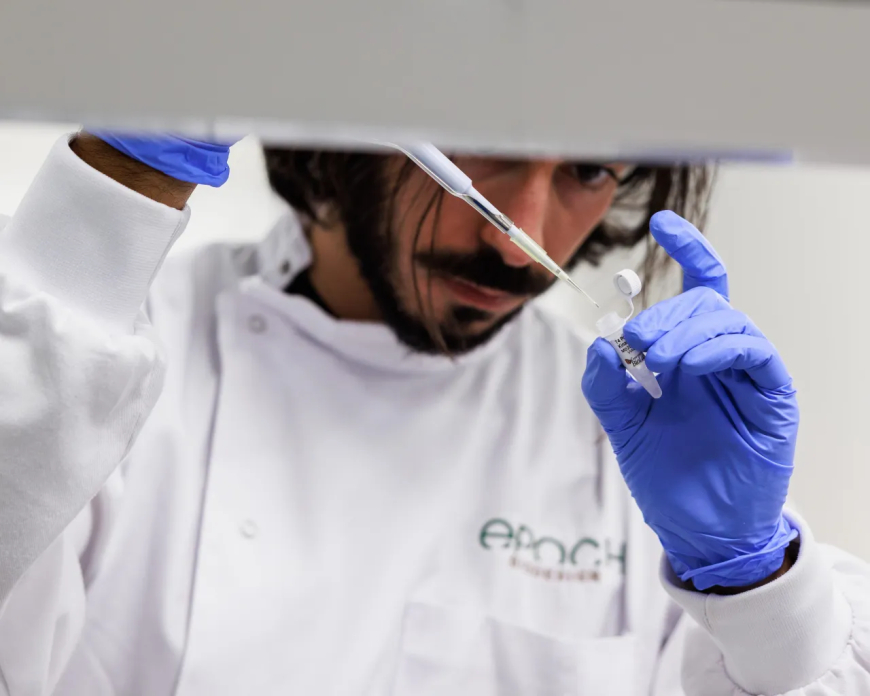
As global industries shift toward electrification, the oil and gas sector is increasingly looking to plastics as a future revenue driver. However, that outlook could be disrupted by innovators like Jacob Nathan, who is working to transform how plastic waste is handled.
Nathan began exploring methods to break down plastics while still in high school. Today, as the founder and CEO of Epoch Biodesign, he has developed a process that uses a sequence of enzymes to convert synthetic waste into reusable material components. He described the approach as a way to “transform this unnatural waste” into a usable base for producing new plastics.
According to Nathan, discarded textiles can serve as a valuable raw material. “For us, a bale of textile is the equivalent of a barrel of oil,” he said, emphasising that waste fabric — rather than petroleum — forms the foundation of Epoch’s process. Unlike fossil fuels, this input is not subject to fluctuations driven by global political or economic factors.
The company’s method focuses on breaking down both pre-consumer and post-consumer plastic waste into monomers, which are the fundamental building blocks of plastic. To achieve this, Epoch relies on enzymes — the molecular tools used by living cells. However, rather than working with entire microorganisms, the company isolates and uses only the enzymes themselves, thereby avoiding the unpredictability associated with biological systems. These enzymes are sourced through partnerships with industrial suppliers that already produce them at scale.
Through a multi-step enzymatic process, Epoch recovers more than 90% of the targeted monomers. Nathan explained that the only remaining byproducts are dyes, which can be separated and managed independently.
The initial application of this technology is focused on nylon 6,6, a durable synthetic material widely used in products ranging from clothing and carpets to airbags and climbing ropes. Nathan noted that nylon 6,6 has been a foundational synthetic fibre since its development by DuPont and remains difficult to replace due to its performance characteristics.
Market conditions are also playing in Epoch’s favour. Nathan pointed out that prices for key inputs used to produce nylon 6,6 and similar materials have recently surged, in some cases by as much as 150% in a short period. By relying on textile waste instead of petroleum, Epoch’s model avoids this volatility and offers a more stable production pathway. “When we’re detaching the production of materials from the extraction, refinement, and volatility that comes from fossil carbon, we can create much more consistency,” he said.
This approach has attracted investor interest, including support from Lululemon, which produces large volumes of synthetic clothing. The company recently joined a $12 million funding round alongside firms such as Extantia, Happiness Capital, Kompas VC, and Leitmotif.
The funding will be used to build a demonstration-scale facility near Imperial College London. Following this phase, Epoch plans to develop a full commercial facility, expected to be operational by 2028, with a projected annual output capacity of 20,000 metric tons of monomer.
Once the system reaches full production, the company intends to expand its technology to handle additional types of plastics. Nathan noted that the underlying process is adaptable and can be applied to various materials over time. While nylon 6,6 is currently the primary focus, he indicated that other applications are already under development and could follow as the technology matures.
What's Your Reaction?
 Like
0
Like
0
 Dislike
0
Dislike
0
 Love
0
Love
0
 Funny
0
Funny
0
 Angry
0
Angry
0
 Sad
0
Sad
0
 Wow
0
Wow
0