

























Hark secures $700M Series A funding for its stealth AI assistant platform
Hark has raised $700 million in Series A funding to develop a secretive universal AI interface designed to connect users with multiple AI models and digital tools.

What will it take to create the first truly indispensable AI product for everyday consumers? If Hark’s latest fundraising effort is any indication, the answer could be as much as $700 million.
The AI startup, which is developing both artificial intelligence models and dedicated hardware for a personal AI assistant, announced Thursday that it has raised $700 million in a Series A funding round. The investment values the company at $6 billion following the financing.
Parkway Venture Capital led the substantial round. It attracted participation from a wide range of prominent investors, including Nvidia, Align Ventures, AMD Ventures, ARK Invest, Brookfield, Greycroft, Intel Capital, Prime Movers Lab, Qualcomm Ventures, Salesforce Ventures, and Tamarack Global.
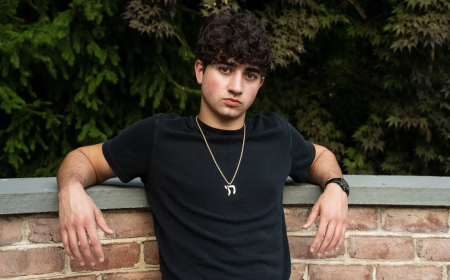
What stands out most about the funding announcement is not only its size, but also how little Hark has publicly disclosed about the technology it is creating. The company was founded in late 2025 by Brett Adcock, the entrepreneur known for launching robotics startup Figure AI and electric aircraft manufacturer Archer. Adcock initially invested $100 million of his own capital to establish Hark and develop an agentic AI platform that serves as a universal interface between users and the digital world.
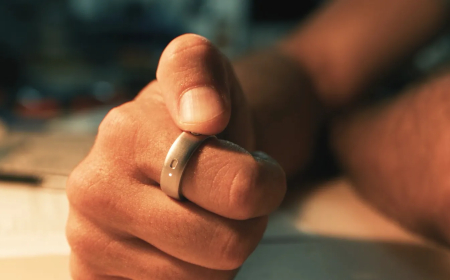
According to the company, its first multimodal AI models are expected to be released this summer. These models will serve as the foundation of a personal AI platform intended to integrate with existing products and services. Hark also plans to introduce dedicated hardware devices specifically designed to work with those AI systems.
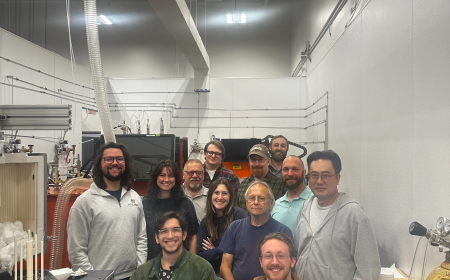
The newly raised capital will be directed toward expanding the company’s workforce, particularly in hardware engineering, product design, and AI research. The funding will also support the acquisition of computing resources and critical components needed for development. At present, Hark employs approximately 70 people and operates a data centre powered by Nvidia B200 GPUs.
Abidur Chowdhury, a former Apple product executive who now serves as Hark’s director of design, recently appeared in a promotional video for the company. Although he declined to provide additional specifics about the products under development when questioned this week, he indicated that investors responded enthusiastically to several demonstrations presented by the team.
Reflecting on the current state of the AI industry, Chowdhury said he has yet to encounter a product that genuinely feels useful for the average consumer. He noted that many of today’s AI tools are primarily designed to assist software developers, a category that has already demonstrated significant value and impact. However, he believes the industry has not yet delivered a similarly transformative experience for everyday users.
Chowdhury further pointed out that while Anthropic continues to prioritise coding-focused AI products and OpenAI appears to be moving in a similar direction ahead of its anticipated IPO, very few companies are concentrating exclusively on building AI interfaces paired with native hardware. Hark sees this combination as a major opportunity.
“With this focus, with this great team that we have, and this round that we’ve raised, I think we can make something really special in this space,” Chowdhury said.
Despite the enthusiasm surrounding the company’s vision and funding, significant questions remain unanswered. One of the biggest challenges facing any advanced AI assistant is gathering sufficient personal context about a user’s daily life to be genuinely helpful while also protecting privacy and ensuring that people around the user feel comfortable.
Existing wearable technologies, including Meta’s smart glasses and the next-generation Android-based smart eyewear currently in development, have not yet fully solved this issue. When asked how Hark intends to balance deep contextual awareness with privacy concerns, Chowdhury chose not to elaborate. Instead, he smiled and replied: “Sounds like that would make a great product.”
What's Your Reaction?
 Like
0
Like
0
 Dislike
0
Dislike
0
 Love
0
Love
0
 Funny
0
Funny
0
 Angry
0
Angry
0
 Sad
0
Sad
0
 Wow
0
Wow
0