




































Maka Kids transforms children’s streaming with a screen-time app focused on well-being over engagement
Maka Kids offers a child-friendly streaming platform designed to support healthy screen habits, prioritising well-being, learning, and age-appropriate content over engagement metrics.
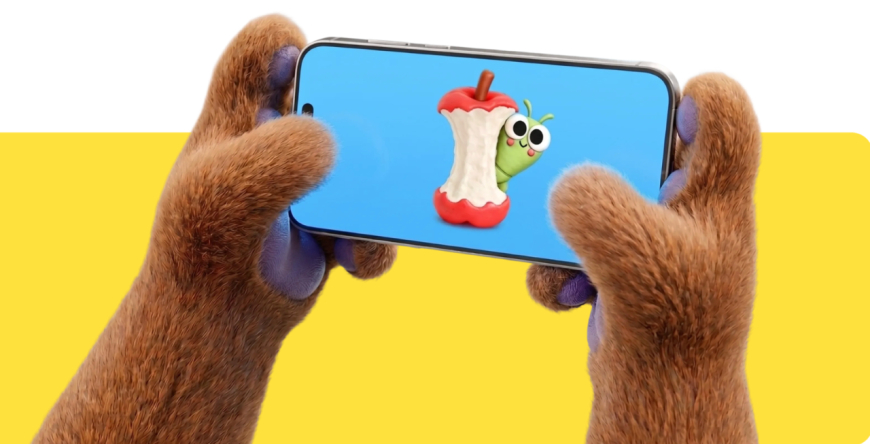
At a time when children's digital entertainment is increasingly dominated by viral content and engagement-driven algorithms, startup Maka Kids is taking a different approach. The company is developing a streaming platform specifically designed for young children, with a focus on healthy development, emotional well-being, and educational value rather than maximising watch time.
The startup recently announced that it has secured $3 million in pre-seed funding to expand its platform and accelerate development. At the same time, the company has begun accepting registrations for its growing waitlist ahead of a broader public launch.
Maka Kids is aimed at children between the ages of zero and six and seeks to provide a carefully curated media experience that supports learning, creativity, emotional development, and healthy screen habits. Unlike many traditional streaming services, the platform avoids recommendation algorithms, advertising, and automatic playback features that are commonly used to increase engagement and viewing duration.
Instead, the company has built the service around predictability and intentionality. According to its founders, the goal is to create a digital environment that parents can trust and that children can enjoy, without exposing them to the pressures of algorithm-driven content discovery.
The company was founded by Isabel Sheinman and Tanyella Leta, who previously launched Nabu, a nonprofit initiative focused on expanding access to children's books worldwide. Through that organisation, they helped deliver reading materials to more than 15 million children across 26 countries.
The two entrepreneurs first met in 2013 during a dinner introduction arranged by a mutual friend. According to the founders, they connected immediately and discovered that they shared remarkably similar backgrounds. Both came from families with strong traditions in education and entrepreneurship, experiences that influenced their work on Nabu and later inspired the creation of Maka Kids.
The concept for Maka Kids emerged through years of conversations with parents, families, educators, and customers connected to their previous nonprofit efforts. During those discussions, the founders repeatedly raised concerns about children's increasing screen exposure and the challenges parents faced in evaluating digital content.
Many parents expressed anxiety about determining which programs were beneficial, which might be harmful, and why children often struggled emotionally when screen time came to an end. Motivated by those concerns, the founders conducted hundreds of user interviews to understand the problem better and identify potential solutions. The result was Maka Kids, a streaming platform designed from the ground up with child development and family well-being as central priorities.
"We were seeing parents get completely overwhelmed trying to weigh decisions about what was unsafe, what was good, and understand why their kid was melting down every time screen time ended," Sheinman explained. "At the same time, we watched the children's media ecosystem get louder, faster, and more algorithmically driven. Looking at this problem, we felt uniquely positioned to deliver the relief that parents craved."
A major component of the platform is its proprietary evaluation system known as Maka Imprint. The framework, which the company describes as patent-pending, was developed over two years of research and development in collaboration with researchers from the Yale Child Study Centre.
Maka Imprint was created to assess content according to developmental principles rather than engagement metrics. The framework evaluates seven primary domains of early childhood development and measures more than 650 developmental indicators. These indicators cover areas such as language acquisition, emotional development, creativity, curiosity, resilience, social skills, and growth mindset. Every piece of content on the platform is analysed using this framework before being approved for inclusion in the catalogue.
To build its content library, Maka Kids licenses programming directly from intellectual property owners and independent creators. In addition to acquiring existing content, the startup is partnering with animation studios and creative teams to develop original programming that aligns with its developmental standards.
The evaluation process extends beyond educational themes alone. The company reviews each program's pacing, stimulation intensity, colour contrast, visual presentation, and narrative structure. According to the founders, the platform prioritises slower-paced programming, lower-stimulation content, meaningful storytelling, and narratives that expose children to a diverse range of cultures and experiences from around the world.
Leta believes the public conversation surrounding screen time often overlooks an important factor: the positive developmental impact that thoughtfully designed stories can have when delivered in an appropriate context. "Stories can support language development, emotional regulation, curiosity, and give kids a sense of how wide the world is," Leta said. "Children's media at its best is one of the most powerful developmental tools families have, when it's designed with this intention."
She also argued that many of today's most popular streaming platforms were not originally designed for children. "Most of the platforms children watch on today were designed for adult audiences, with a kids' experience crudely bolted on as an afterthought," Leta added. "The incentive for the majority of kids' streaming platforms is watch time, not well-being."
When setting up an account, parents create individualised profiles for their children and select areas of interest or developmental focus. Available categories include kindness, science and technology, emotional regulation, physical movement, and other educational themes.
Parents can also set preferred viewing durations, helping them establish boundaries around screen use. Based on those preferences, the platform curates a personalised viewing experience using content that has already been evaluated through the Maka Imprint framework.
Unlike conventional streaming services that automatically queue additional episodes, Maka Kids structures viewing sessions to conclude naturally. At the end of a session, characters provide calming wind-down cues intended to help children transition away from screens more comfortably and reduce the emotional frustration that often accompanies abrupt viewing interruptions.
The company plans to launch a private beta version of the application for iOS users during the summer. A broader public release is expected later this fall for iPhone and iPad devices. Support for streaming content to larger screens through AirPlay will also be included.
According to the startup, interest has already been substantial, with thousands of families joining the waitlist ahead of launch. Maka Kids intends to operate on a subscription-based business model. Access to the service will cost $11.99 per month, with a discounted pricing option available for annual subscribers.
The newly secured funding will primarily be used to expand the company's catalogue of developmentally reviewed programming and accelerate platform growth. Michigan Rise led the investment round. It included participation from Union Heritage Ventures, Flybridge, Also Capital, Detroit Venture Partners, Song United, Invest Detroit, Ann Arbour Spark Capital, 84I90, Georgetown Gain, Segal Ventures, and several angel investors. Beyond streaming video, the founders envision a broader role for the company in the children's technology ecosystem.
"Longer term, our vision is to become the trust layer for every digital experience children have," Sheinman said. "Embedded into games, edtech products, and shows, Maka Imprint can help developers align their products to what is actually good for kids and families."
She added that the broader children's media industry lacks a universally trusted standard for evaluating developmental quality and family impact. "The kids category deserves a trusted industry standard, and that's what we are building," Sheinman said.
As parents, educators, and child development experts become more concerned about children's digital experiences, Maka Kids is positioning itself as an alternative to engagement-focused platforms by emphasising developmental science, thoughtful storytelling, and healthier approaches to screen time.
What's Your Reaction?
 Like
0
Like
0
 Dislike
0
Dislike
0
 Love
0
Love
0
 Funny
0
Funny
0
 Angry
0
Angry
0
 Sad
0
Sad
0
 Wow
0
Wow
0