The U.S. and Europe are facing a growing challenge regarding nickel, a critical mineral essential for batteries, missiles, electronics, and steel production. Despite its importance, both regions have struggled to develop sufficient mining and refining capacity, largely due to regulatory hurdles, permitting challenges, and concerns around industrial waste.
In contrast, Indonesia and China dominate the global nickel refining landscape. A closer look reveals that Chinese companies control roughly 75% of Indonesia's refining capacity, effectively giving China influence over more than half of the world's nickel supply.
As geopolitical tensions with China continue to rise, companies in the U.S. are increasingly exploring ways to establish domestic refining capabilities. "A lot of companies are starting to really look at how do we start to refine here in the U.S.?" said Megan O'Connor, co-founder and CEO of Nth Cycle.
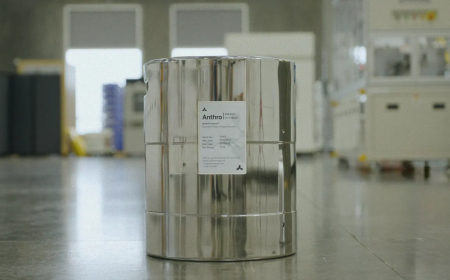
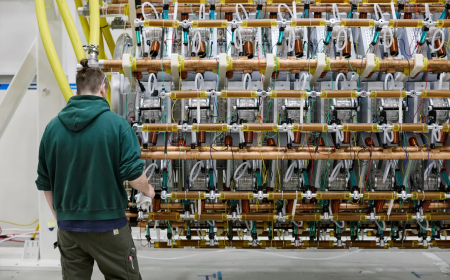
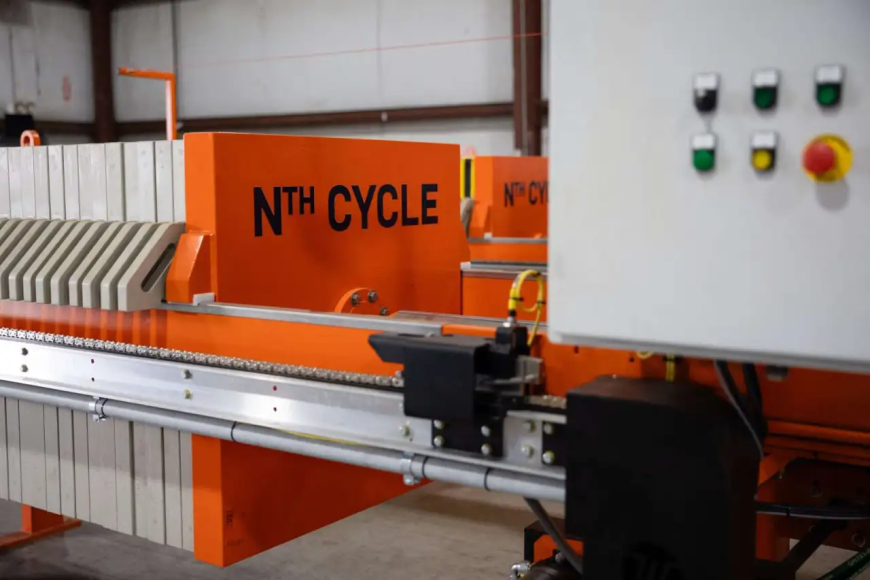
Nth Cycle has been developing an electrochemical refining system designed to process nickel and other critical minerals, including cobalt, copper, and rare earth elements. The company began production just over a year ago at a facility in Ohio capable of processing up to 3,100 metric tons of scrap material. It has now secured a $1.1 billion agreement with commodity trading firm Trafigura, which will allow it to expand its capacity fourfold.
The agreement reflects a broader shift in how companies are thinking about their supply chains for critical materials, as well as the role technology can play in reshaping them.
Currently, not only refining but also recycling of metals are often carried out overseas. As batteries reach the end of their life cycle, they are frequently shipped abroad for processing. O'Connor pointed out that this approach results in the loss of valuable resources that must later be repurchased. "These are really valuable resources that we're currently mostly shipping to China. You don't necessarily want to be giving up that valuable material and then having to buy it back," she said.
Nth Cycle is not alone in pursuing domestic solutions. Westwin Elements, another company in the space, operates a small refinery in Oklahoma and is working to expand with a new facility in Georgia, though it has encountered local opposition.
Nth Cycle's approach centres on a modular, electric refining system. According to O'Connor, traditional large-scale refining methods that are effective in parts of Asia do not translate well to the U.S. due to high capital costs. "You translate that here and it's just too capital-intensive," she explained.
The company sources materials from recyclers, including black mass — a mixture of metals derived from shredded batteries — as well as nickel-containing catalysts from the oil and gas industry. These materials are then processed using its electrochemical system, which is significantly smaller than conventional refineries, typically by a factor of five to ten.
Because of its smaller size, the system reduces capital expenditure requirements and allows operations to become profitable more quickly. "Our system can operate profitably at as low as 6,000 metric tons per year," O'Connor said.
This lower threshold is particularly important given that large volumes of end-of-life electric vehicle batteries have not yet fully entered the recycling stream and are not expected to do so until later in the decade. In fact, companies like Redwood Materials have already begun exploring alternative uses for older batteries, after discovering that many still retain usable capacity.
In the meantime, O'Connor believes there is sufficient raw material in the U.S. and Europe to support Nth Cycle's expansion plans. The company is currently developing facilities in South Carolina and the Netherlands, which together will be able to process approximately 18,000 metric tons of scrap material. The system is also designed to adapt to changes in material composition over time.
O'Connor argued that competing approaches often depend heavily on achieving large-scale operations to remain viable against established Asian refiners, leaving them vulnerable until supply volumes increase. In contrast, Nth Cycle's modular system allows capacity to grow incrementally as more material becomes available.
"That's how you change and really get refining capacity here [in the U.S.] — you match the volumes," she said.




































 Like
0
Like
0
 Dislike
0
Dislike
0
 Love
0
Love
0
 Funny
0
Funny
0
 Angry
0
Angry
0
 Sad
0
Sad
0
 Wow
0
Wow
0