







































Commonwealth Fusion Systems turns to magnet technology for near-term revenue
Commonwealth Fusion Systems is focusing on high-performance magnet technology to generate near-term revenue while advancing its fusion energy goals.
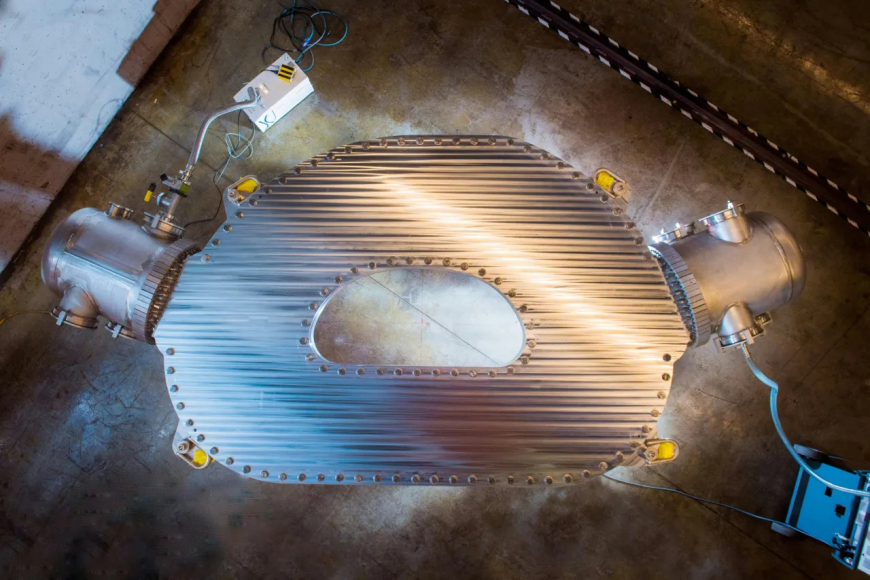
Fusion energy startup Commonwealth Fusion Systems is increasingly focusing on its high-temperature superconducting magnet technology as a near-term revenue source, as highlighted by a new agreement to supply magnets to Realta Fusion.
The company said on Thursday that the deal with Realta represents the second in a series of agreements centred around its magnet technology, signalling a broader strategy to commercialise this capability while its core fusion projects are still under development.
“This is the largest deal of this type for us so far,” said Rick Needham during a call with reporters.
Previously, Commonwealth Fusion Systems supplied magnets to the WHAM experiment at the University of Wisconsin, where Realta collaborates closely. The WHAM experiment forms the scientific foundation for Realta’s approach to fusion, which relies on a magnetic mirror reactor design.
In a magnetic mirror system, plasma is confined within a structure resembling two connected bottles. Powerful magnets at each end reflect the plasma toward the centre, while weaker magnets maintain stability in the middle region. This design allows for scalability, as increasing the size of the central section — which relies on less expensive magnets — can reduce overall energy costs per kilowatt-hour.
Commonwealth Fusion Systems, by contrast, is developing a tokamak-based reactor, a different form of magnetic confinement fusion. In this approach, D-shaped magnets generate strong magnetic fields that keep plasma circulating in a toroidal, or doughnut-like, configuration. The company has spent years refining this magnet technology as part of its effort to deliver electricity through its future commercial reactor, known as Arc, which is planned for construction in Virginia.
Both companies’ origins are closely tied to advances in magnet technology. Commonwealth Fusion Systems was established in 2018 following MIT research identifying high-temperature superconductors as a key breakthrough for viable tokamak designs. Realta emerged later when researchers recognised that the same advancements could revitalise the magnetic mirror concept.
Realta CEO Kieran Furlong explained that these new materials represented a turning point, enabling engineers to revisit older reactor concepts with improved performance and feasibility.
In addition to its partnerships with Realta and the WHAM experiment, Commonwealth Fusion Systems has licensed its magnet technology to Type One Fusion, which is developing a third type of fusion reactor, a stellarator. While this agreement does not currently involve manufacturing magnets for Type One, it could evolve into a production partnership.
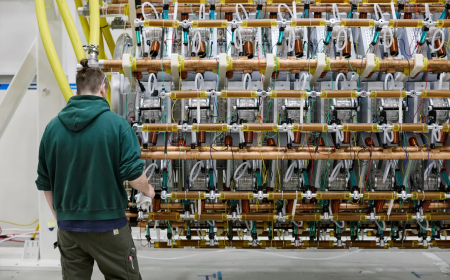
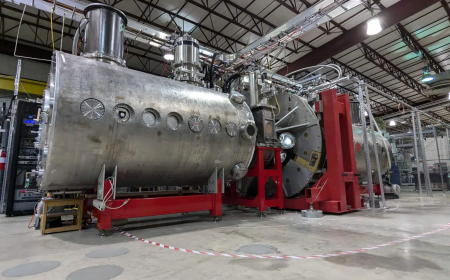
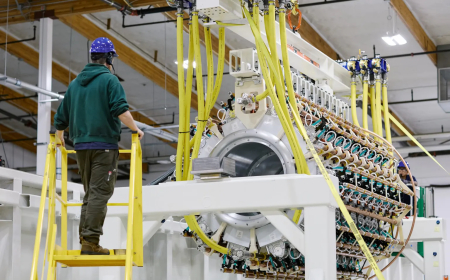
These deals are expected to help offset the substantial investment Commonwealth Fusion Systems has made in building its magnet manufacturing capabilities. Over the past seven years, the company has invested hundreds of millions of dollars to develop a specialised factory capable of producing magnets that meet the demanding specifications of fusion energy systems.
So far, much of that production has been directed toward Sparc, the company’s demonstration reactor, which is now around 70% complete and is expected to become operational later this year.
“With Sparc reaching this stage of completion, it’s an ideal time to begin supporting partners like Realta with our magnet manufacturing,” Needham said.
Because Realta and Type One are pursuing different reactor designs, Commonwealth Fusion Systems does not currently view them as direct competitors. In fact, their market focus differs significantly: Realta initially targeted industrial applications requiring large-scale heat generation rather than electricity production.
To date, Commonwealth Fusion Systems has raised nearly $3 billion, making it one of the most well-funded companies in the fusion energy sector. This financial strength has enabled it to build critical infrastructure, including its magnet production facility, ahead of many competitors.
The company presents these partnerships as a way to support the broader fusion ecosystem by providing access to advanced, costly technologies. This strategy will help it generate additional revenue and strengthen its role in the industry as fusion development continues.
What's Your Reaction?
 Like
0
Like
0
 Dislike
0
Dislike
0
 Love
0
Love
0
 Funny
0
Funny
0
 Angry
0
Angry
0
 Sad
0
Sad
0
 Wow
0
Wow
0