















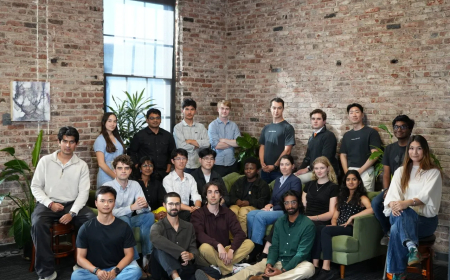























Group14 launches new factory to produce advanced battery materials for fast-charging EVs
Group14 Technologies opens a new manufacturing facility to produce advanced silicon battery materials designed to enable faster charging of electric vehicles.

Electric vehicle drivers and heavy smartphone users have long been excited about the potential of silicon anode batteries, which promise major gains in energy density while also reducing charging times.
Several companies have been developing silicon anodes over the past decade, and the technology has already begun making its way into consumer electronics. Wearable maker Whoop, for instance, uses materials from Sila, while Group14’s battery materials are already found in a variety of smartphones.
The much bigger opportunity, however, is the electric vehicle market, which is far larger than the consumer electronics market, according to Benchmark Mineral. But to gain a meaningful foothold in that sector, startups need to manufacture silicon anode material at a much larger scale than they have managed so far.
To reach that level, Group14 said on Thursday that it had begun production at its BAM-3 factory in South Korea. The plant can produce up to 2,000 metric tons of silicon battery materials each year, enough for 10 gigawatt-hours of energy storage, or roughly 100,000 long-range electric vehicles.
“It’s a big deal for us, and I think it’s a big deal for the industry, too,” Group14 co-founder and CEO Rick Luebbe said.
The BAM-3 facility was originally launched as a joint venture between Group14 and Korean battery manufacturer SK. SK held a 75% stake in the project but sold it to Group14 last summer.
“SK has had their own challenges — financial and reprioritising their battery and battery materials strategies all at the same time,” Luebbe said. “It did open up a great opportunity for us to acquire it from SK.”
The startup has been working with a range of companies, including Porsche’s battery unit Cellforce Group, StoreDot, Molicel, and Sionic. Porsche has also backed Group14 through its venture arm.
Most current batteries use carbon as the anode material. It performs adequately, but scientists have long known that silicon, which can store up to 10 times as many lithium ions, would be a better option for energy storage if durability issues could be solved. Pure silicon anodes tend to swell and break apart quickly, making them poorly suited for repeated charging over several years.
Group14’s solution is a hard carbon scaffold that keeps extremely small silicon particles in place, stopping the anode from swelling or crumbling. That scaffold is filled with nanoscale holes that allow lithium ions and electrons to move through. It also helps the anode charge rapidly without degrading.
Some of Group14’s customers, such as Sionic, are using silicon anodes to increase energy density by up to 50%. Others, including Molicel, are focusing on silicon’s fast-charging potential, with designs that can take a battery from empty to full in only 90 seconds.
That kind of use of silicon anodes could significantly reshape the EV market. Chinese electric vehicle maker BYD is already pursuing that type of capability. Last week, it introduced a new battery pack that can “flash” charge from 10% to 70% in five minutes. Luebbe said he is convinced BYD is using silicon-carbon in the new battery. “It has to be,” he said.
If charging infrastructure can support that type of EV, range anxiety could become a thing of the past. At present, automakers have been working to deliver 300 to 400 miles of range largely to ease consumer concerns, but achieving those figures requires large battery packs that add size, weight, and cost. Flash charging that can deliver meaningful range in seconds could allow carmakers to reduce battery pack size, cutting both cost and weight.
“I’ve got a Rivian with a 130-kilowatt-hour battery in it, which is ungodly expensive,” Luebbe said. But with flash charging, ideas such as inductive charging at stoplights — which may sound unrealistic today — begin to look more practical, he said. “You’d never think about charging ever again.”
What's Your Reaction?
 Like
0
Like
0
 Dislike
0
Dislike
0
 Love
0
Love
0
 Funny
0
Funny
0
 Angry
0
Angry
0
 Sad
0
Sad
0
 Wow
0
Wow
0